William Turnbull: Another step into the future
by Laura Heyrman
“I prefer the hazards and chance remarks of conversation. The peripheral glance, the observation from the corner of my eye is what interests me.” – William Turnbull (Scottish, 1922-2012)
William Turnbull is considered one of the leading British sculptors of the second half of the 20th century but his work is unfortunately not widely known beyond the United Kingdom. The current exhibition at Karma in Los Angeles (see below for details) will increase awareness of the artist in the USA and it inspired me to learn more about Turnbull and his works.
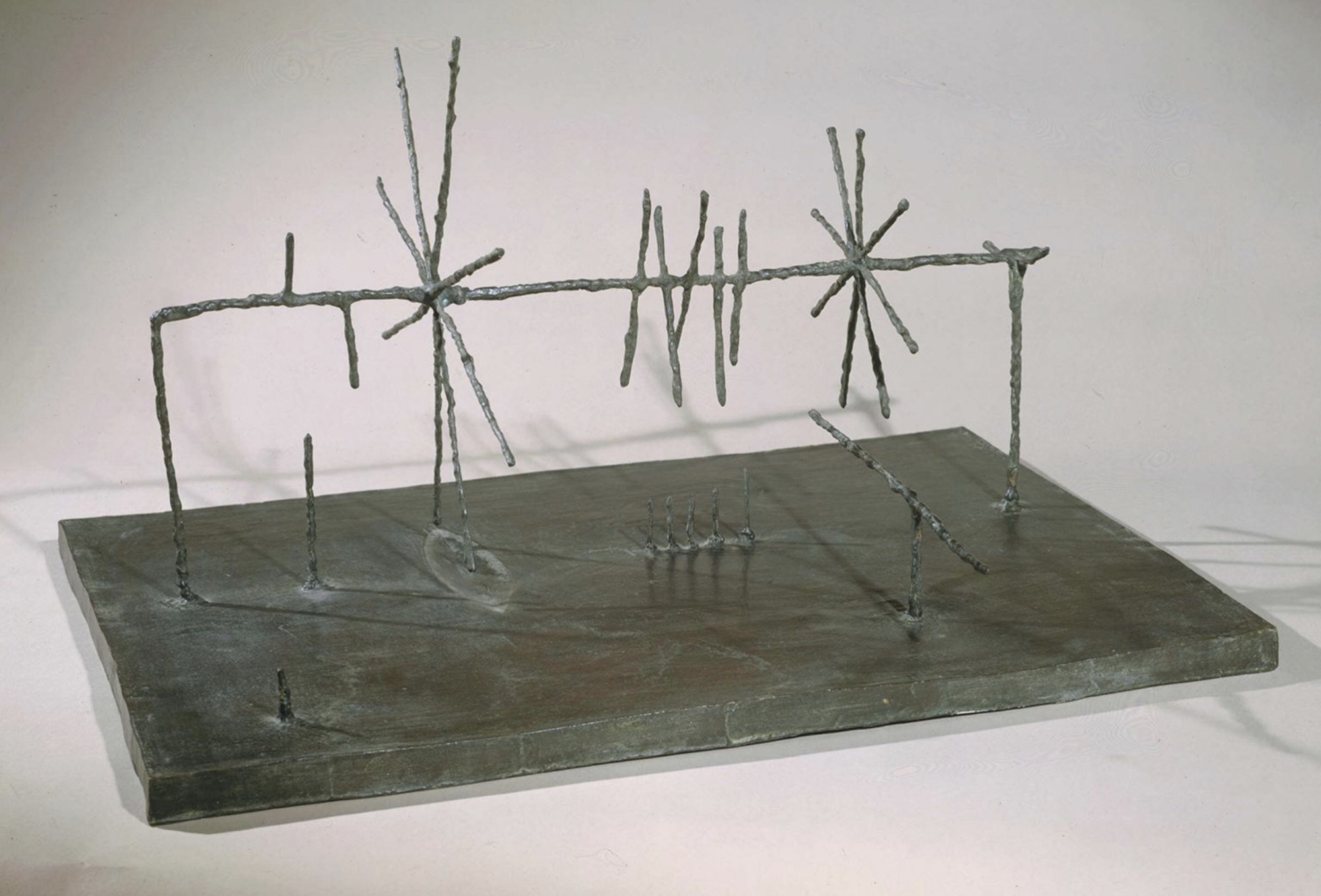
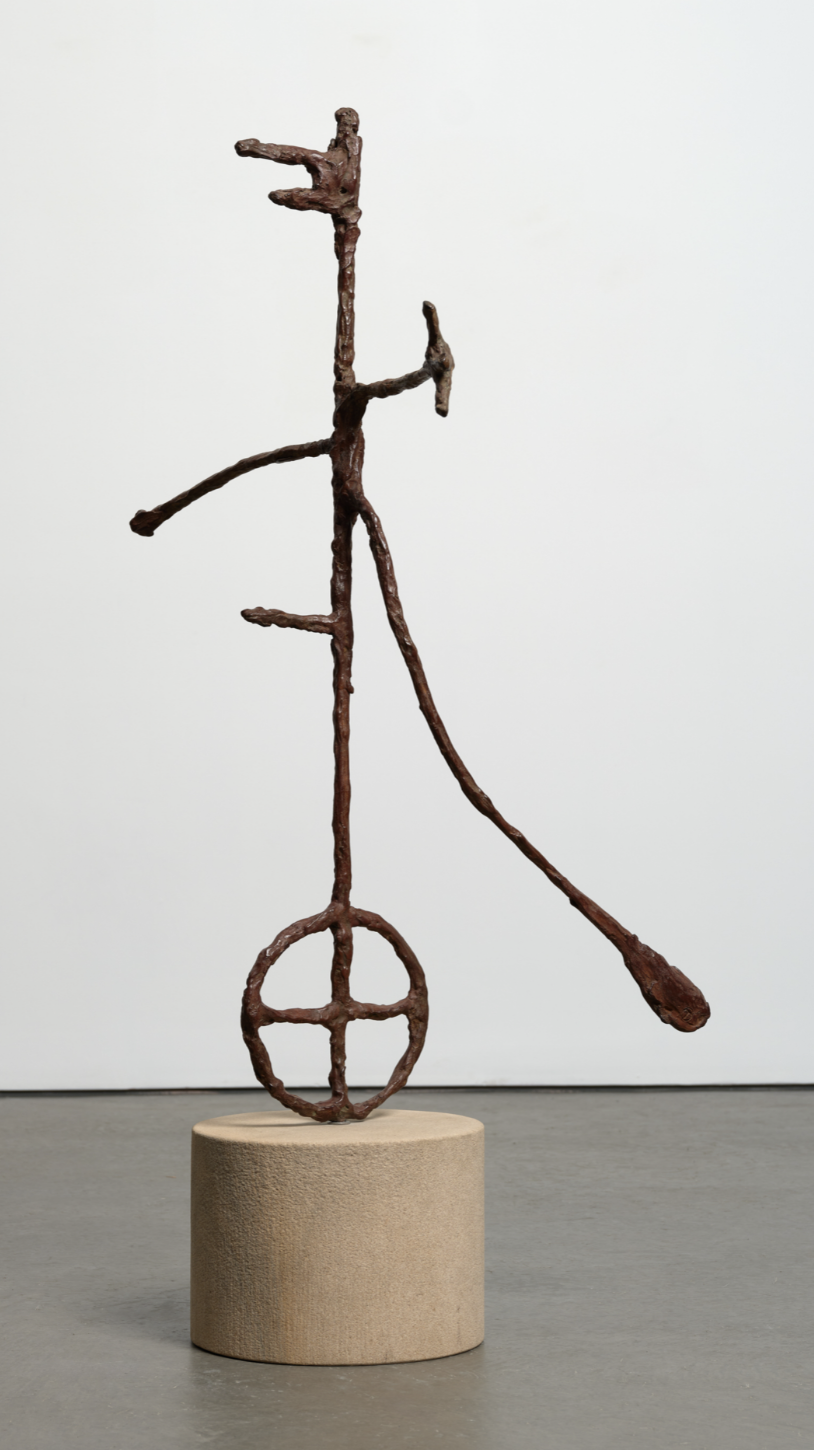
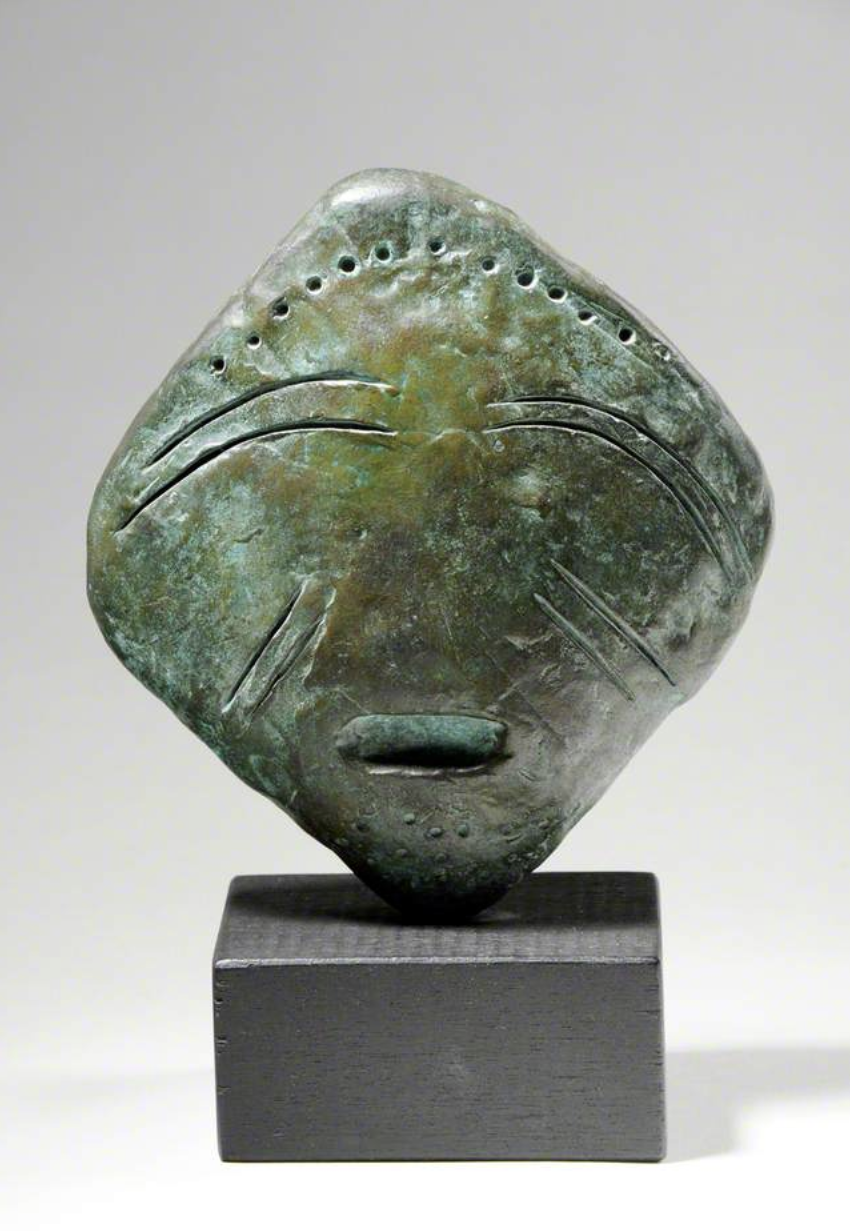
Turnbull was interested in drawing from an early age, teaching himself by copying magazine illustrations, but he had little formal artistic training. He worked as an illustrator for a short time before World War Two and after the war briefly studied at the Slade School of Art. The rejection of modern art by many instructors at the school led Turnbull to abandon the Slade for a stay in Paris, where he encountered fellow sculptors Alberto Giacometti (Swiss, 1901-1966) and Constantin Brâncuși (Romanian, 1876-1957). The influence of the former is especially noticeable in Turnbull’s early sculptures like Mobile Stabile (1949) and Acrobat (1952) in the slide show below. Brâncuși’s influence is more subtle but can be seen in Turnbull’s many sculpted Heads and Masks (for example, Tragic Mask (1979) below).
“I was very much concerned that a sculpture was an object and a painting was an object. The paintings I made were objects, they weren't illusions. They didn't refer to something else, they only refer to themselves, and so they were actually in the same area but they were made with different stuff.” – William Turnbull
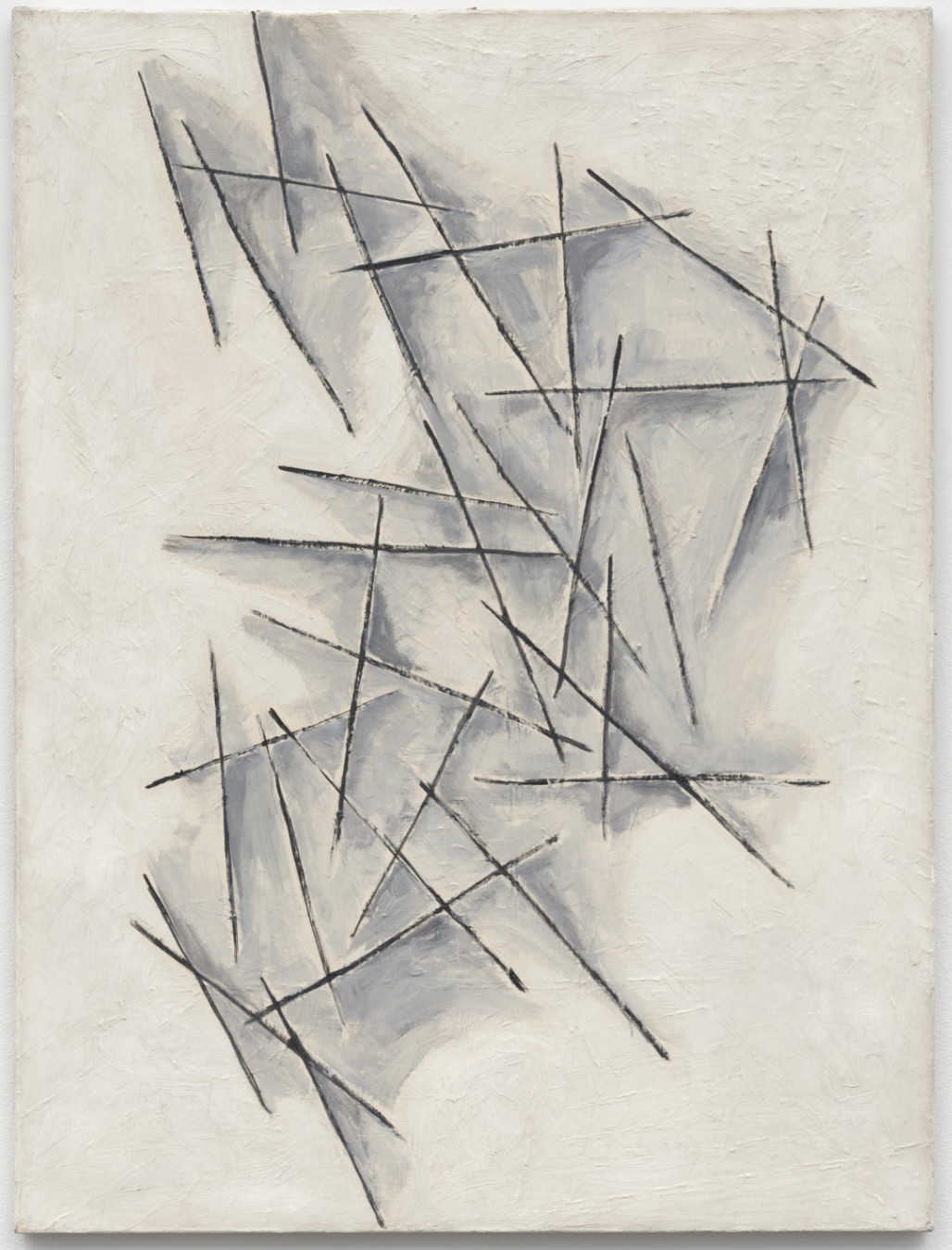
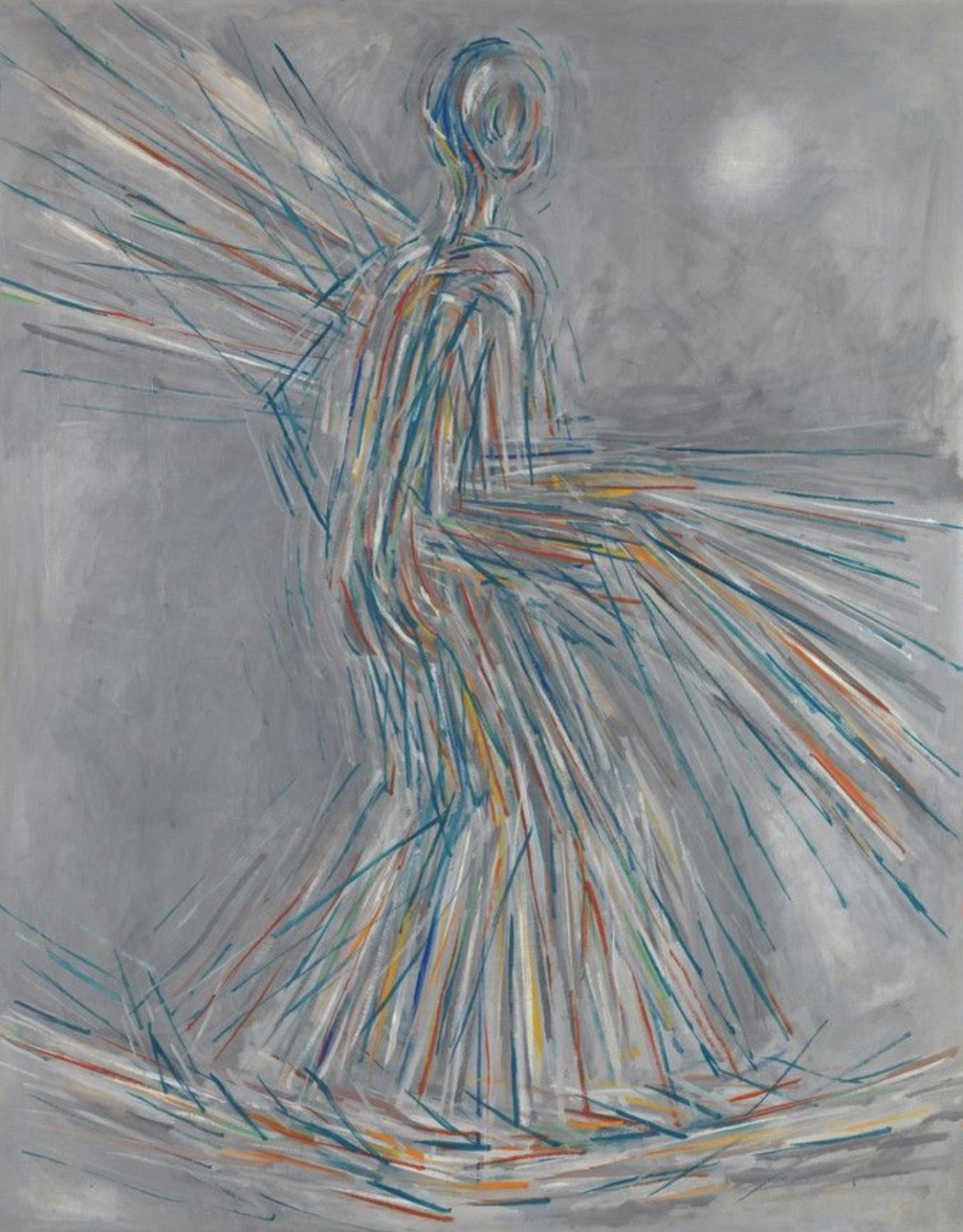
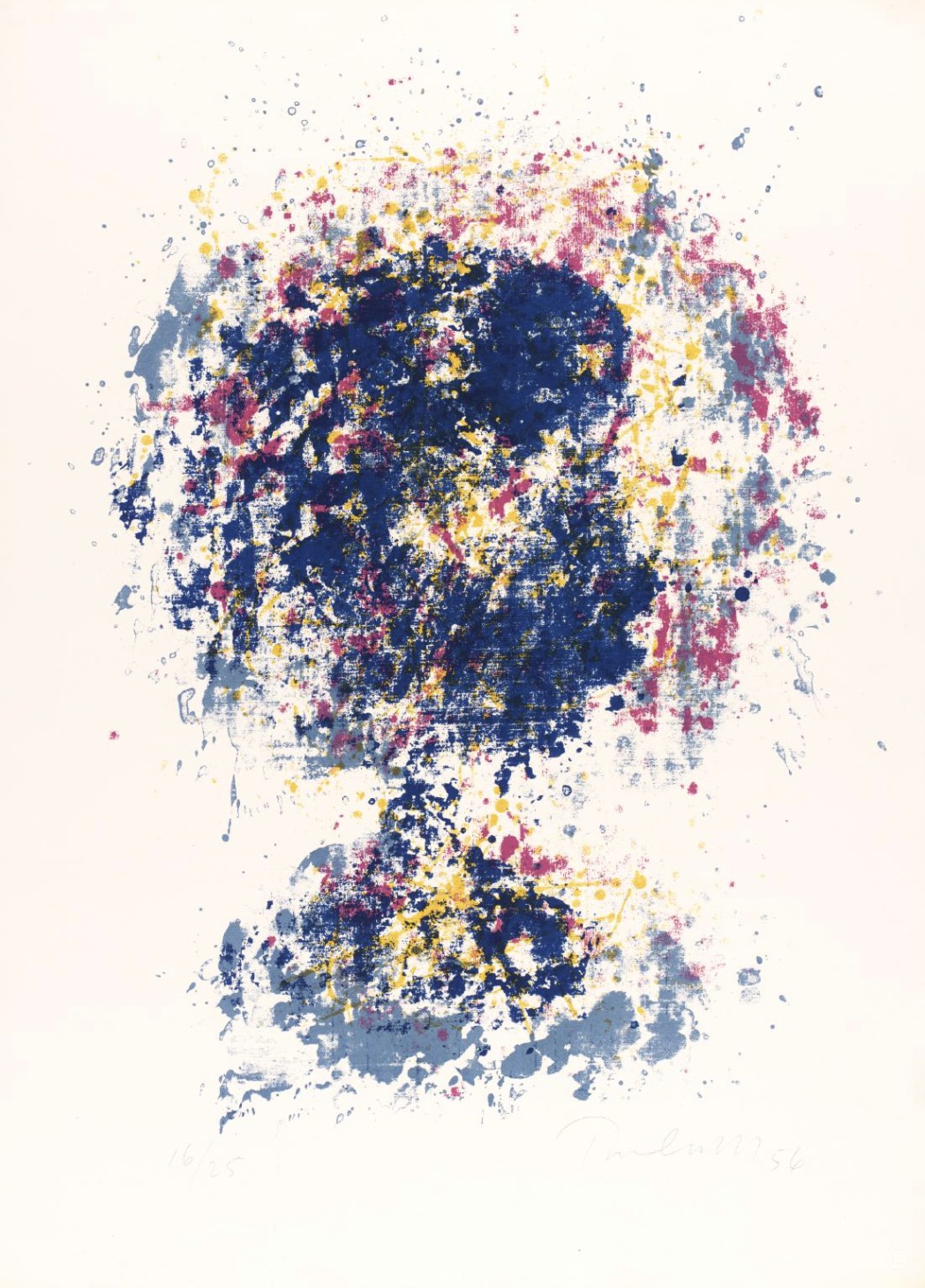
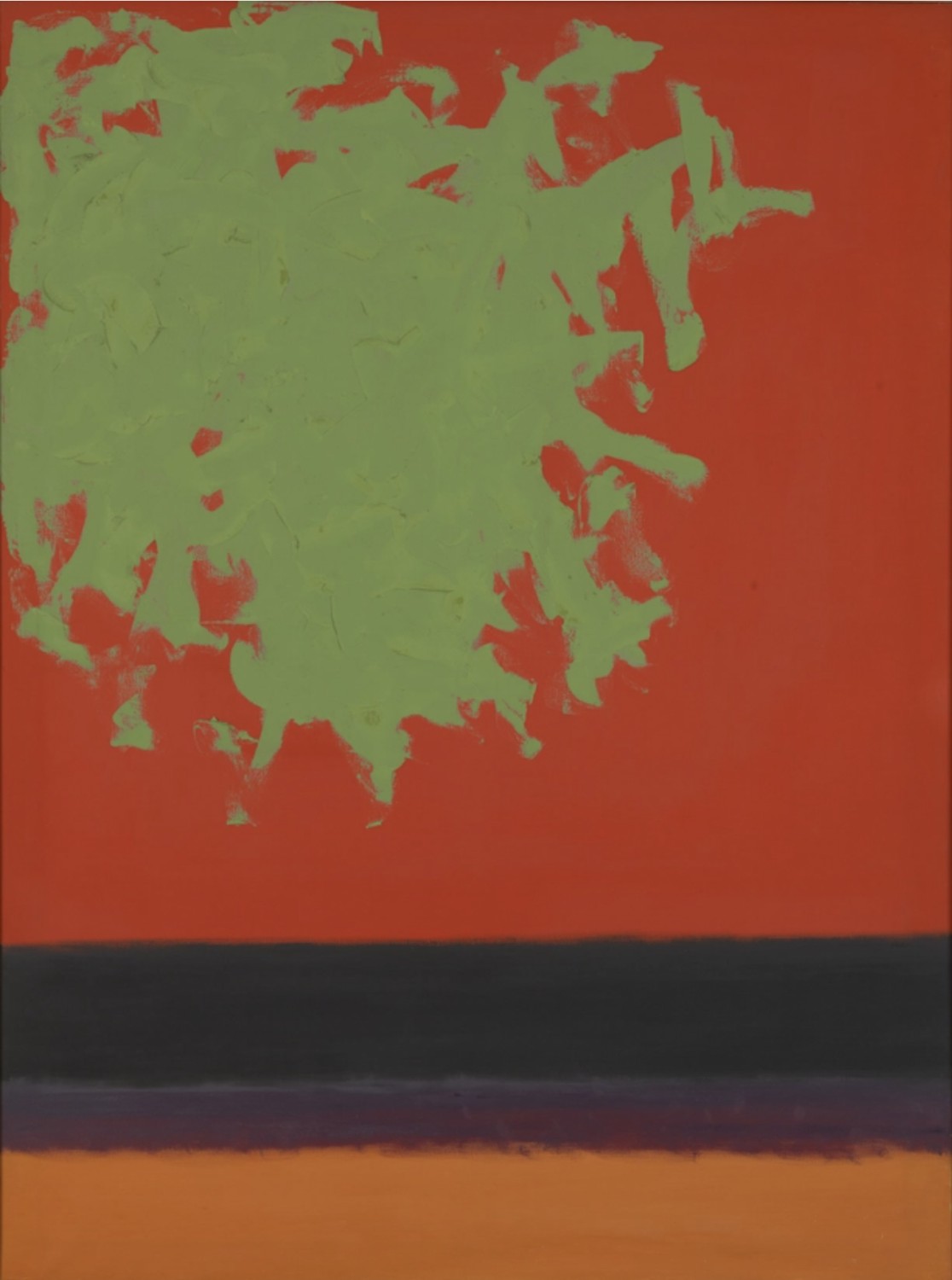
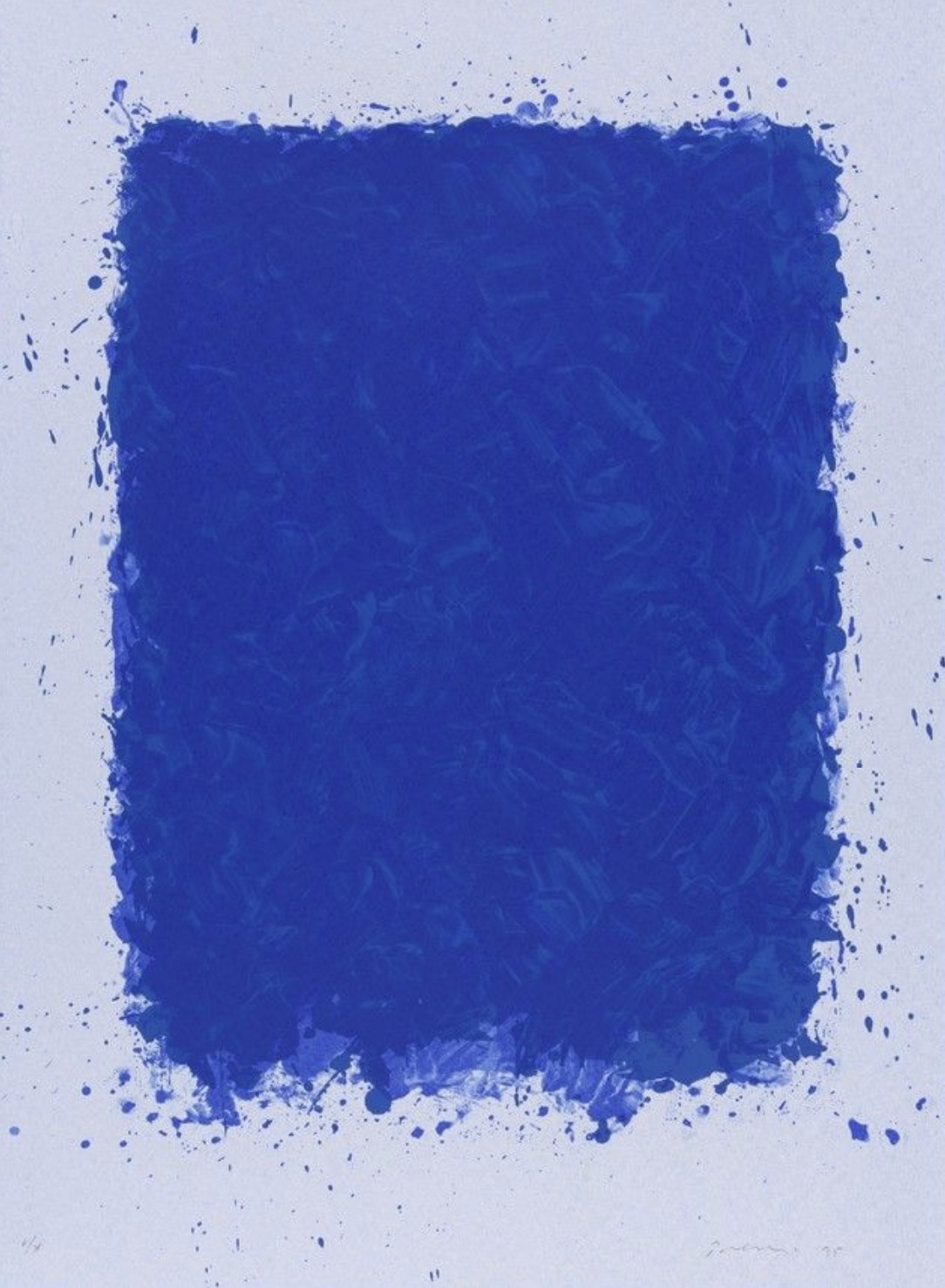
In addition to sculpting, the artist was a painter and printmaker throughout his life. Some of Turnbull’s early paintings, like the example from 1949 in the slide show, are nearly monochromatic and seem to be two dimensional explorations of the lines and spaces found in the sculptures the artist was creating in the same period. Turnbull’s practice of exploring similar themes and forms in various media is apparent throughout his career. He often returned to earlier concepts repeatedly over time as well. In this slide show, some examples are Head Blue / Yellow (1956) and Tragic Mask, and 23-1958 (1958) and Untitled (1996).
In 1952, Turnbull was included in two major exhibitions of current British sculpture, one in London and the other at the 26th Venice Biennale. This brought the artist some recognition but he still faced severe financial hardships in the first half of the 1950s. In 1955 Turnbull sold his first work to an American collector who introduced the artist to Mark Rothko, Helen Frankenthaler, and Barnett Newman when the Scottish artist visited New York. One effect of connecting with these artists was a shift to larger canvases for his paintings, which he described as “physical scale directly related to the observer.” Turnbull maintained friendships with these artists and throughout his life kept abreast of the latest developments in contemporary international art through travel, correspondence, and attending exhibitions.
“The sort of thing that interested me was - how little will suggest a head, how much load will the shape take and still read head, head as colony, head as landscape, head as mask, head as ideogram, head as sign, etc.” – William Turnbull
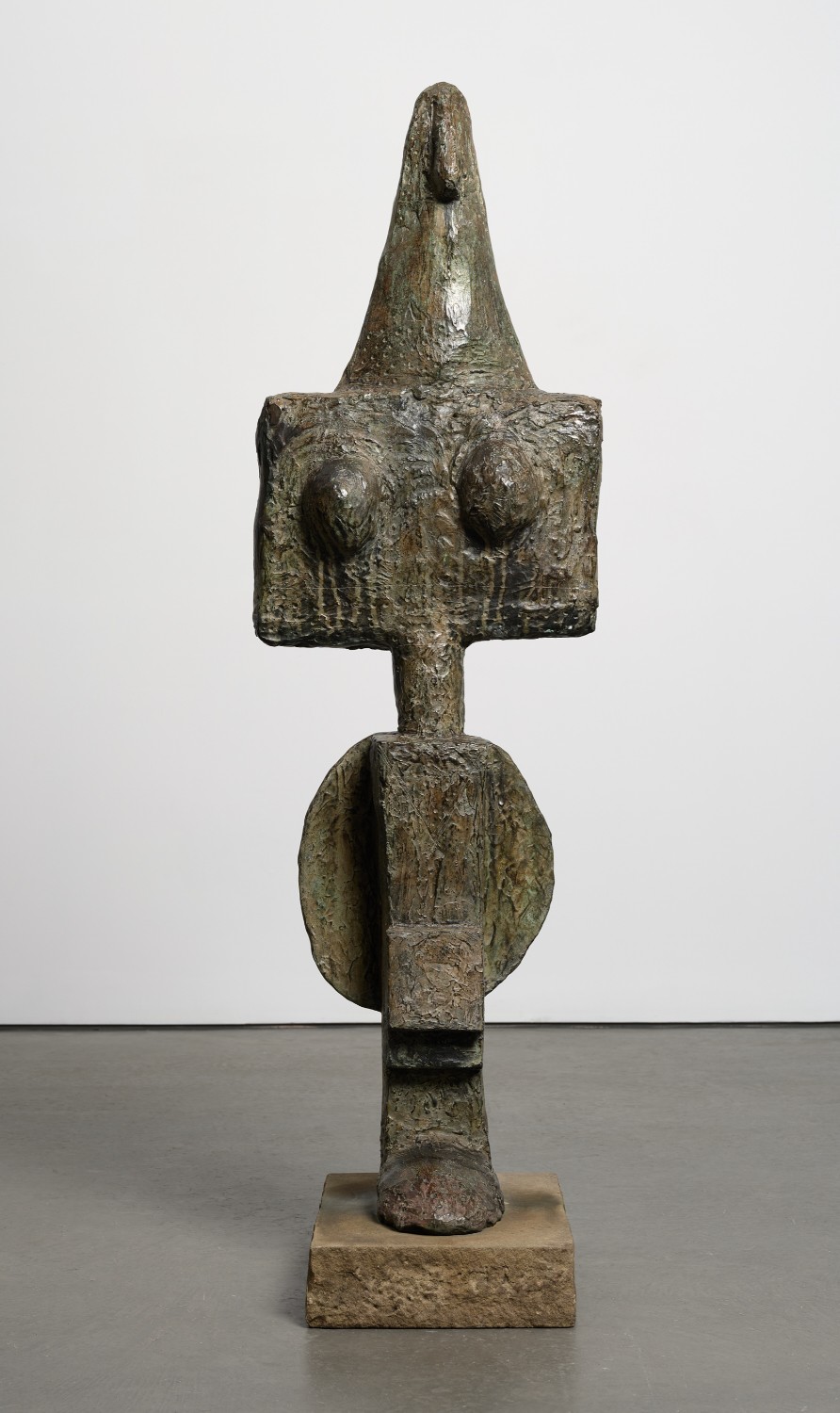
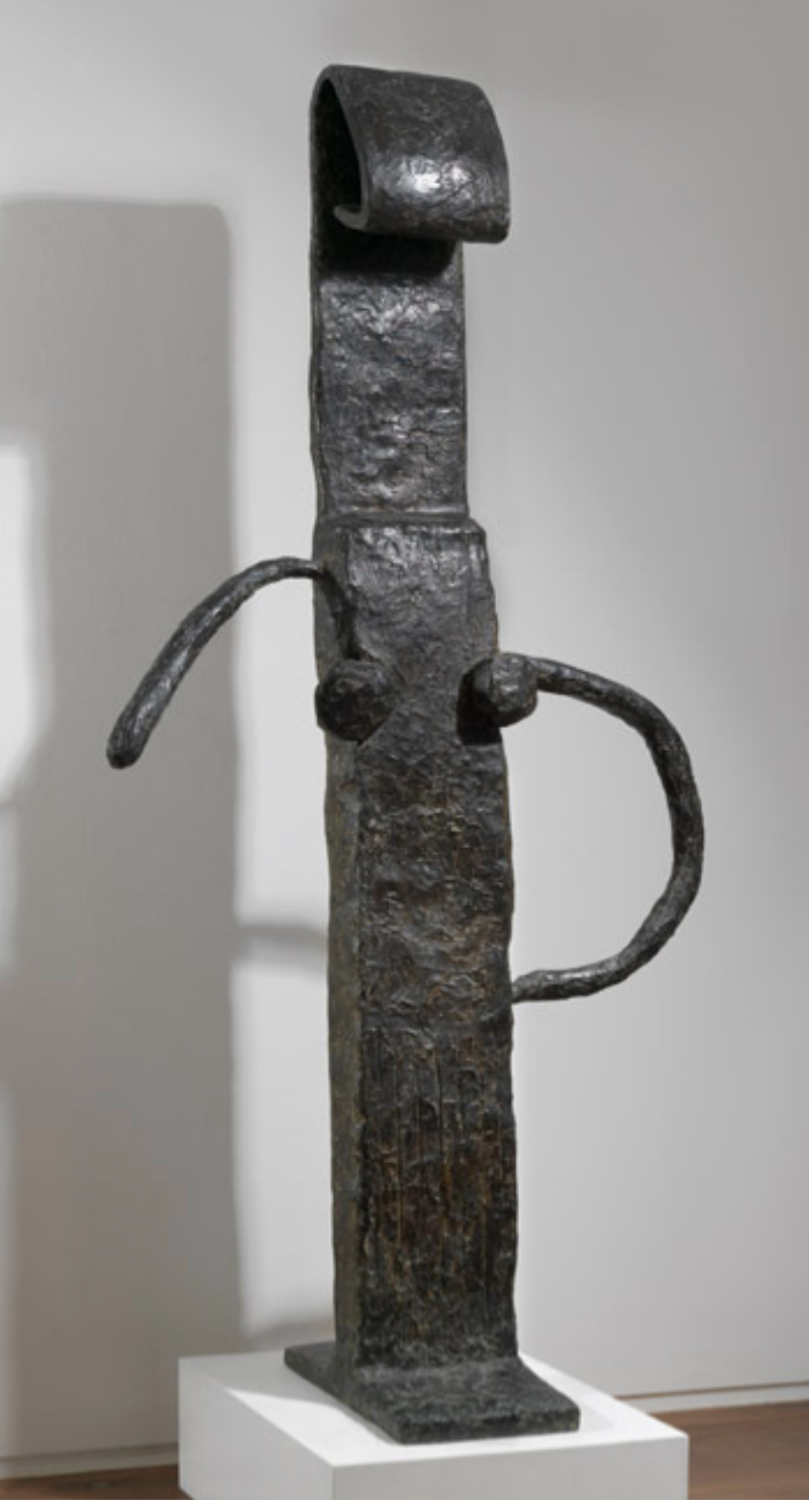
Heads as a theme attracted Turnbull from early in his career, but as quoted above, he wanted to explore the many potential meanings that could be conveyed by an abstract head. We all have had the experience of seeing a face in wood grain, a plumbing fixture, or the full moon. For the artist, exploring how far he could push the abstraction and still have it signify “head” was a long-term project. Many of the artist’s mask sculptures were abstractions based on objects he had collected during his international travels. During these journeys, Turnbull recognized formal and conceptual commonalities that exist among cultures. In his art, this idea is expressed through his use of simplified heads and bodies that are simultaneously modern and timeless. The 1956 sculpture War Goddess has the abstraction of 29th to 21st centuries BCE sculptures from Neolithic Greece (see en.wikipedia.org/wiki/Cycladic_art for examples), yet its large size and expressive surface treatment identify it as originating in the mid 20th century CE.
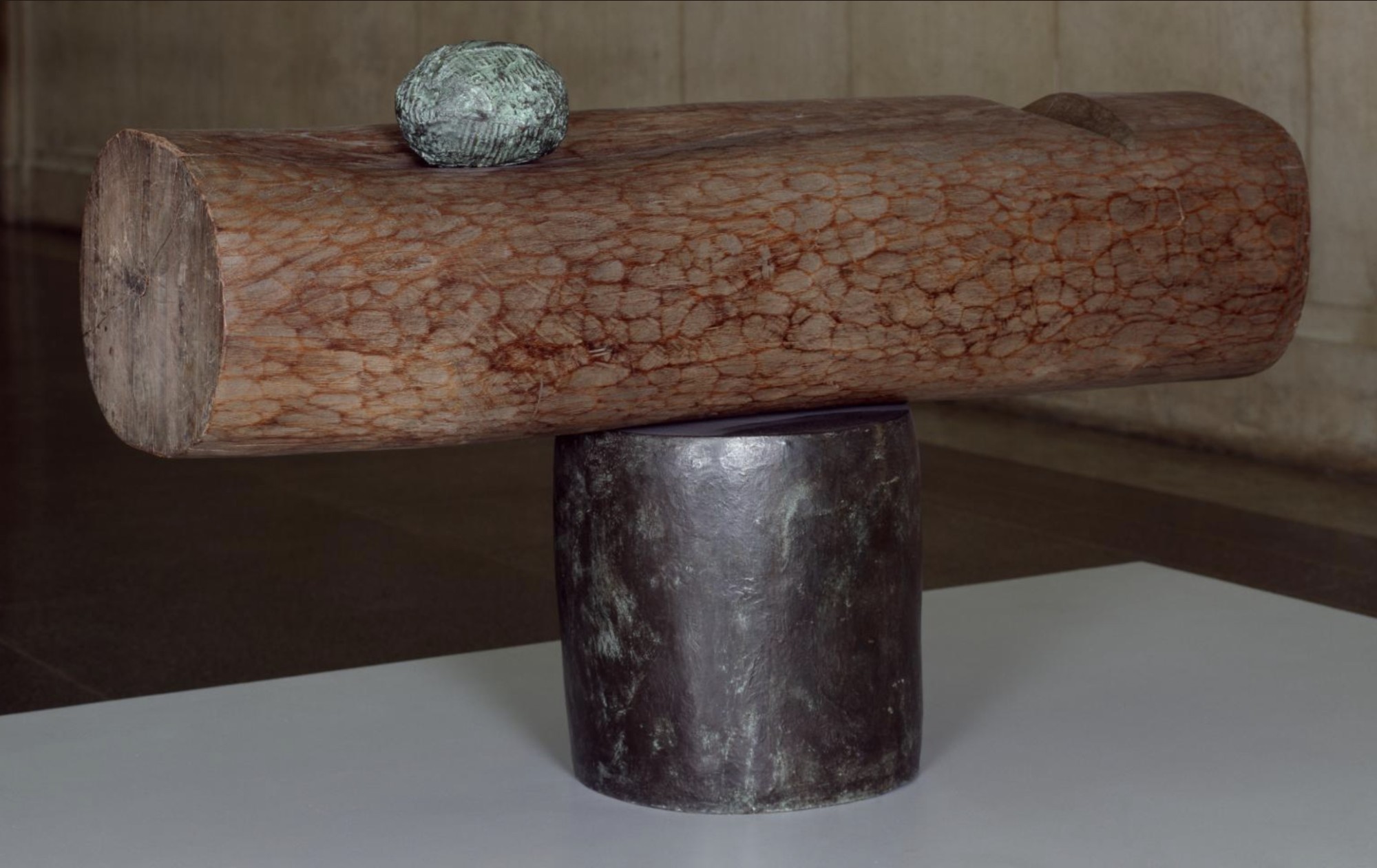
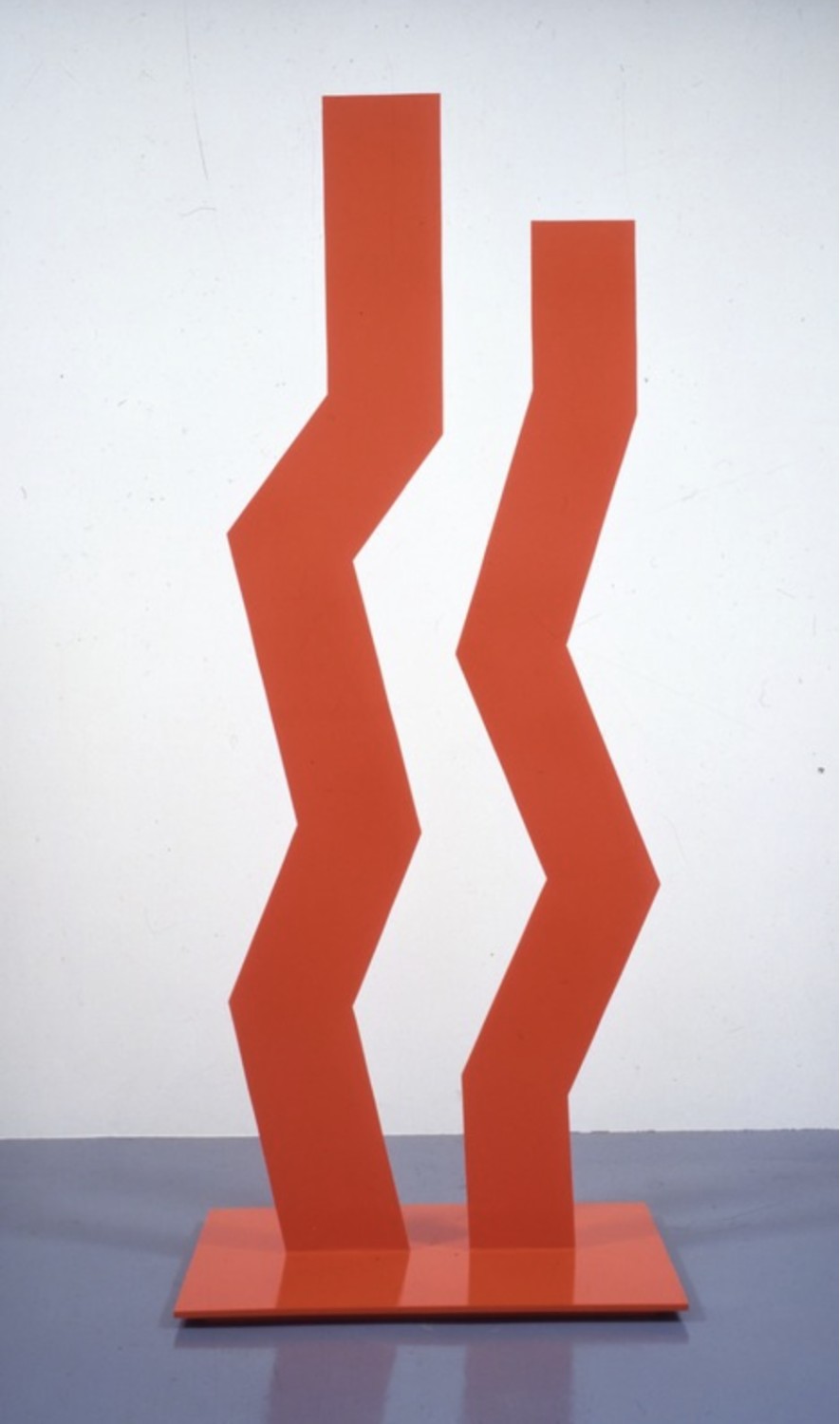
In the 1960s, Turnbull began to work with stainless steel, fiberglass, and plastics. His sculptures, like Double Red (1966) in the slide show, began to have the industrial feel of Minimalism. When a retrospective exhibition of the artist’s work was held at the Tate in 1973, the artist decided he was not happy about the direction his work was taking and he returned to his earlier approach of cast bronze and textured wood works like Spring Totem (1962-1963). Aside from that brief period in the 1960s, the artist’s presence remains apparent in Turnbull’s paintings and sculptures through visible brushstrokes or scrapes and gouges in bronze and wood. Though he sometimes found inspiration in the trends and changes in the art world of his day, his personal journey as an artist was always most important to Turnbull. When he finished a work, he expected others to complete the object through their own interactions with it. For this artist, abstraction was a way of allowing the viewer to make the art their own by opening his works up to the widest variety of possible interpretations.
“…the artist attempts to create a new object… This object then exists in the world as a part of nature, as the person who makes it is, its qualities never absolute but changing in relation to the participation of the spectator.” – William Turnbull
An artistic vocabulary that evolved from Turnbull’s process of responding to his chosen materials ensured that the viewer could see how the work came to be, encouraging them to explore his surfaces, masses, and colors as much for their own sakes as for any meanings they might embody. In Turnbull’s early works, a love of circus themes and a playful quality are apparent. Later, as he began to explore universal forms like masks, idols, and totems, his works rarely seem oppressive or frightening. Most appear calm and self-contained, suggesting they could share eternal secrets with an attentive viewer. For Turnbull, each work was an opportunity to discover something new in his materials and in his imagination, and a chance to take us with him on the journey.
“Each new excavation is another step into the future.” – William Turnbull
Exhibition:
“William Turnbull: Origins” through July 17, 2026, at Karma, 7351 Santa Monica Boulevard, Los Angeles, California, USA LINK: karmakarma.org/exhibitions/william-turnbull-la-2026
Turnbull’s work is also included in “Going Modern: British Art 1900-1960” through August 29, 2026, at Yale Center for British Art, 1080 Chapel Street, New Haven, Connecticut, USA LINK: britishart.yale.edu/news-and-press/yale-center-british-art-present-going-modern-british-art-1900-1960
Coincidentally, one of the artist’s sculptures is depicted between the two figures in David Hockney’s American Collectors (Fred and Mary Wiseman) which headed I Require Art’s memorial essay published on Substack on June 17, 2026. LINK: irequireart.substack.com/p/in-memoriam-david-hockney
Please share your comments and questions on Substack. LINK irequireart.substack.com/p/viewing-room-53/comments
Longer captions may not be fully visible on smaller screens. We apologize for the inconvenience.
If the caption obscures part of the artwork, click on the image to turn off the caption.