Transformation: Art Out Of Debris
By Laura Heyrman
The statistics grow more alarming with each passing year. More solid waste pollutes land and water around the world each year, in both developed and developing countries. The absence of functioning systems for solid waste disposal in much of the world endangers the environment and public health all over the world. Humans now produce about 350 million metric tons of plastic waste per year. Of that, 23% or about 80 metric tons ends up as litter or is mismanaged, that is, not recycled, incinerated or sealed in a landfill. One to 2 metric tons ends up in the world’s oceans, to harm marine life or wash up on someone’s shores.
In this Viewing Room, created to mark the end of April’s Earth Month, I have gathered works by 12 of the many artists who respond to the trash accumulations in their communities by gathering it for creating art. The specific materials the artists choose, the styles they use to transform their accumulations, and the reasons they turned toward these materials vary, but their results are compelling.
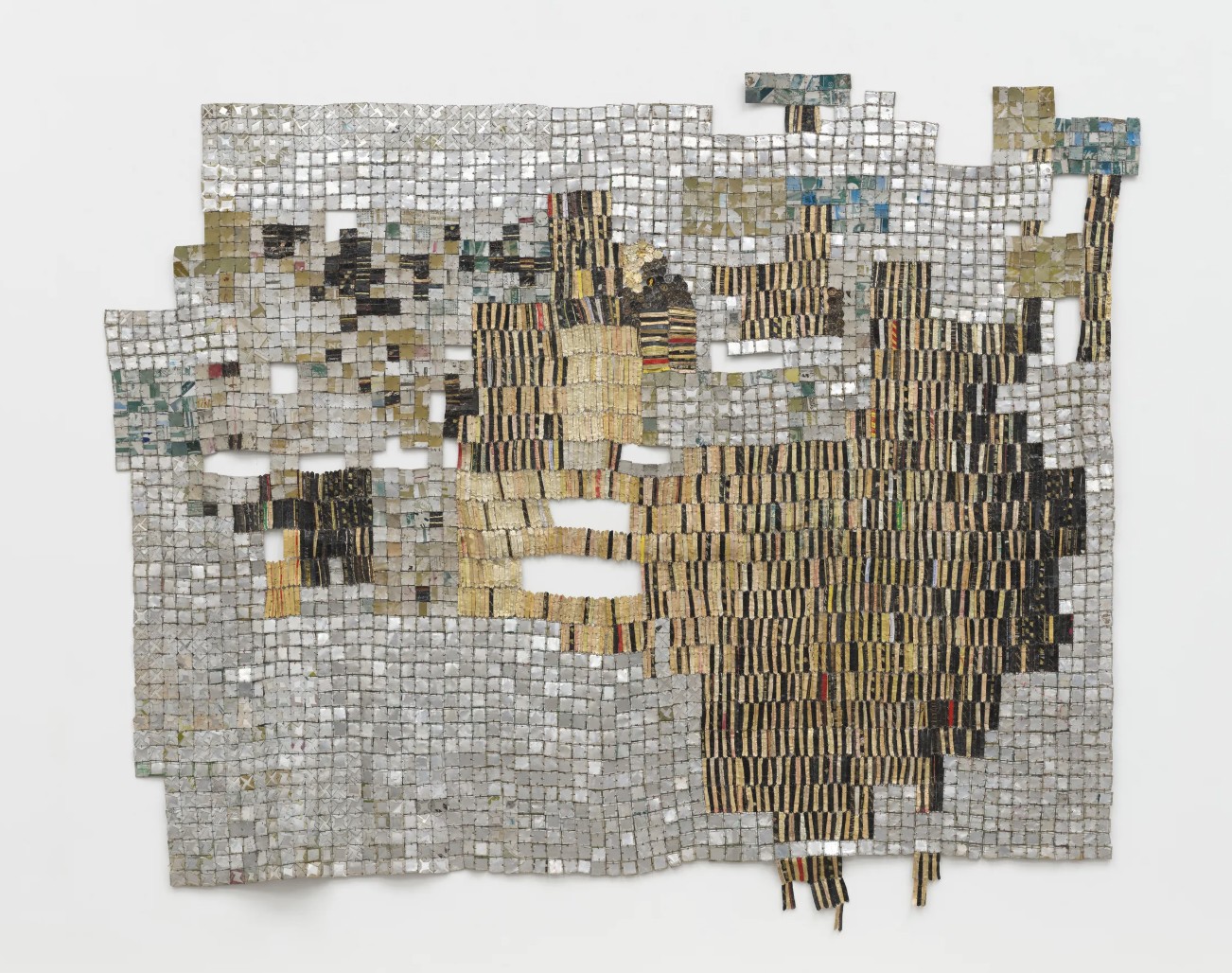
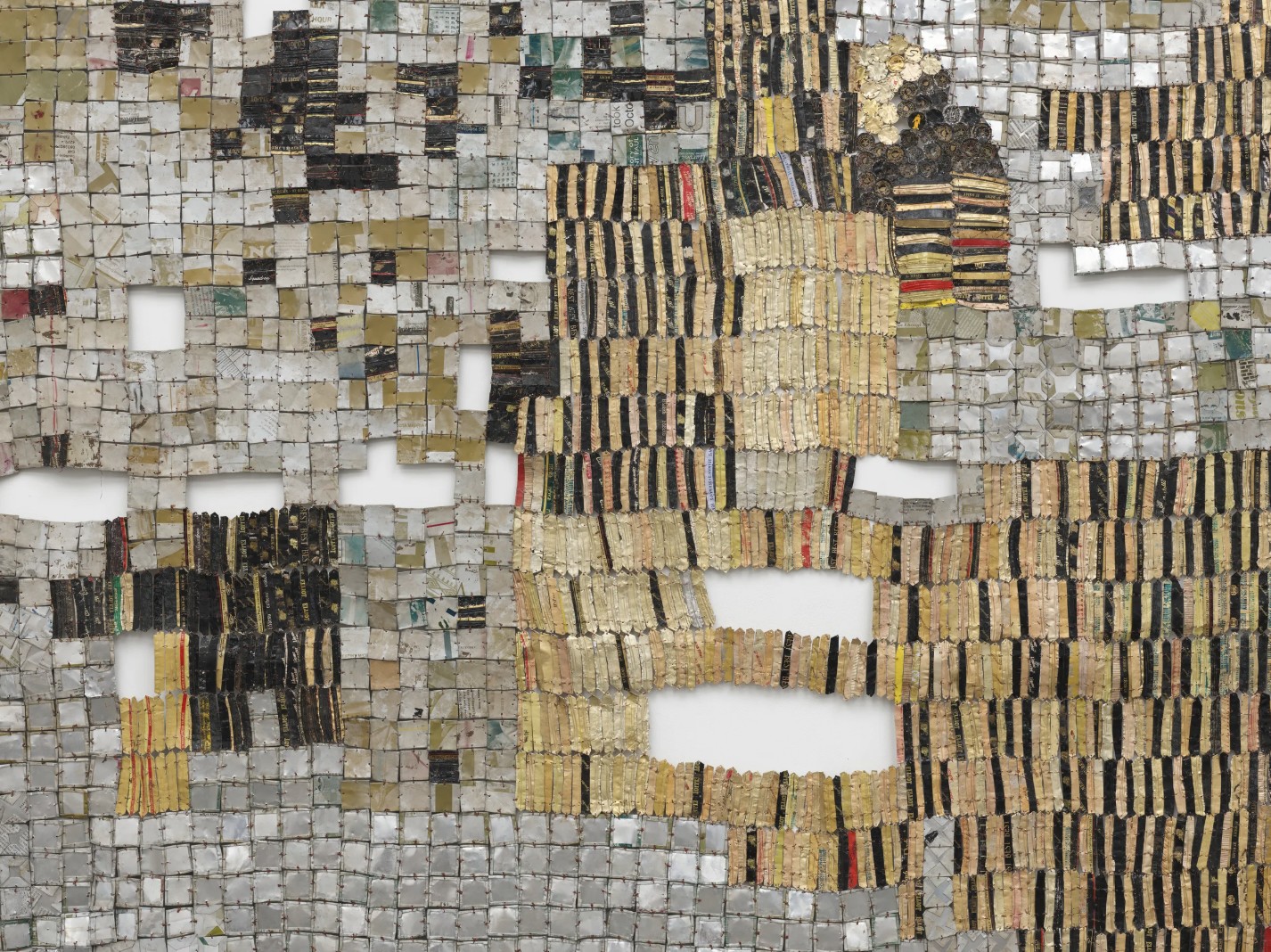
El Anatsui (Ghanaian, b. 1944) is the most widely celebrated of the artist included in the slide show. He began working with found objects, wooden trays used in local markets, in the 1970s and by the end of that decade he had discovered the material with which he is most associated – metal bottle caps. Flattened and attached together with wire, Anatsui’s bottle caps yield expanses which can be hung and draped like heavy fabrics.
"The most important thing for me is the transformation. The fact that these media, each identifying a brand of drink, are no longer going back to serve the same role but are elements that could generate some reflection, some thinking, or just some wonder. This is possible because they are removed from their accustomed, functional context into a new one, and they bring along their histories and identities." – El Anatsui
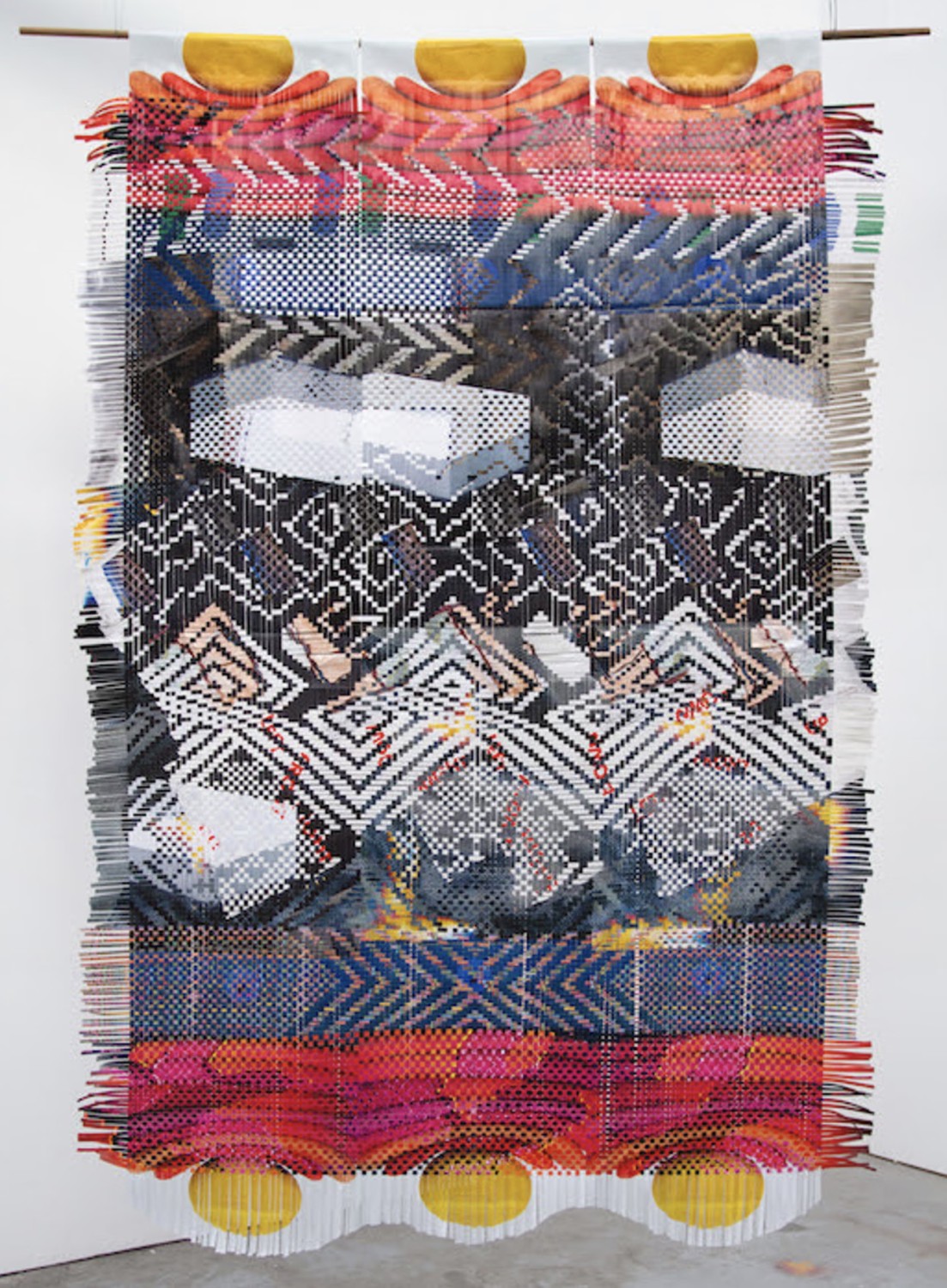
Like Anatsui’s metallic tapestries, the paper weavings of Miguel Arzabe (American, b. 1975) create new patterns and images from fragments of discarded objects. This artist collects exhibition catalogs, posters, and other photographic reproductions of art and cuts them into strips, Organized by color and length, the strips become the material of Arzabe’s weaving which mix patterns from the artist’s indigenous heritage with brightly colored shapes.
“I wanted to show that complexity and value could be created through humble materials.” - Miguel Arzabe
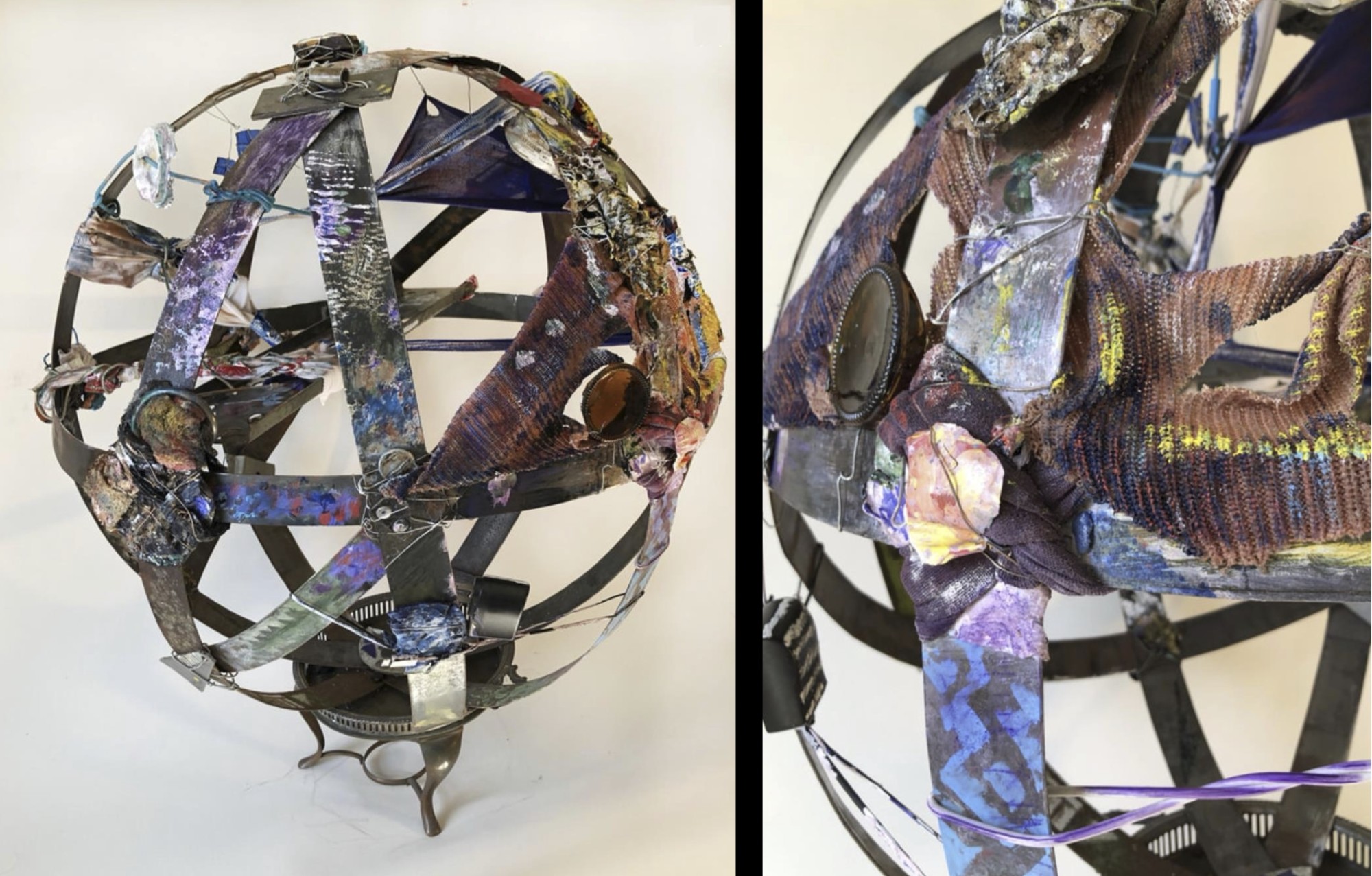
Carol Diamond (American, b. 1960) uses a wider variety of materials than Anatsui or Arzabe, The artist collects detritus found on New York’s streets, construction sites, and abandoned factories. Cat’s Cradle in this slide show is made from metal strips, ribbons, and paint, but the artist also works with glass, plastic, wire mesh, and bits of concrete.
“I am energized by a growing community of artists working with found materials, whose work engages questions of value, labor, and responsibility. Through sculpture, I transform urban detritus into structures that invite viewers to reconsider beauty, fragility, and wholeness.” – Carol Diamond
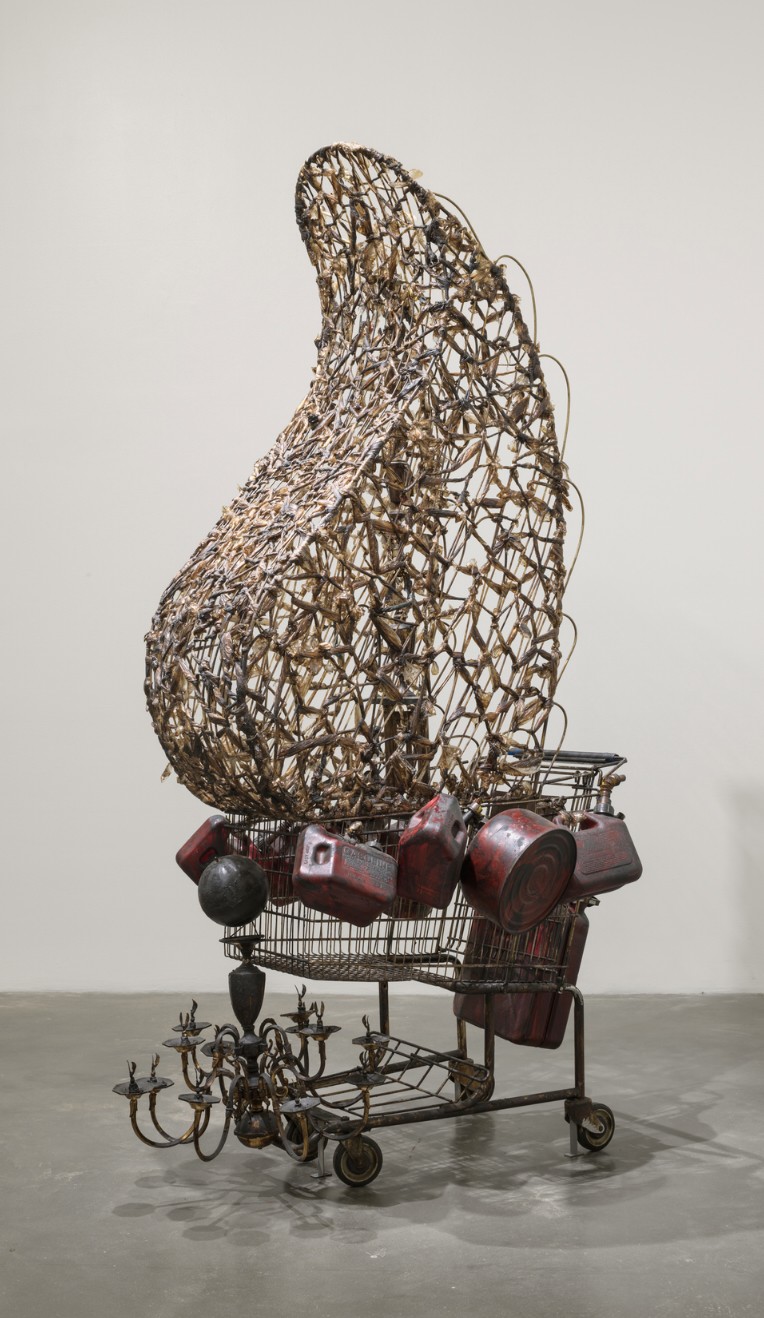
The next group of artists also collect discarded materials but mostly leave them unaltered, instead creating assemblages from disparate objects. Nari Ward (Jamaican-American, b.1963) uses objects gathered from Harlem where he has lived for many years. The objects often remain identifiable, bringing their past uses and meanings to blend with their new context. Ward’s Crusader has many elements that one recognizes – a shopping cart, a chandelier, plastic containers, but others are less identifiable and the meaning of the whole remains mysterious, requiring engagement with the sculpture’s title as well as its materials and form.
“I’ve always felt like when you start a work, it takes you on a journey. For me, the challenge was to figure out how to give into that journey and how much to control or how much to give over control. The spaces that the work brings me—the space of mystery, the space of introspection—is a space to connect with oneself that even you’re not always fully aware of. It’s a kind of awakening.” - Nari Ward
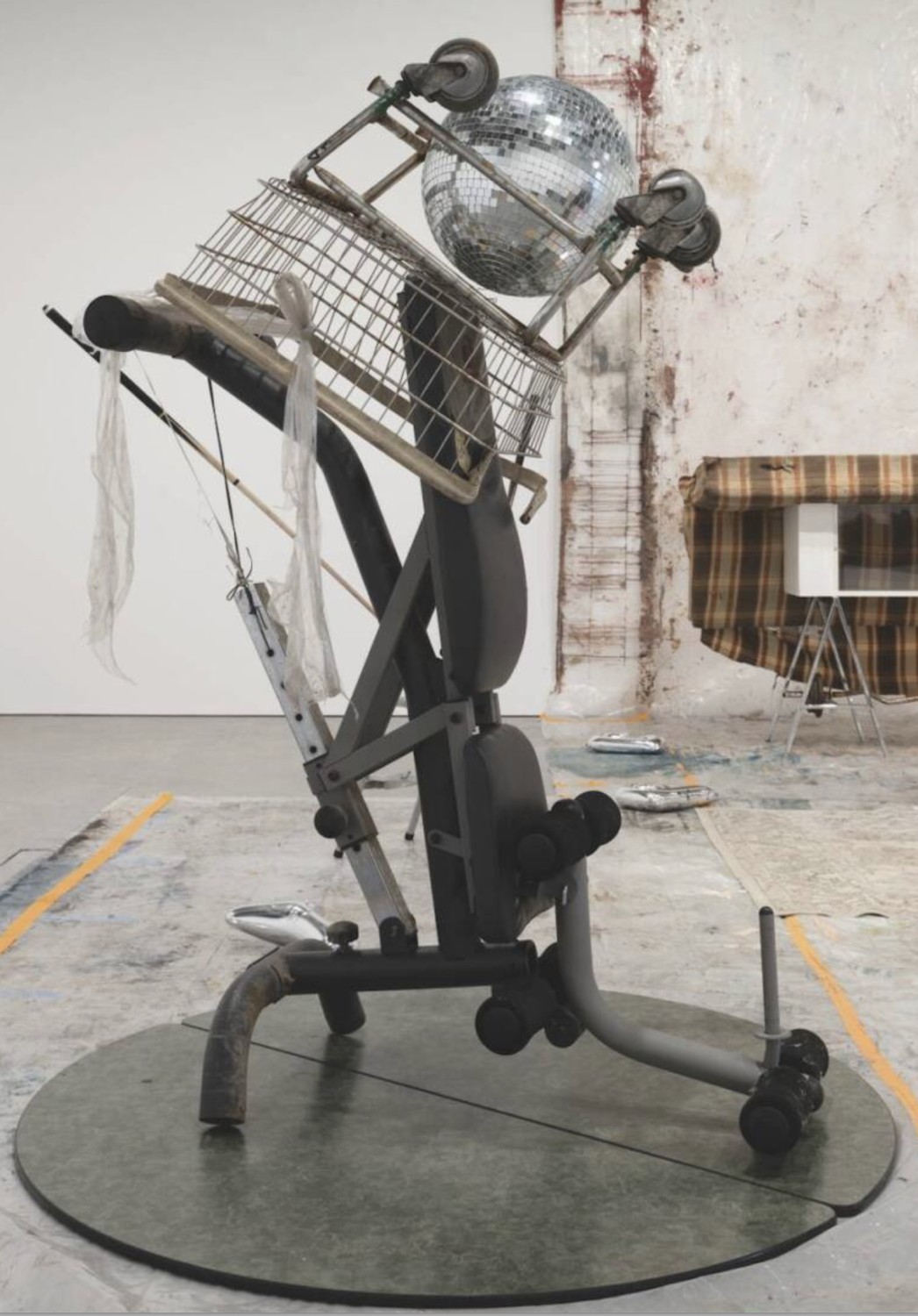
Like Ward, Ser Serpas (American, b. 1995), creates assemblages from mostly recognizable found objects to which she applies poetic titles. In Huff Heavy Forget This Song The Hell I See, a grocery cart and a mirror ball top a collection of less identifiable industrial-looking objects. There is a heavy robotic quality to the lower section, while the top elements seem slightly humorous. The artist describes her sculptures as the “aftermath of a private performance or choreography” leaving the viewer to reconstruct the private event from its public manifestation.
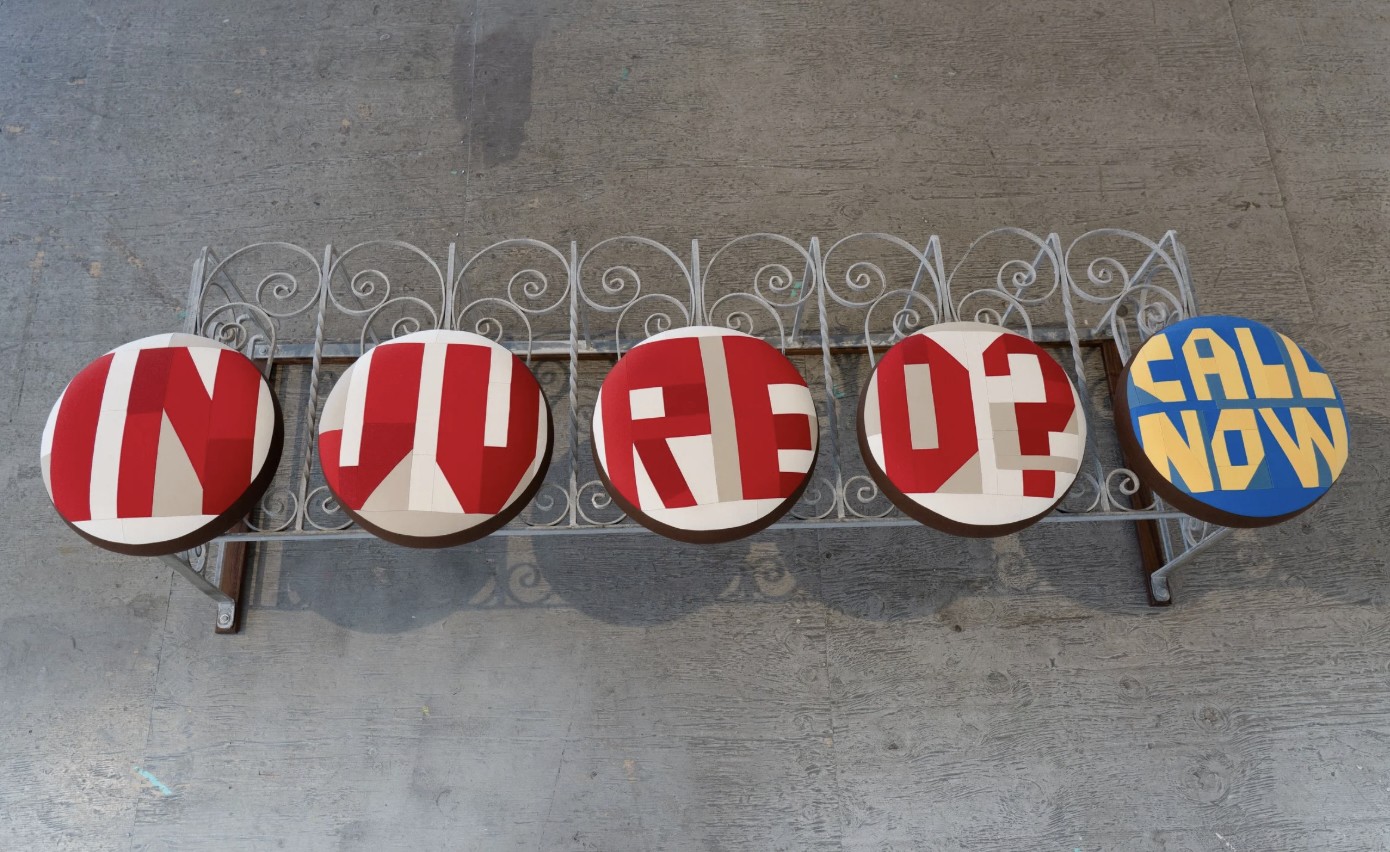
Jeffrey Sincich (American, b. 1990) also leaves many of his found objects in their original state, but his interest is in the bold signage of urban streets, so the window grates and architectural fragments act as supports or framing elements for the hand-painted lettering and fabric elements of his assemblages. The artist's previous career in professional sign-painting is reflected in his art practice.
In Contemporary art, the most frequently used found objects are fabrics – used clothing, fabric scraps and remnants, discarded linens and draperies, all have found their way into artists’ creations. Past Substack essays about Suchitra Mattai (Guyanese-American, b. 1973) and Rodney McMillian (American, b. 1969) discussed two contemporary artists who used found fabrics in their works. (See Chance Encounters 57 irequireart.substack.com/p/chance-encounters-edition-57 and Viewing Room 47 irequireart.substack.com/p/viewing-room-47.)
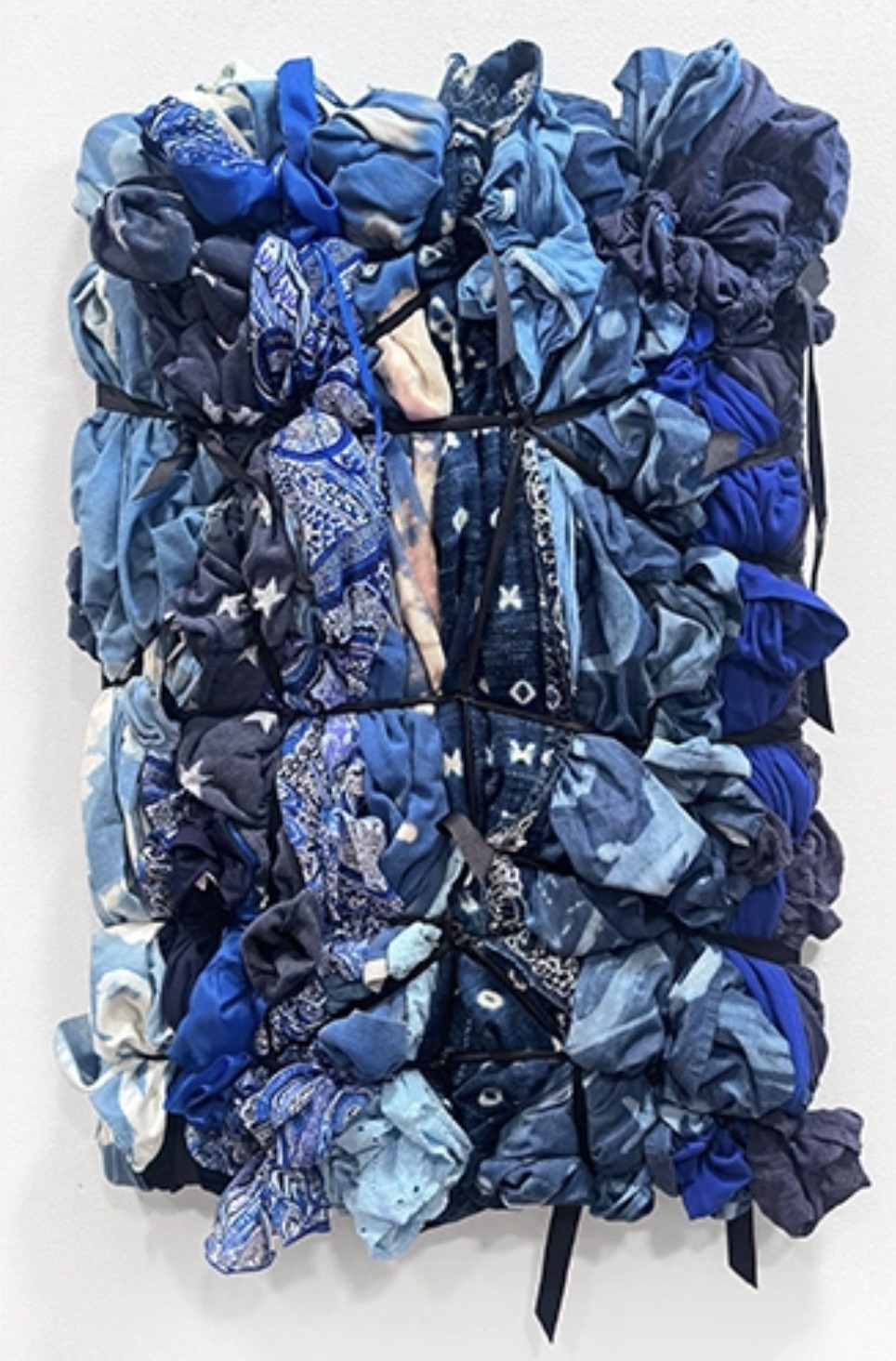
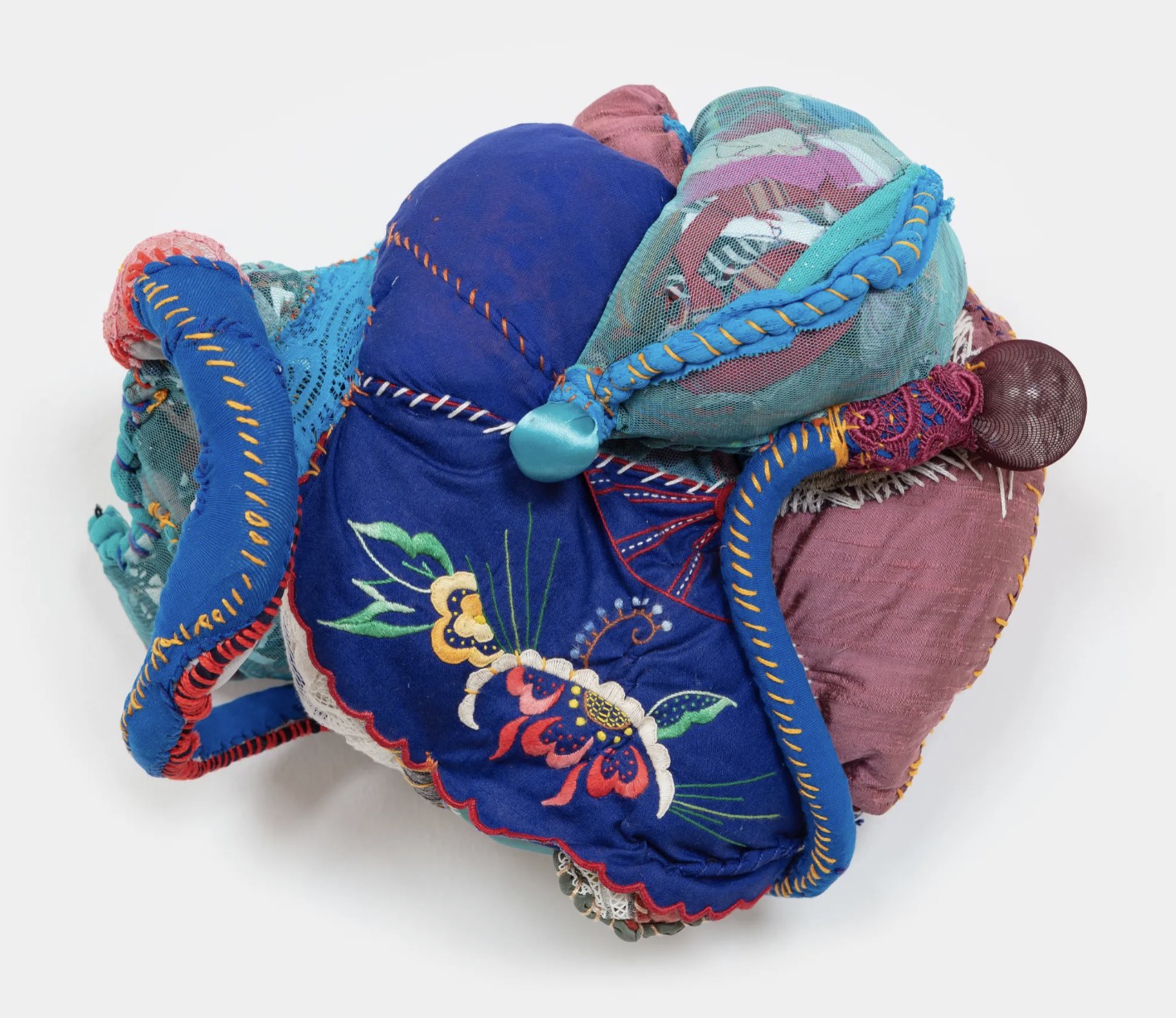
In this slide show, works by Shinique Smith (American, b. 1971) and Sonia Gomes (Brazilian, b. 1948) show two different approaches to reusing fabrics. Smith’s work gathering stars is included in the Santa Barbara Museum of Art’s current exhibition “Remixed: Entwined Histories and New Forms” (see below for details). She became interest in used clothing after reading an article about how thrift stores often ship large quantities of secondhand garments to Africa. In the work in this slide show, Smith combines a variety of blue fabrics, including donated clothing, her own garments, vintage African fabrics, and textiles she had used in previous performances, to conjure thoughts of night skies and falling stars. The variety of textures, apparent even in reproduction, and puffy bulges suggest that touching this sculpture would be as rewarding as looking at it.
Though Sonia Gomes showed an interest in art and craft as a child, she pursued a career in law when she grew up. Only at the age of 45 did she abandon that career to attend art school. Gomes uses found and gifted materials, both fabrics and other materials to create her sculptures. She considers her practice a critique of Brazil’s wasteful consumption and its destruction of its environmental abundance. The artist deconstructs her materials and tangles them together, finding new shapes, images, and meanings as the colors and textures interact.
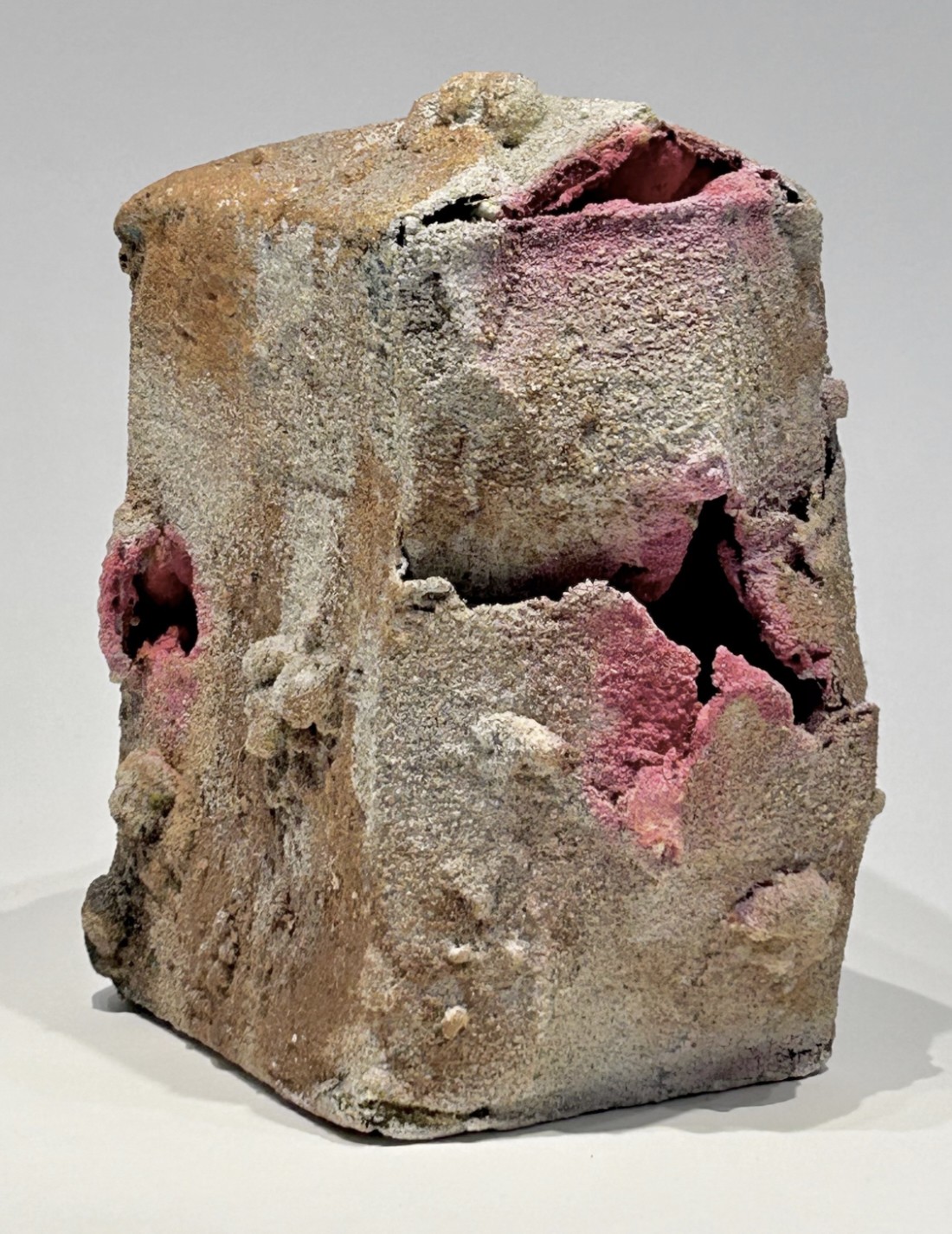
Mark Van Wagner (American, b. 1959) takes a unique approach to reusing materials. He has collected natural sand from all over the world and combines that with colored sand which he then applies to used cardboard boxes. The colors and sparkling grains of sand create a fascinating surface but the semi-collapsed boxes beneath hint at ongoing decay and one expects the object to collapse before one’s eyes.
“The implications of conflict and ruin are present but so are humor and restoration, providing a sense of intimacy and introspection for the embodied subject.” – Mark Van Wagner
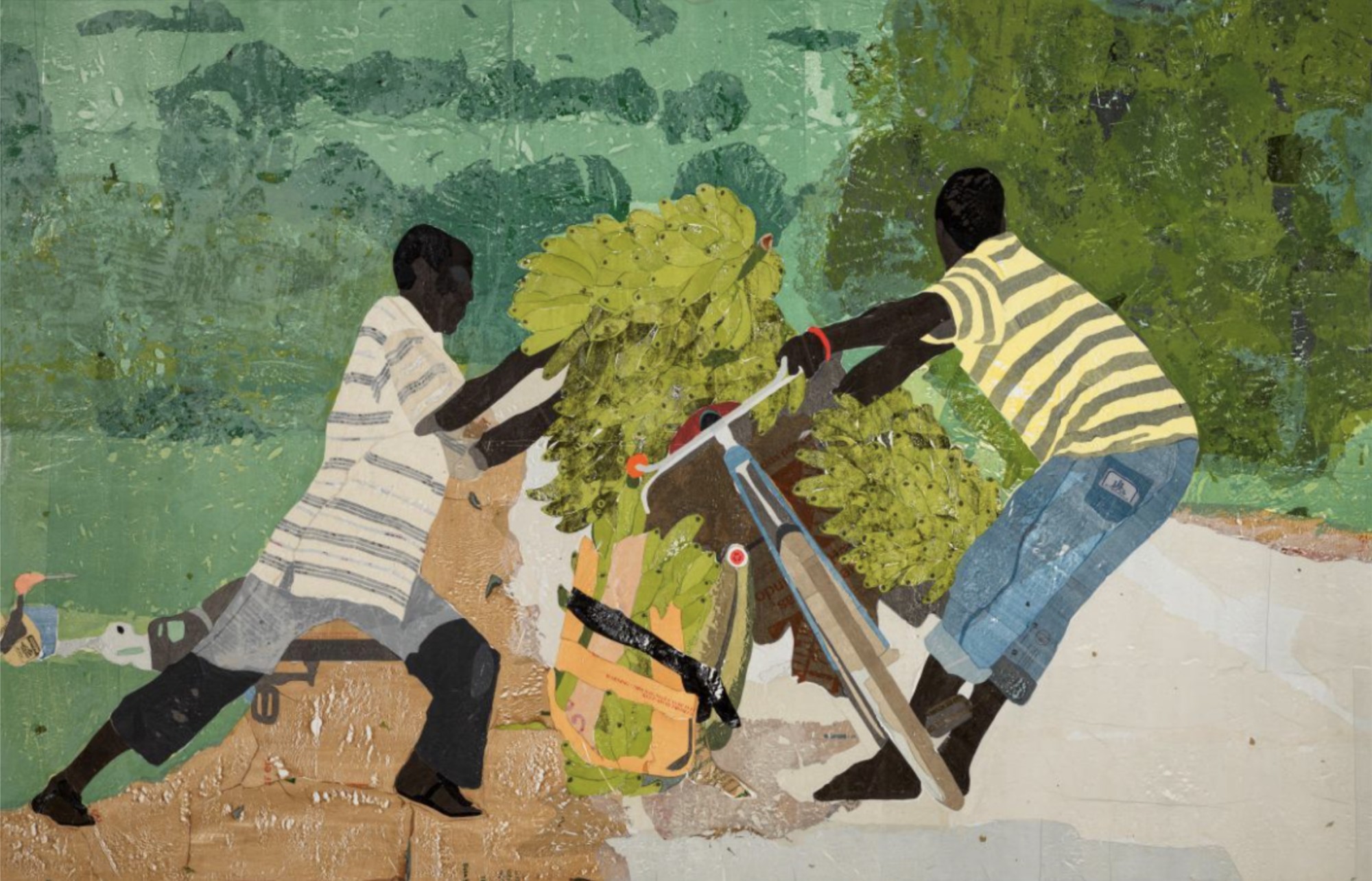
I close with three artists whose works incorporate plastic waste. Hugo McCloud (American, b. 1980) was the artist whose plastic “paintings” set me to collecting the names and works of artists who shared his interest in working with humble, discarded materials. McCloud collects plastic merchandise bags from around the world and cuts them into pieces which he applies to a wooden support using an electric iron to attach them to one another. McCloud’s subjects are drawn from the everyday lives of hard-working, often impoverished, people. In push pull, two young men struggle to right a bicycle carrying an unwieldy, large cargo of bananas.
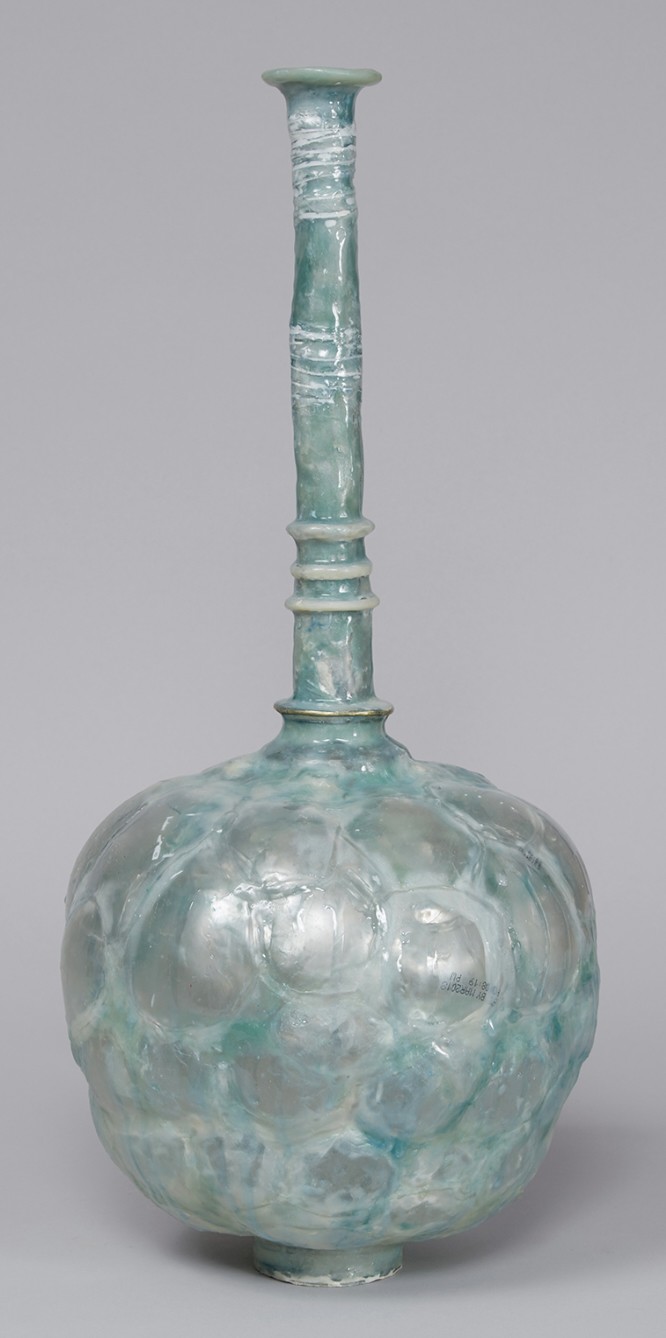
Like McCloud, Shari Mendelson (American, b. 1961) creates works which disguise their original materials, in her case, the ubiquitous clear plastic bottle. Mendelson cut apart plastic bottles, into curved shapes, decorative patterns and thin strips to create objects which mimic ancient vessels and sculptures. Acrylic resin, hot glue, and various pigments and other materials are combined with the plastics to create objects which look so like ancient glass, metal, and even clay, that it’s almost impossible to believe they began as ordinary plastic bottles.
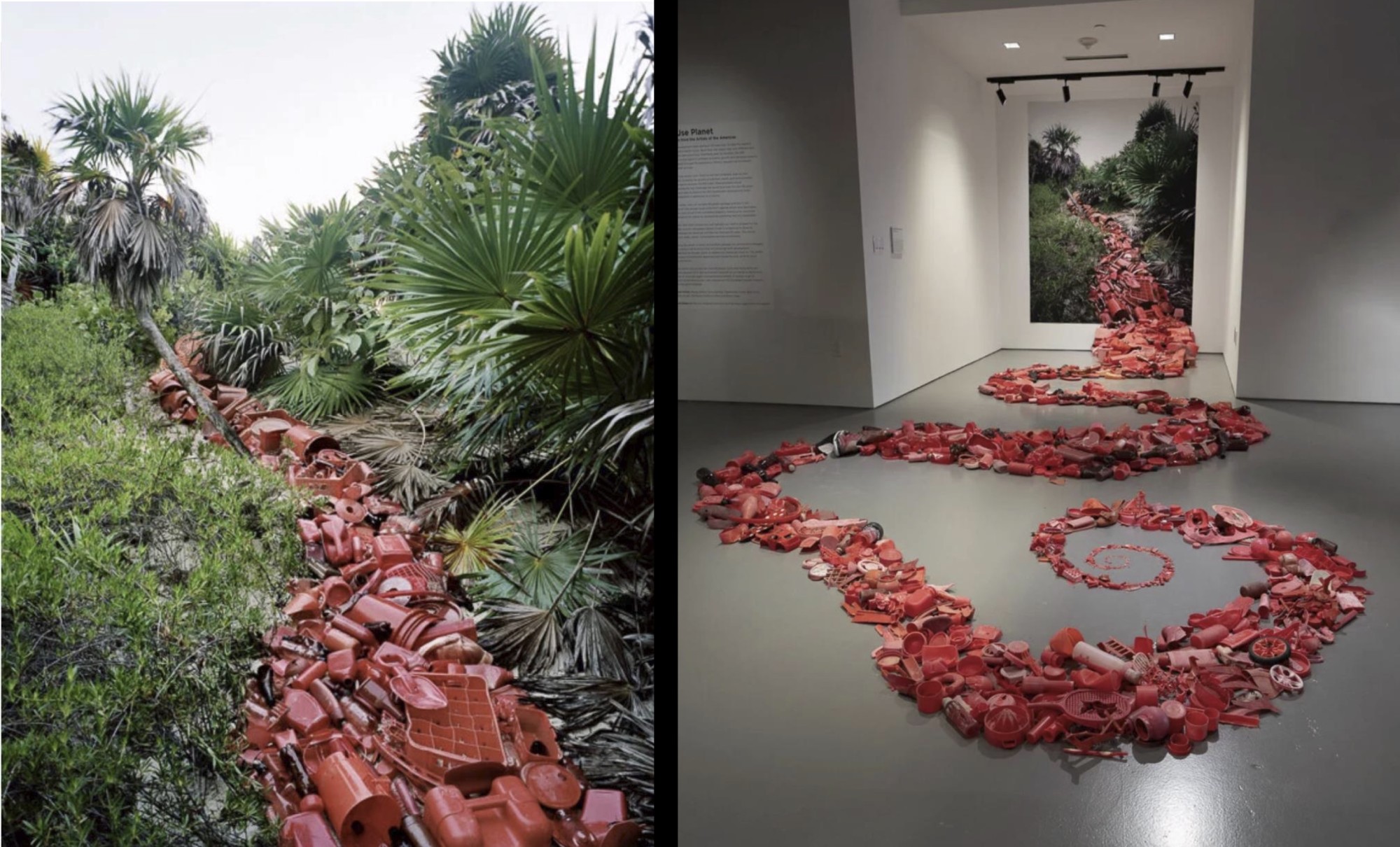
Unlike McCloud and Mendelson, Alejandro Durán (Mexican, b. 1974) does nothing to disguise the plastic he uses in his work. The artist’s long running project Washed Up: Transforming a Trashed Landscape involves collecting trash that washes ashore on the Caribbean beaches of Sian Ka’an, one of Mexico’s largest nature reserves and a UNESCO World Heritage Sites. Plastic trash from 58 nations and territories on six continents have appeared in those beaches, highlighting the global spread of the problem and the need for international cooperation is resolving the problem. Durán sorts the plastics by color and uses these to create arrangements in the landscape. These are photographed and are often displayed with more plastic which continues the arrangement in the landscape. This can be seen in the example in the slide show where the photographed landscape and the public display are shown side by side.
The challenges of unchecked consumerism, rampant waste, and environmental damage are highlighted by these works. For many of these artists and others like them, part of their purpose is to call attention to environmental issues but for others, the materials are chosen because of their association with their previous functions. No matter the original impulse, all of these works demonstrate how inspiration can be found in the most humble materials. As the curator of a recent Institute of Contemporary Art-San Francisco exhibition of reused materials Larry Ossei-Mensah said “These are all materials we recognize, but the artists have alchemized them.” (The Poetics of Dimensions) While appreciating the aesthetic character of that alchemy, we should also heed their messages.
++++++++++
Exhibition:
“Remixed: Entwined Histories & New Forms,” through August 30, 2026 at Santa Barbara Museum of Art, Santa Barbara, California, USA. sbma.net/exhibitions/remixed-entwined-histories-new-forms
Please share your comments and questions on Substack. LINK: irequireart.substack.com/p/viewing-room-51/comments
Longer captions may not be fully visible on smaller screens. We apologize for the inconvenience.
If the caption obscures part of the artwork, click on the image to turn off the caption.