Romare Bearden: How Life Can Triumph
By Laura Heyrman
"Painting is the act of discovery and you're constantly enlarging your horizon or finding yourself every time you paint." – Romare Bearden (American, 1911-1988)
Romare Bearden was a Renaissance Man. Known today as a visual artist and author, Bearden was successful in many areas. While in high school and college, he excelled in various sports. He played semi-professional baseball and on one occasion pitched against the great Satchel Paige. Later he was offered a contract with the professional Philadelphia Athletics team. Though details are not certain, the team either mistook the light-skinned Bearden for white or wanted him to pass as white. He declined the offer and completed his college education, graduating with degrees in science and education while also studying art. In the 1930s, Bearden was employed as a caseworker for the New York City Department of Social Services. He returned to this job from time to time when his art career was struggling. After serving in the Army during World War Two, Bearden attended the Sorbonne in Paris, studying philosophy and art history. The artist co-authored books about African-American contemporary art and art history later in his life. Bearden was also a songwriter; he cowrote Sea Breeze, which was recorded by Billie Eckstine and Dizzy Gillespie and wrote song lyrics for the 1960 play Star of the Morning by Loften Mitchell.
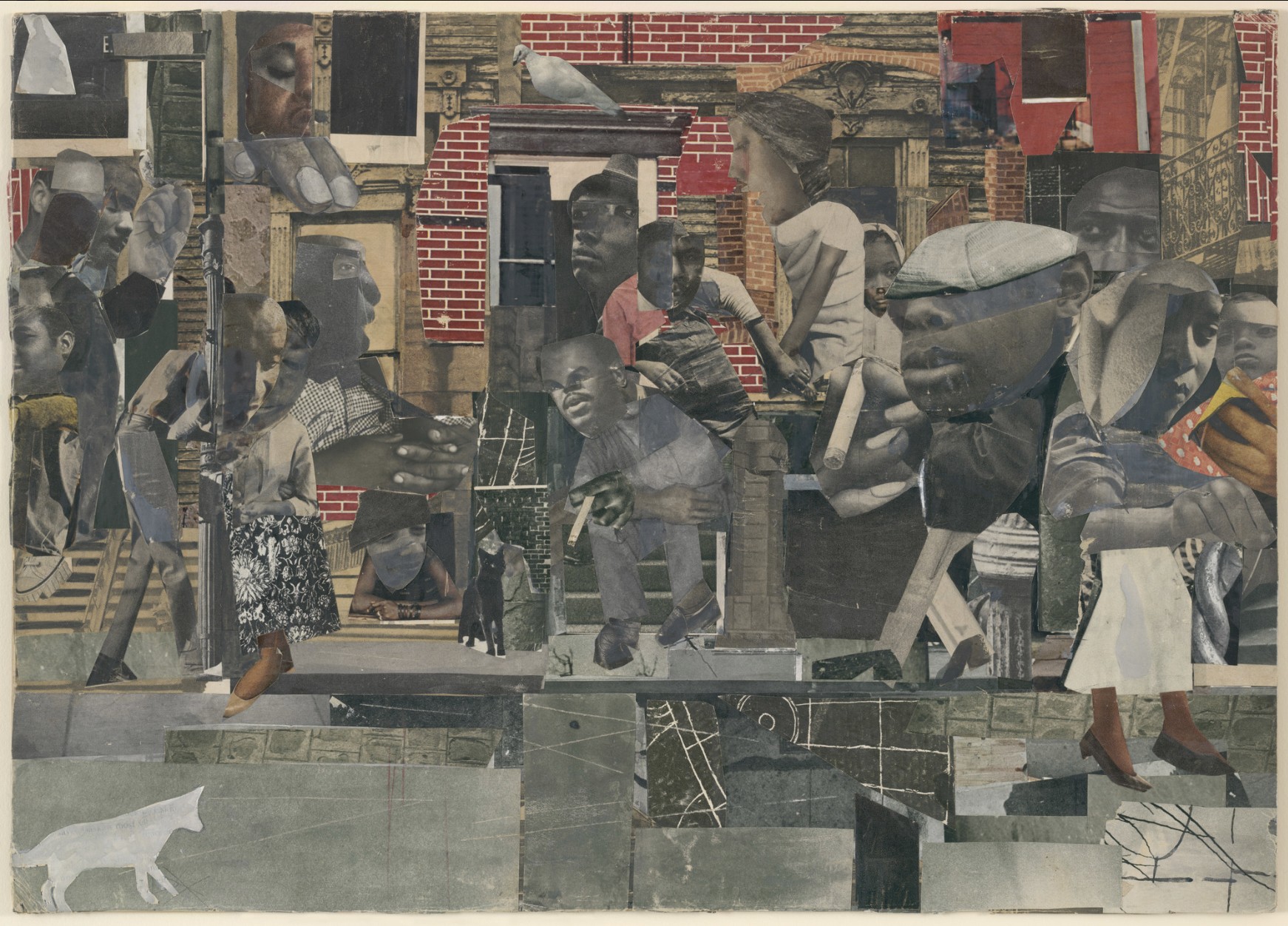
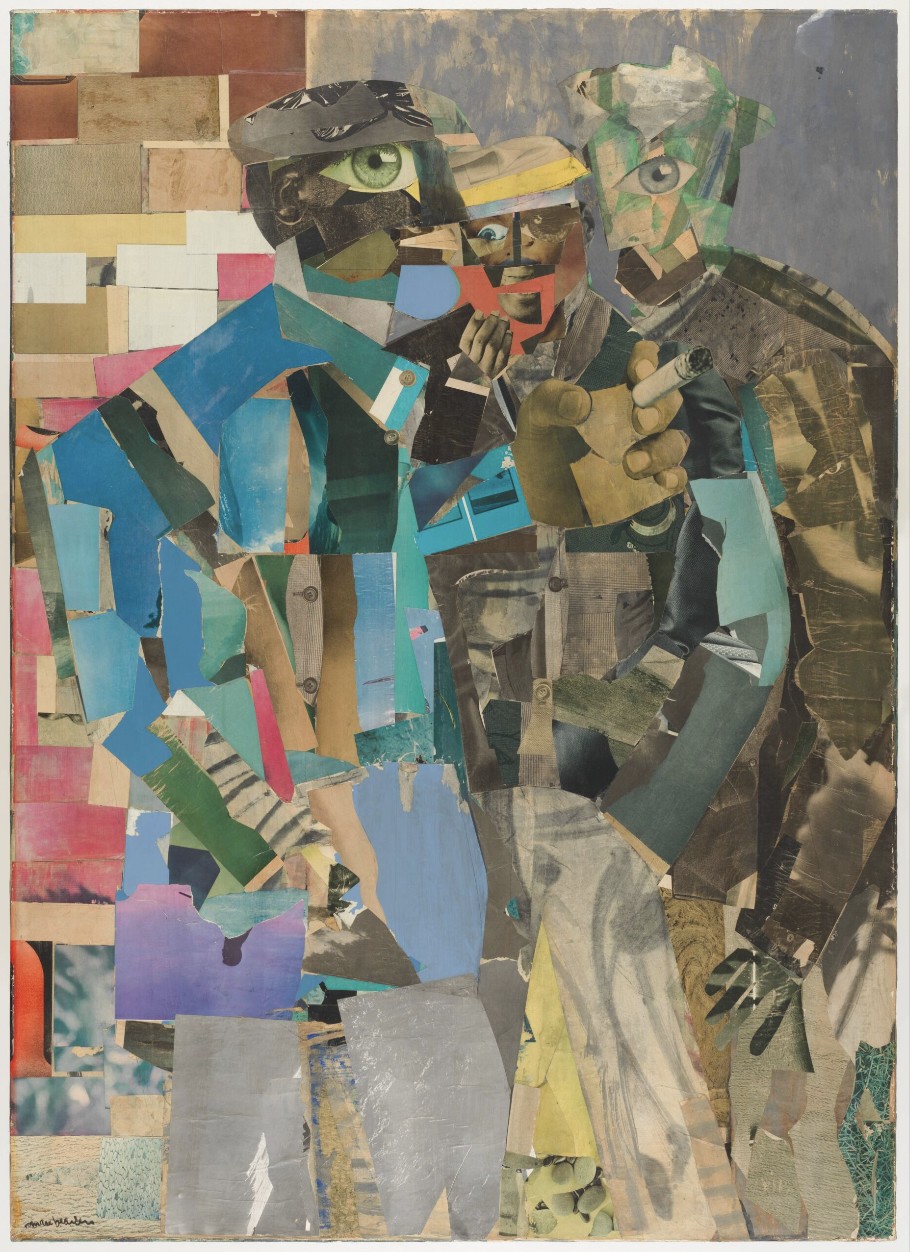
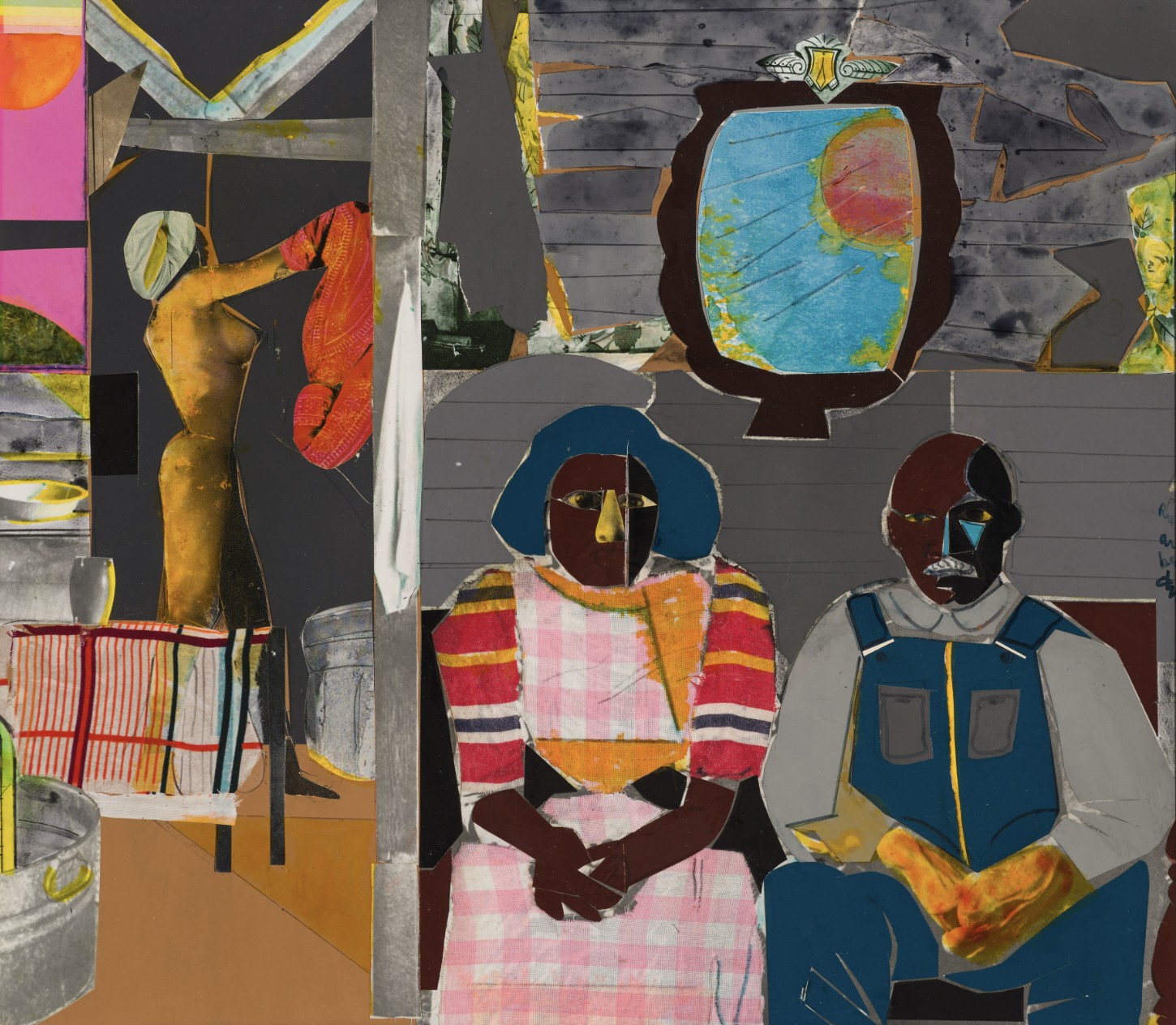
The artist gained his first gallery representation in the late 1940s where Bearden's early abstract paintings were exhibited but when he began to depict more representational and narrative images, the gallery withdrew its support. It was a time when the Abstract Expressionists were coming into favor Chance Encounters 23), but Bearden wanted to incorporate a greater sense of humanity and community into his works. During WW2, he had felt these were missing from society, so he chose subjects depicting unity and cooperation within African-American communities to express what he wanted to see more of in the world. Examples from this slide show include The Dove (1964), Three Men (1966-1967), and Before Dawn (1985). The artist was personally drawn to abstraction but felt that it was more important to depict the Black experience in a culture that often ignored the subject.
"It was not my aim to paint about the Negro in America in terms of propaganda. It is to depict the life of my people as I know it, passionately and dispassionately as Brueghel." – Romare Bearden
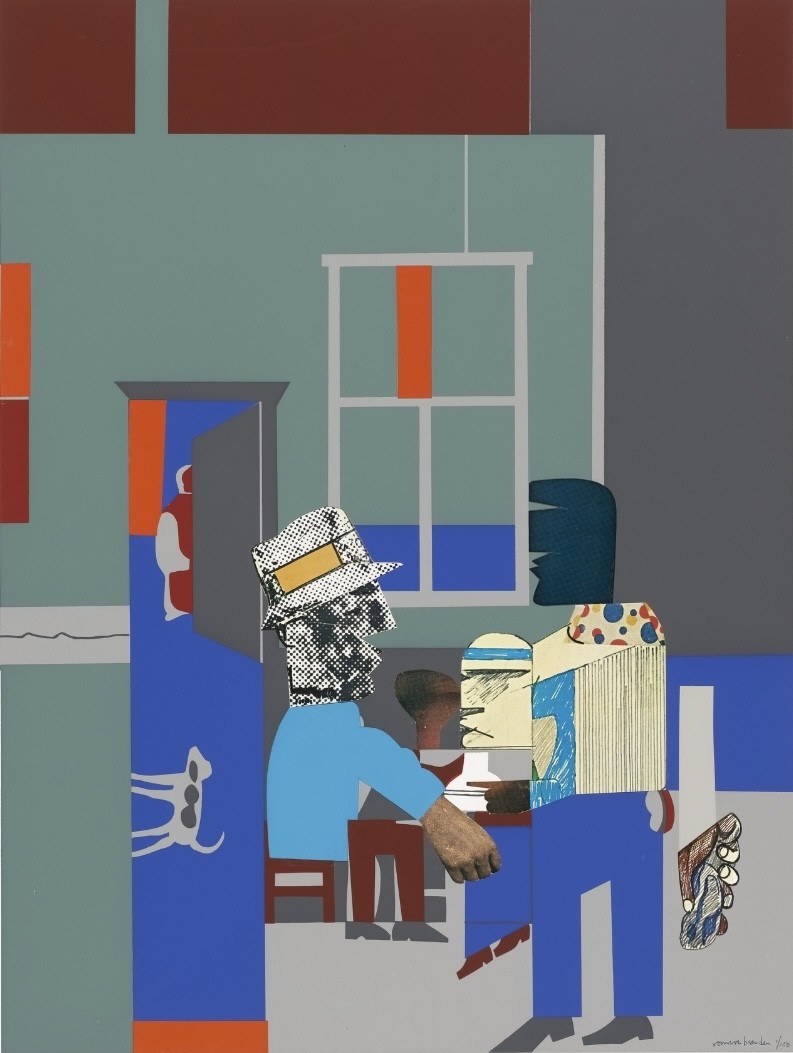
Bearden worked in a wide variety of media, focusing mostly on painting until he executed his first collages around 1963 or 1964. The artist was one of the first to employ glossy magazine paper in his collages. Such magazines were growing in popularity at the time and the glossy paper was easily cut and could be altered by applying paint or bleach, and could be textured by scraping with sandpaper or pointed tools. The first work in the slide show is The Dove from 1964. The title figure sits above a window in the center of the composition while the street below is busy with walking, sitting, and standing figures composed from varied source images. Collage as a free-standing art medium was introduced by Cubism’s founders Pablo Picasso and Georges Braque, so it’s not surprising to see the influence of Cubism in this and many of Bearden’s collages.
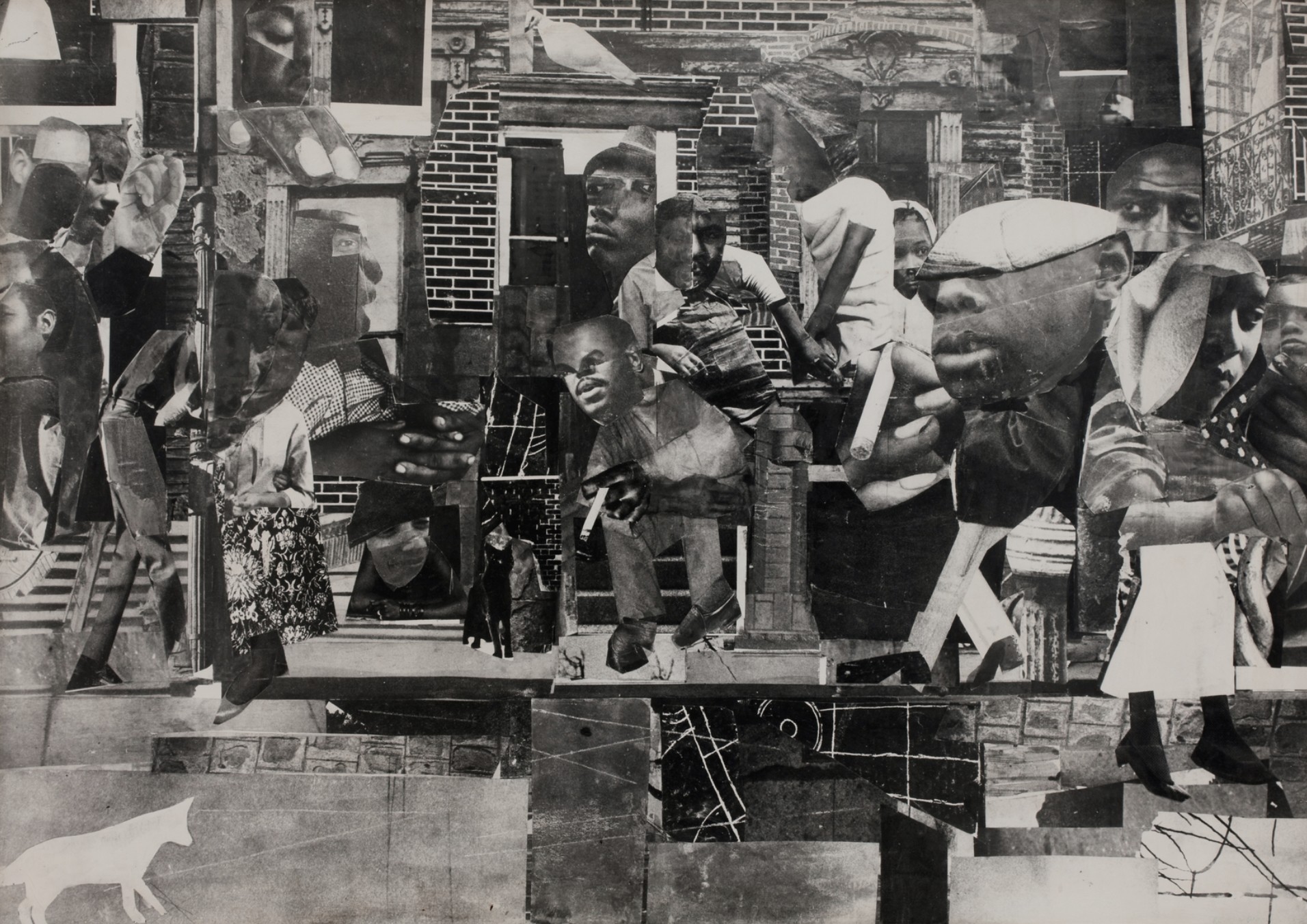
The Dove is typical of the artist’s earliest collages, busy with many small details and relatively small in size (13.4 x 18.8 in. l 33.8 x 47.5 cm.). To make these small works more accessible to viewers, Bearden used the Photostat process to copy and enlarge the images. The second slide below shows the larger (38.5 x 54.5 in. l 97.8 x 138.4 cm.) copy of The Dove. At more than twice the size of the original collage, the Photostat could be more easily exhibited. The disadvantage to the 1960s process was the shift from color to black and white; later Bearden sometimes created color photographic copies of his works. A 1964 exhibition of the first series of Photostats called Progressions was very successful and led to additional opportunities for the artist.
“Art is always made from other art, and you just have to find your place.” – Romare Bearden
As Bearden became comfortable with the collage technique, he sometimes produced larger works; Three Men (1966-1967) is almost 5 feet tall. This work also shows the artist using painted paper as well as printed materials. In this we see Bearden adapting the practice of Henri Matisse (French, 1869-1954) whose innovation known as cut-outs employed a collage-like technique to accommodate a disability in his later life. (Matisse was the subject of Viewing Room 52, published in April.)
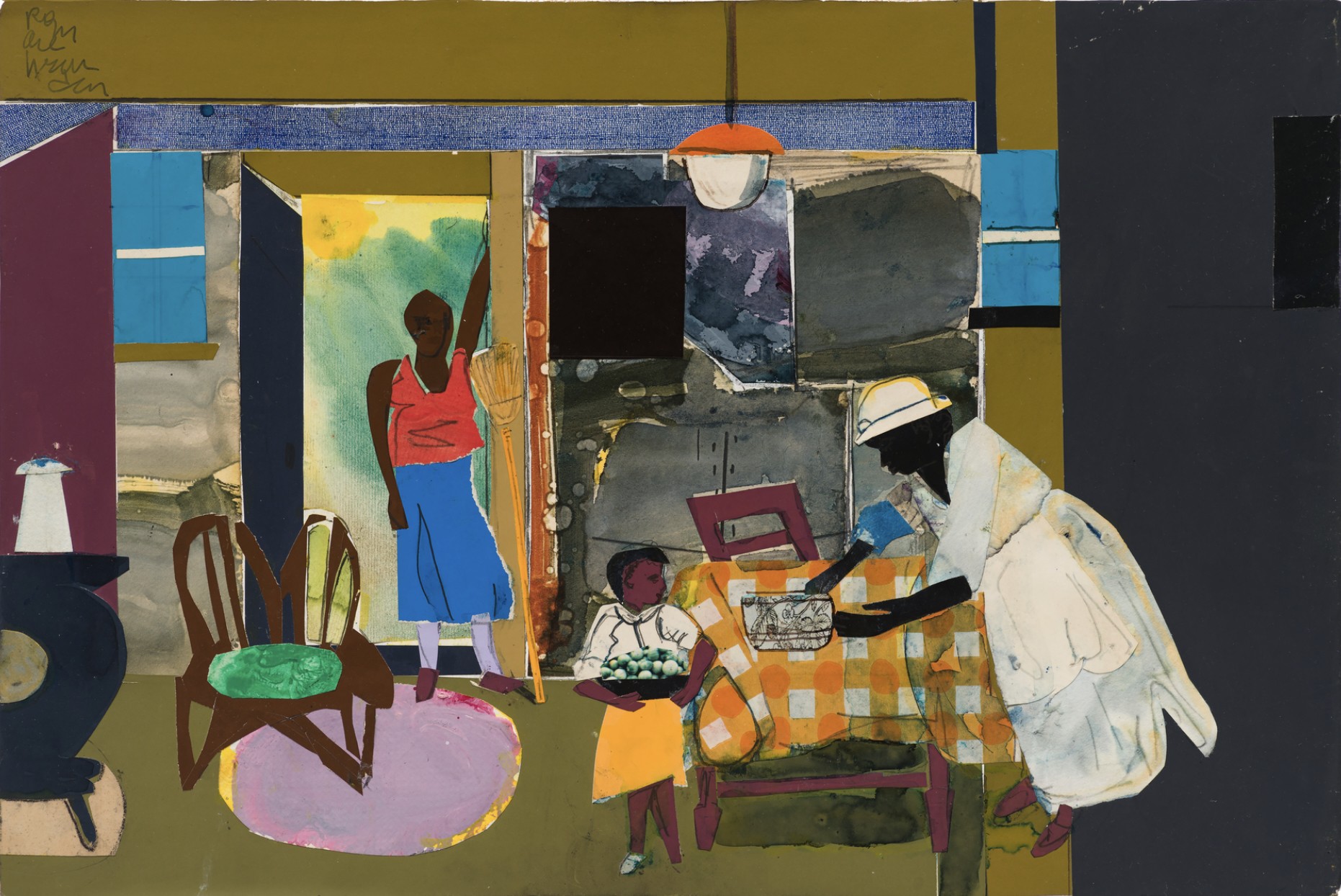
An important theme in Bearden’s body of work is his own childhood and family history. Works like This is a Morning in Mecklenburg County (1975) and Before Dawn (1985) depict the rural North Carolina community where Bearden’s family originated. Both works depict the daily routines which Bearden came to regard as universal rituals which bind together people of various cultures.
“I make every effort to give my works a universal character, and I feel that the meanings can be extended and reinforced by means of myth and ritual.” – Romare Bearden
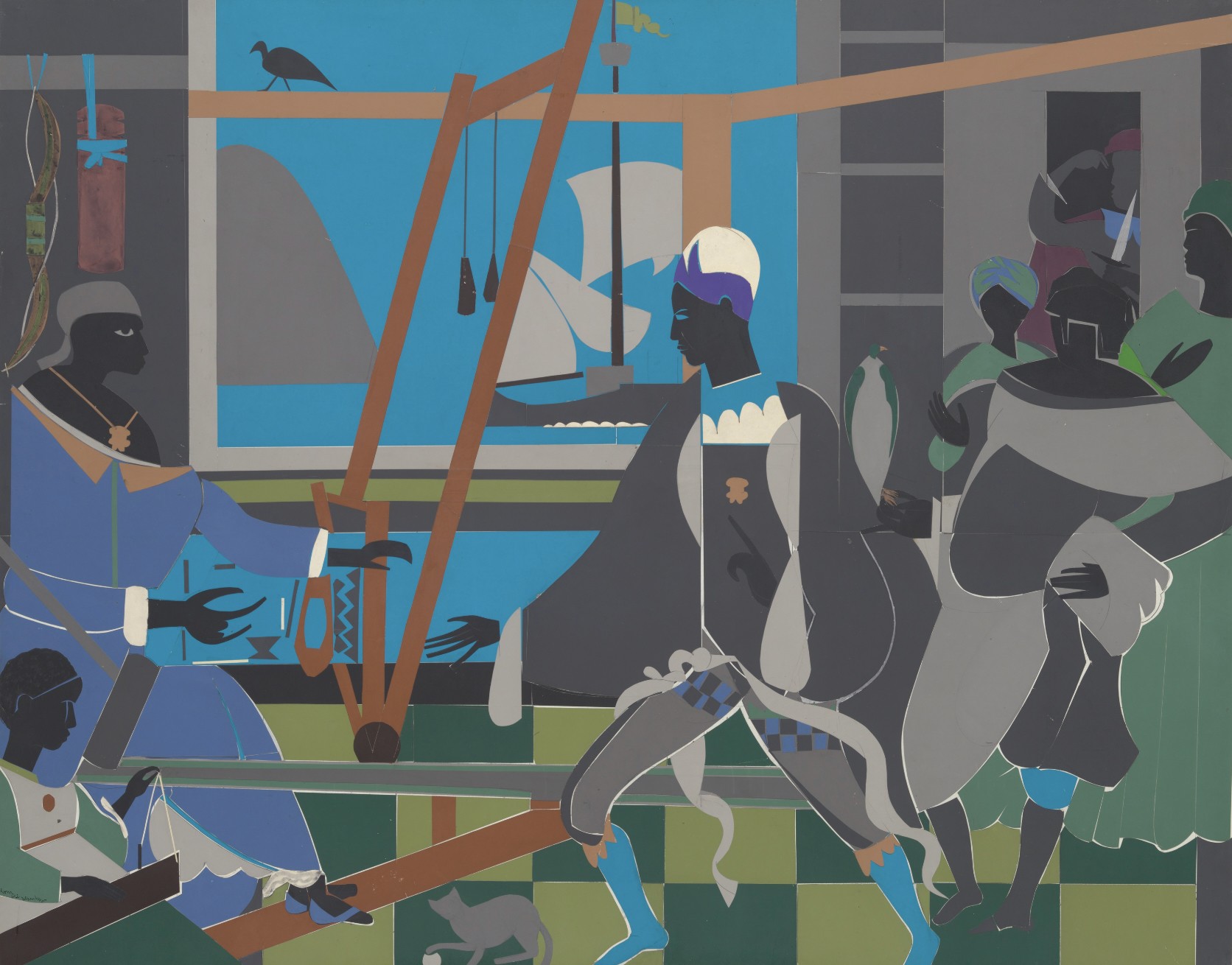
Bearden’s wide-ranging interest in and knowledge of art history led him to express his admiration for earlier artists from many periods and cultures by incorporating references to them in his art. In this slide show, The Return of Odysseus (1977) explicitly refers to the Italian Renaissance Pinturicchio and the African Kingdom of Benin in its subtitle. The composition is based on the Italian artist’s fresco Penelope and Her Suitors (c. 1509, now in the National Gallery, London). Benin had gained its independence in 1960 and Bearden’s use of Black characters in this collage is a multi-leveled reference to the American Civil Rights movement, Benin’s struggle for independence, and Odysseus’ struggles to return home after the Trojan War.
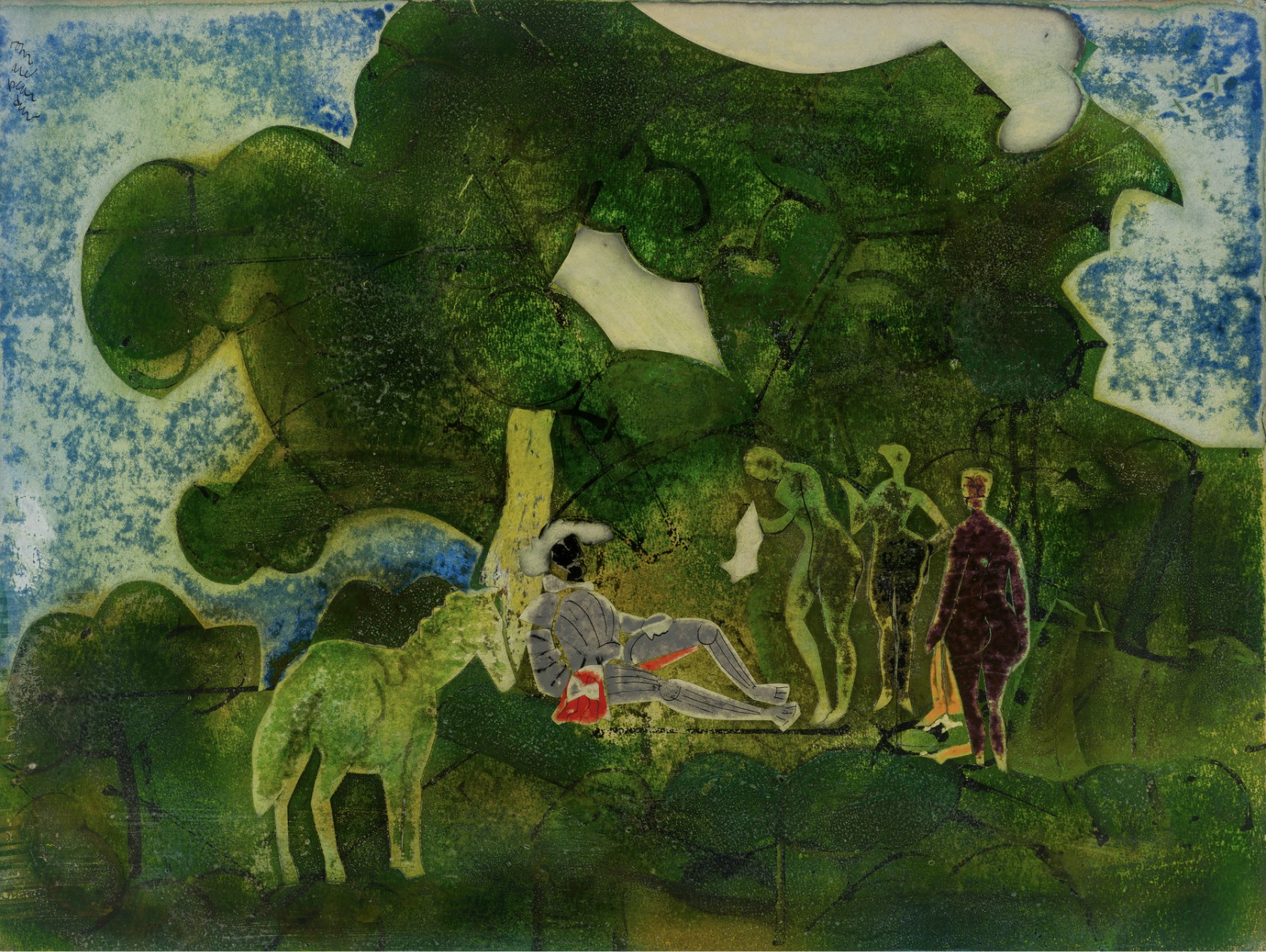
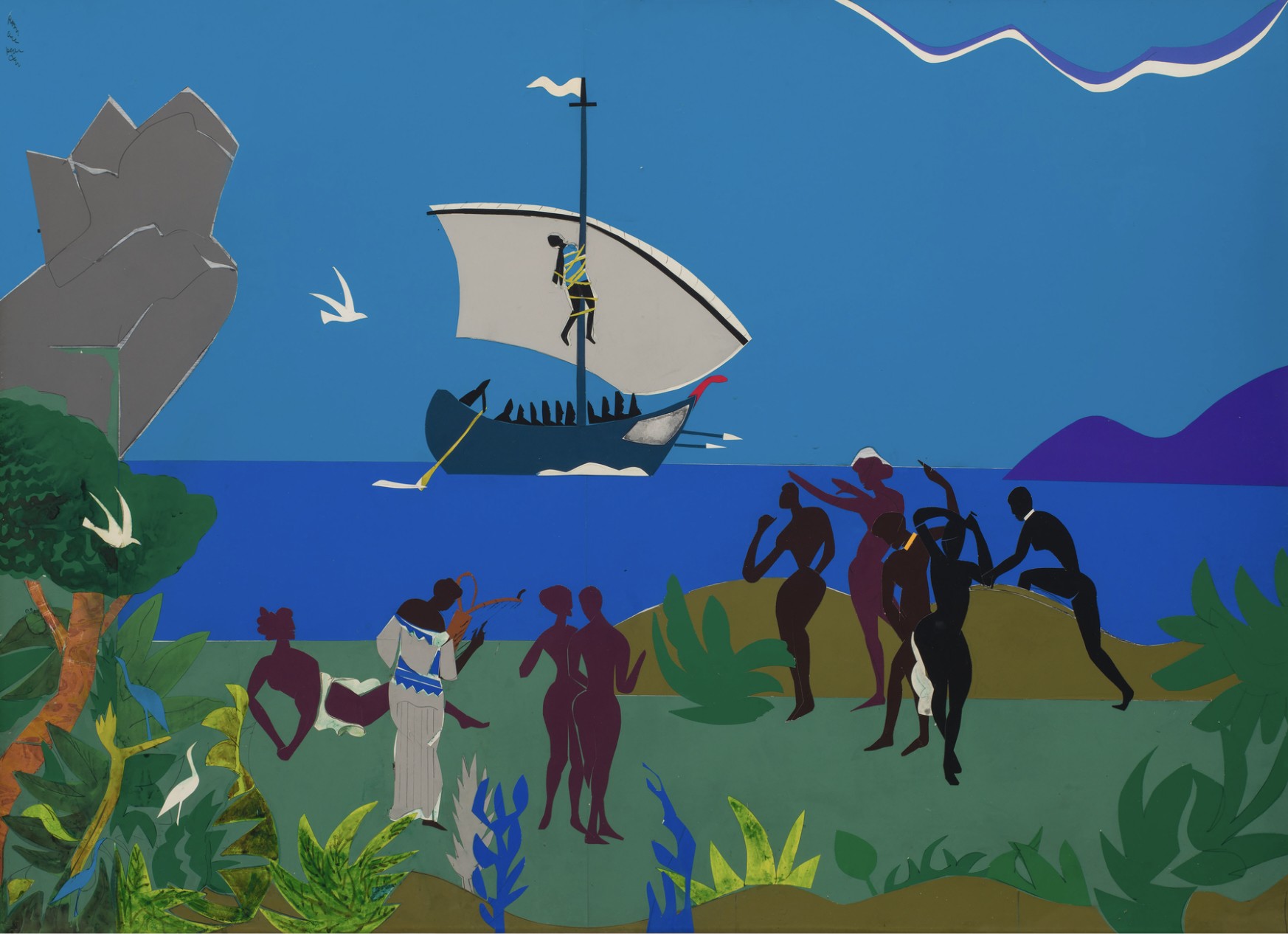
The Homeric epics of The Iliad and The Odyssey served as subject matter for Bearden at different stages of his career, in part because he saw them as representing universal human experiences. The Return of Odysseus is part of the 1977 series of collages based on the latter poem, of which The Siren’s Song in this slide show is also a part. The artist had already completed a series of paintings based on The Iliad in 1946. A few years before the Odyssey series, Bearden had made the collage Before Troy in 1973. This work, included in the slide show, seems to represent the Judgment of Paris, an event which led to the Trojan War. Paris, a prince of Troy, was tasked by Zeus with awarding a golden apple to the most beautiful of three Greek goddesses. In the collage, the reclining gray figure of Paris appear to be receiving the gifts offered by the standing contestants.
"The artist has to be something like a whale swimming with his mouth wide open, absorbing everything until he has what he really needs." – Romare Bearden
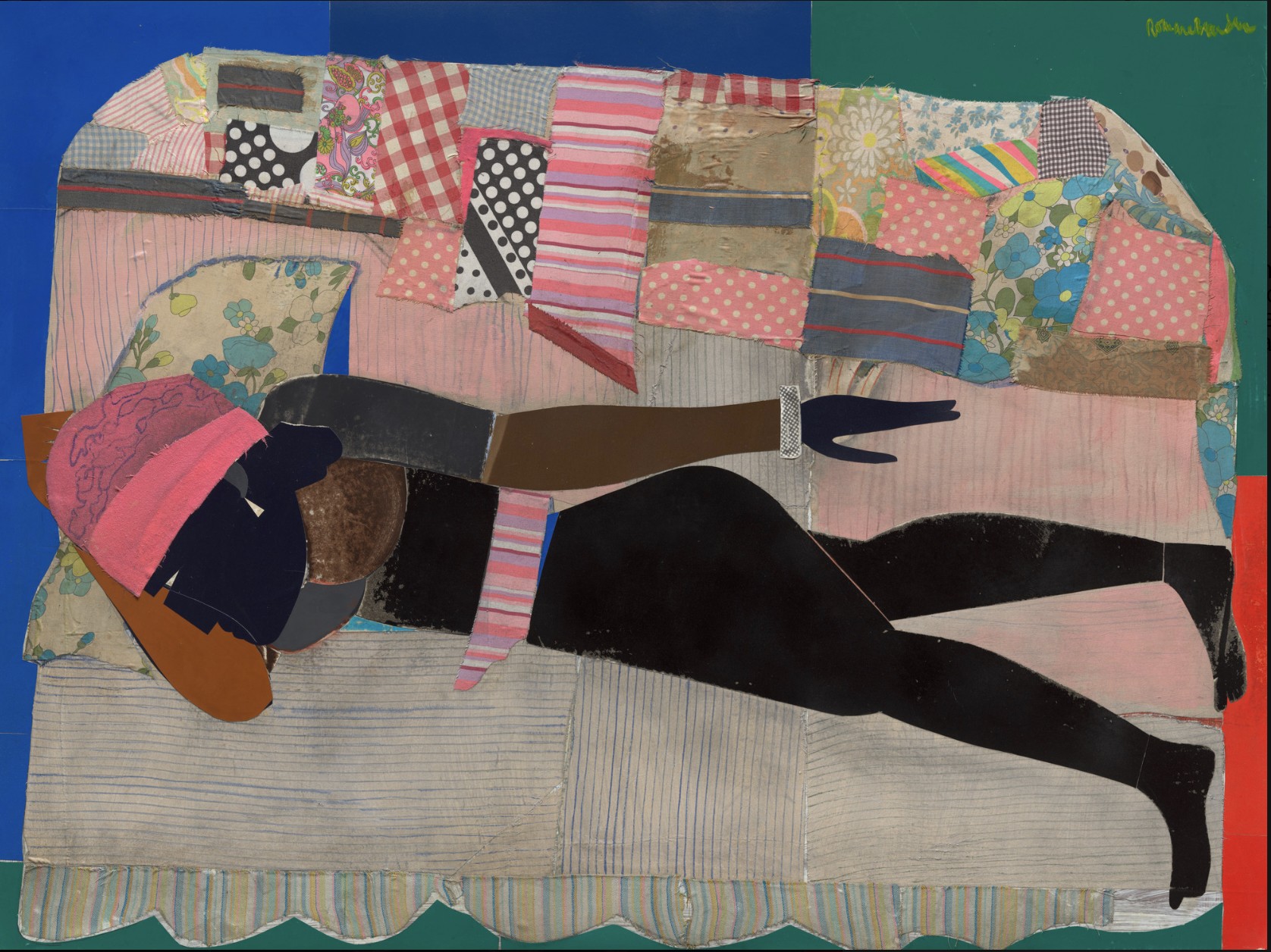
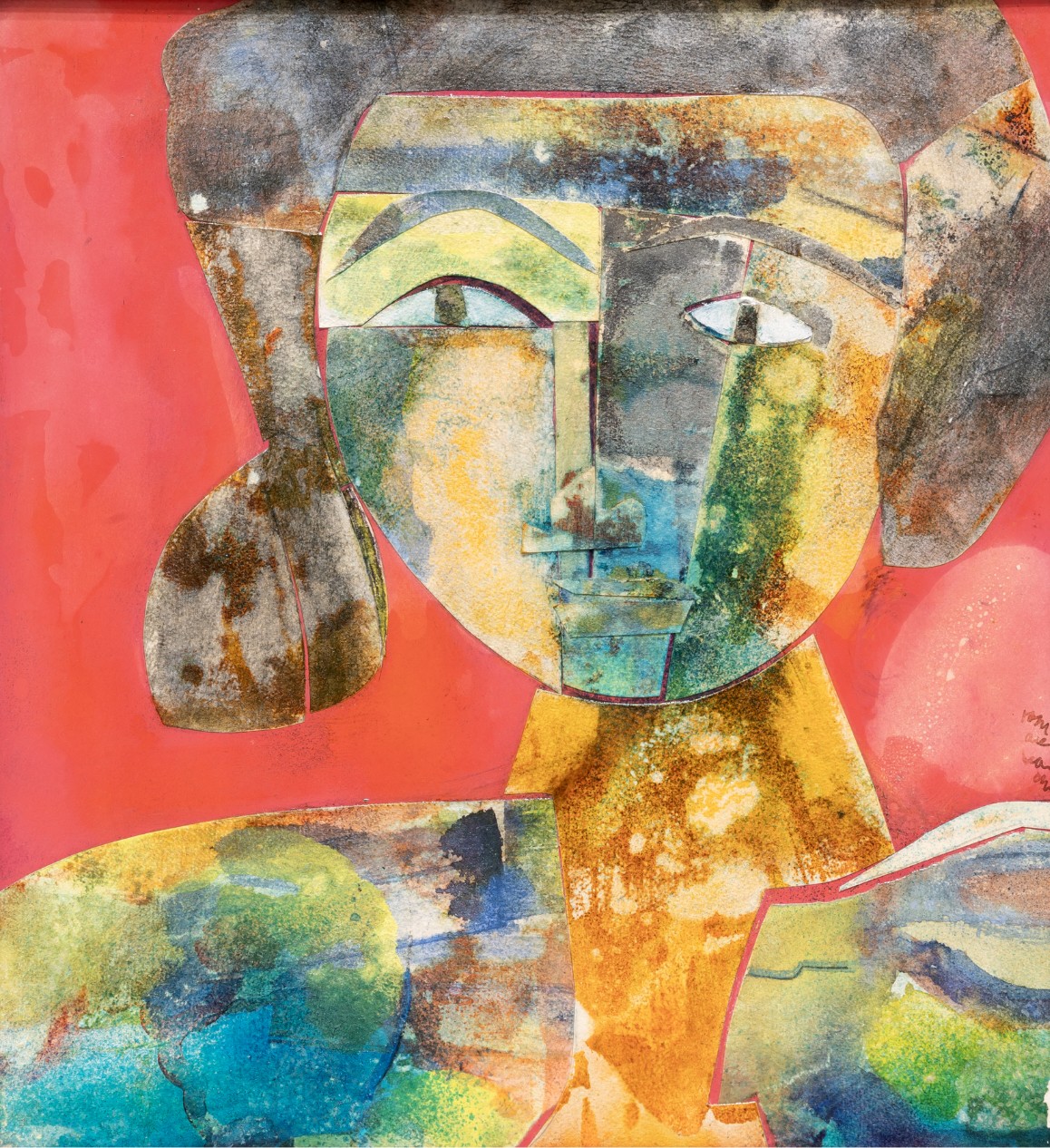
Before Troy appears more painting than collage, as large pieces of painted paper make up the background and smaller pieces of painted paper depict the figures. Bearden never confined himself to a single approach to collage. He applied collage elements to oil paintings, silkscreen and other types of prints, and used collages as studies for tapestries and mosaics. The artist also included diverse materials in his collages; photographs were used in addition to printed images, along with brightly colored papers and fabric scraps. Inks, watercolors, gouache, and acrylic paints might be applied over the collage elements. Whatever the artist felt would intensify the narrative and visual power of his work was pulled into Bearden’s studio.
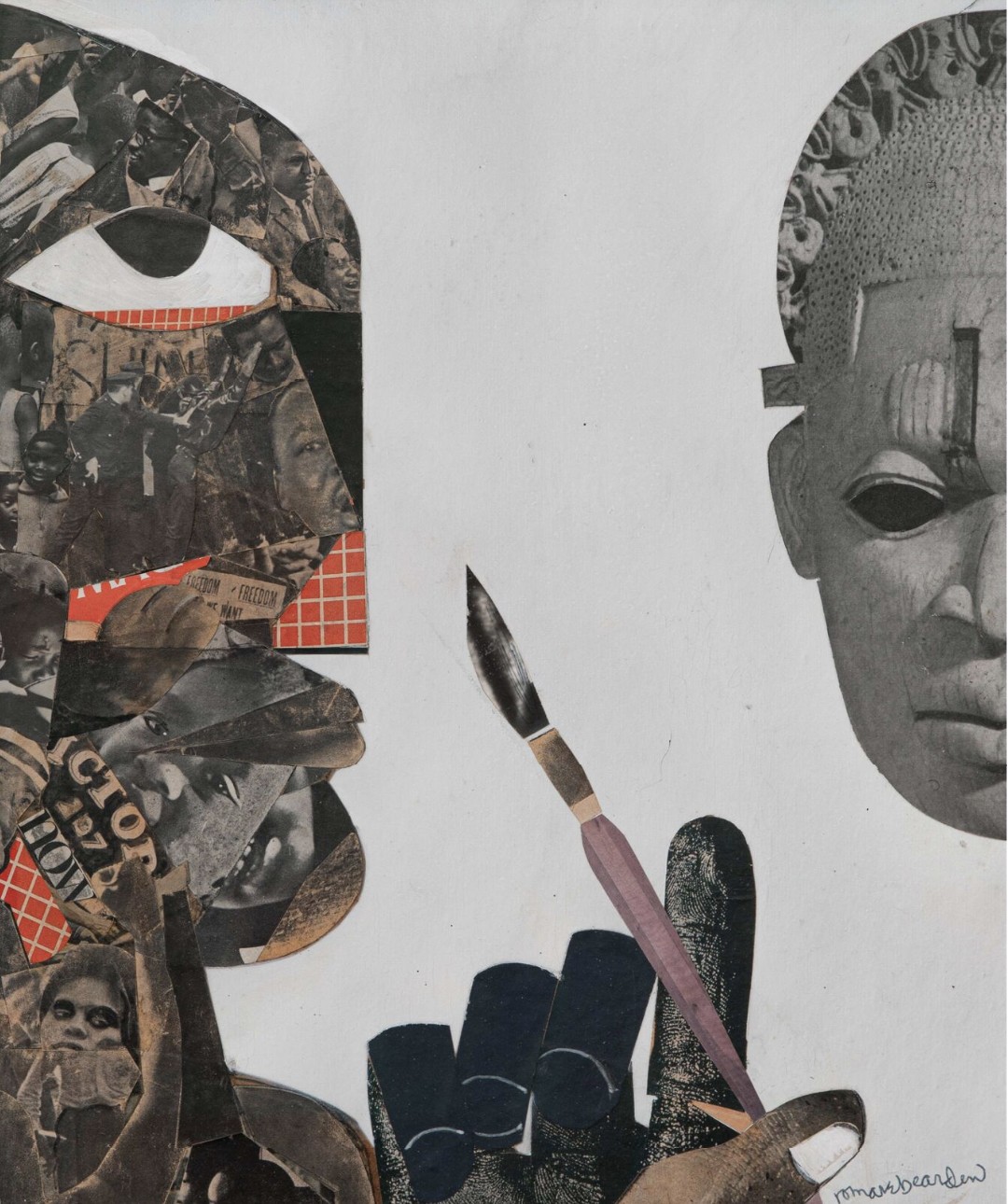
This Viewing Room focuses on collage because it is the medium on which Bearden spent so much of his creative energy. For the artist, the collage technique symbolized “the coming together of tradition and communities.” Romare Bearden’s art combines the artist’s desire to share his experience of the world as a Black man and his recognition of the universality of human experiences.
"I want to see how life can triumph." – Romare Bearden
Exhibition:
Romare Bearden: Figure in Collage, through June 28, 2026 at DC Moore Gallery, 535 West 22nd Street, New York, New York, USA. dcmooregallery.com/exhibitions/romare-bearden-figure-in-collage
Please share your comments and questions on Substack. irequireart.substack.com/p/viewing-room-52/comments
Longer captions may not be fully visible on smaller screens. We apologize for the inconvenience.
If the caption obscures part of the artwork, click on the image to turn off the caption.