Rodney McMillian: History is Always Present
By Laura Heyrman
Rodney McMillian (American, b. 1969) is the subject of two current exhibitions and another upcoming. (see below) An African American artist who creates installations, videos, sculptures, and paintings, McMillian communicates the visible and invisible forces that shape peoples’ lives, especially the lives of African Americans. The artist is determined to use his art to increase awareness of racial and socioeconomic injustice, while embedding his ideas in aesthetically complex objects.
"There needs to be a deep rooting out – of the racism, of the inequalities, of the brutality – that is plaguing this land." – Rodney McMillian
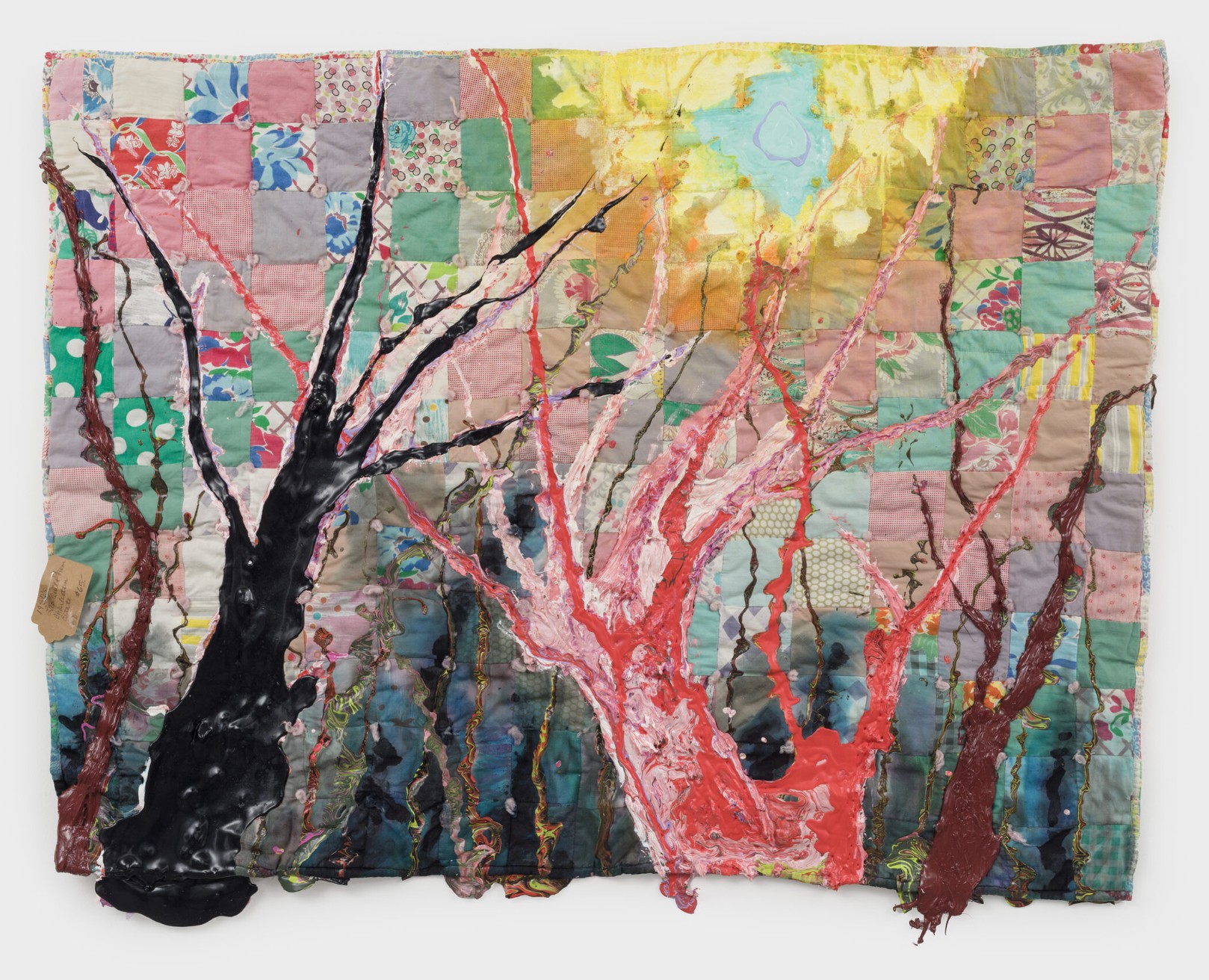
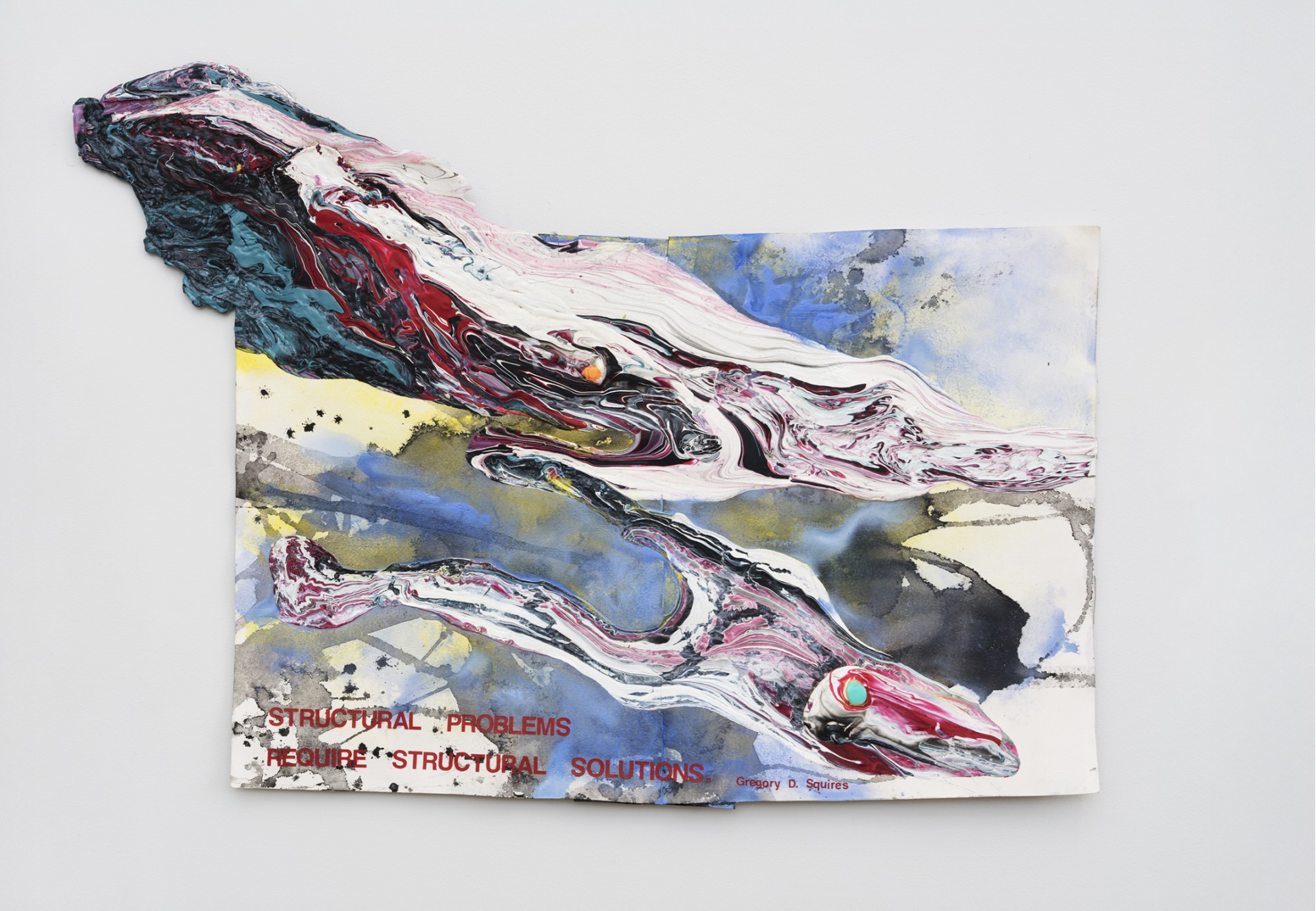
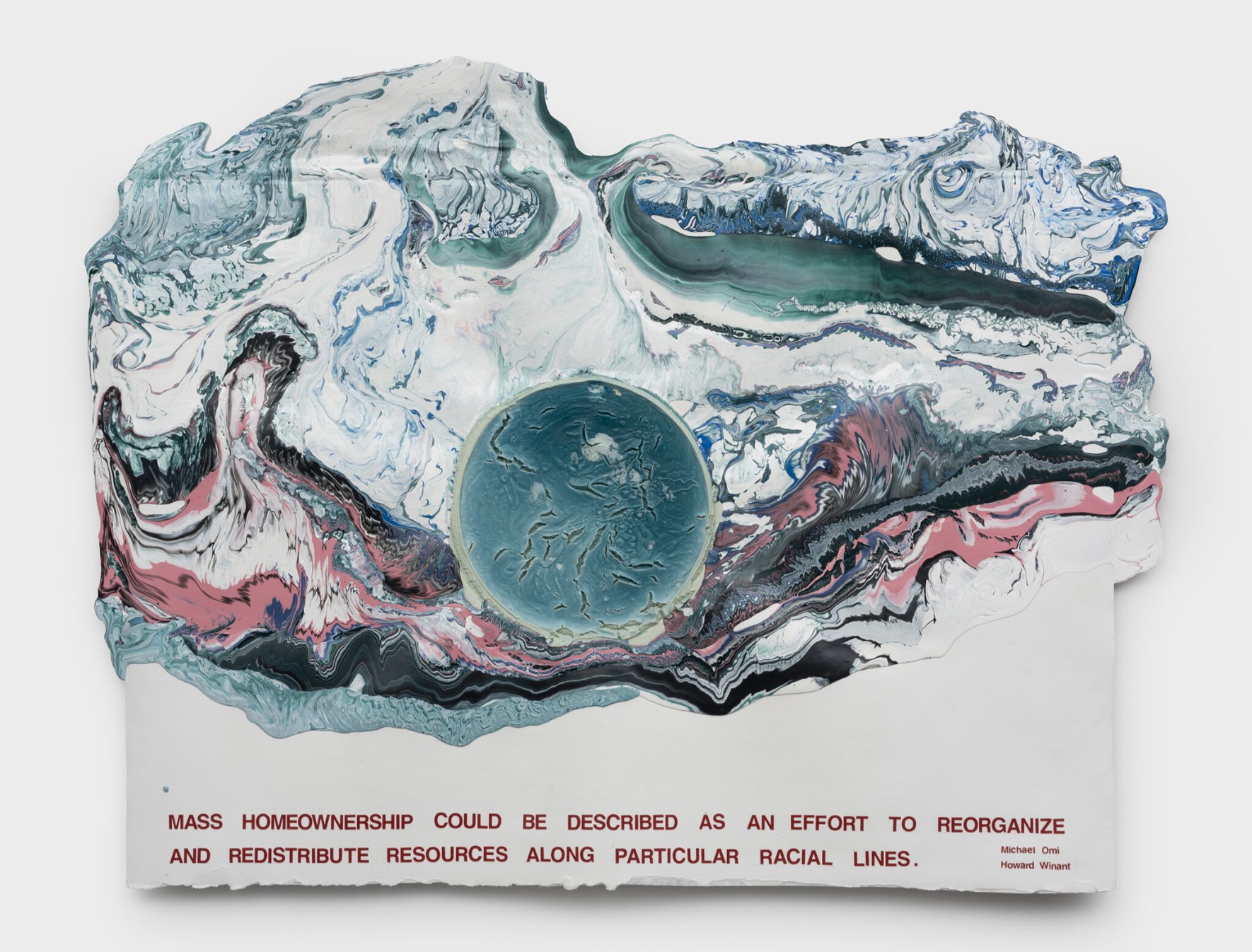
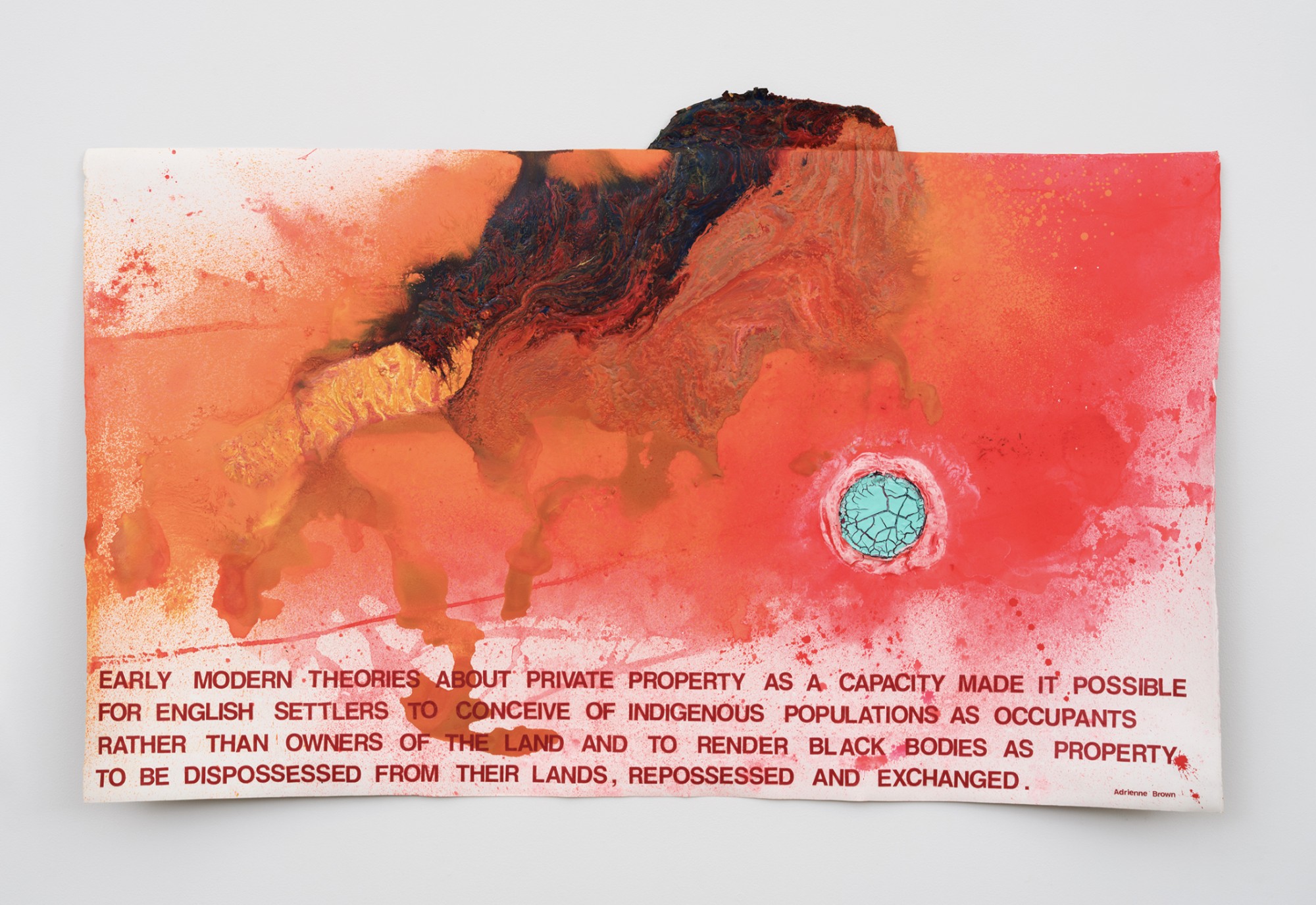
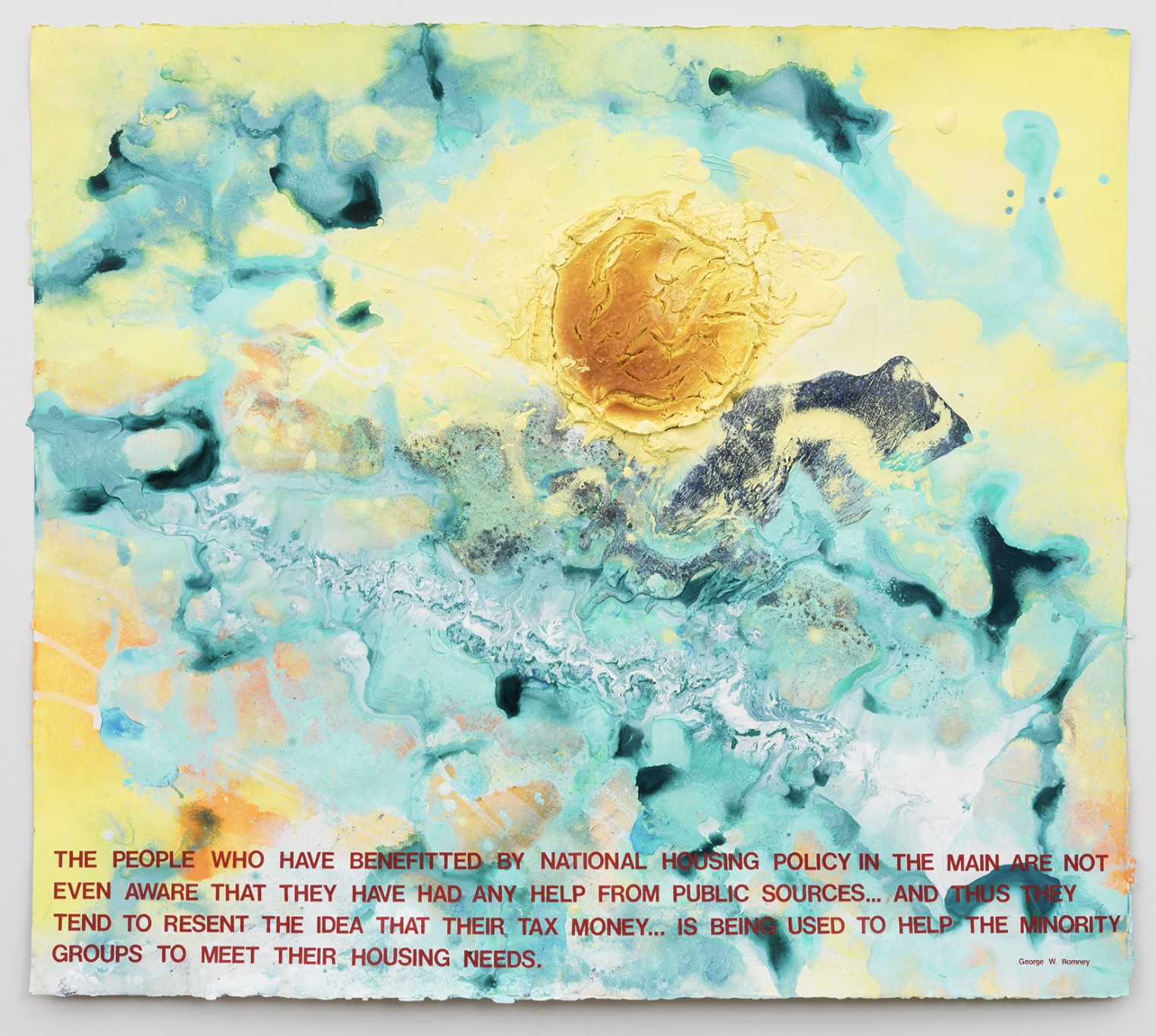
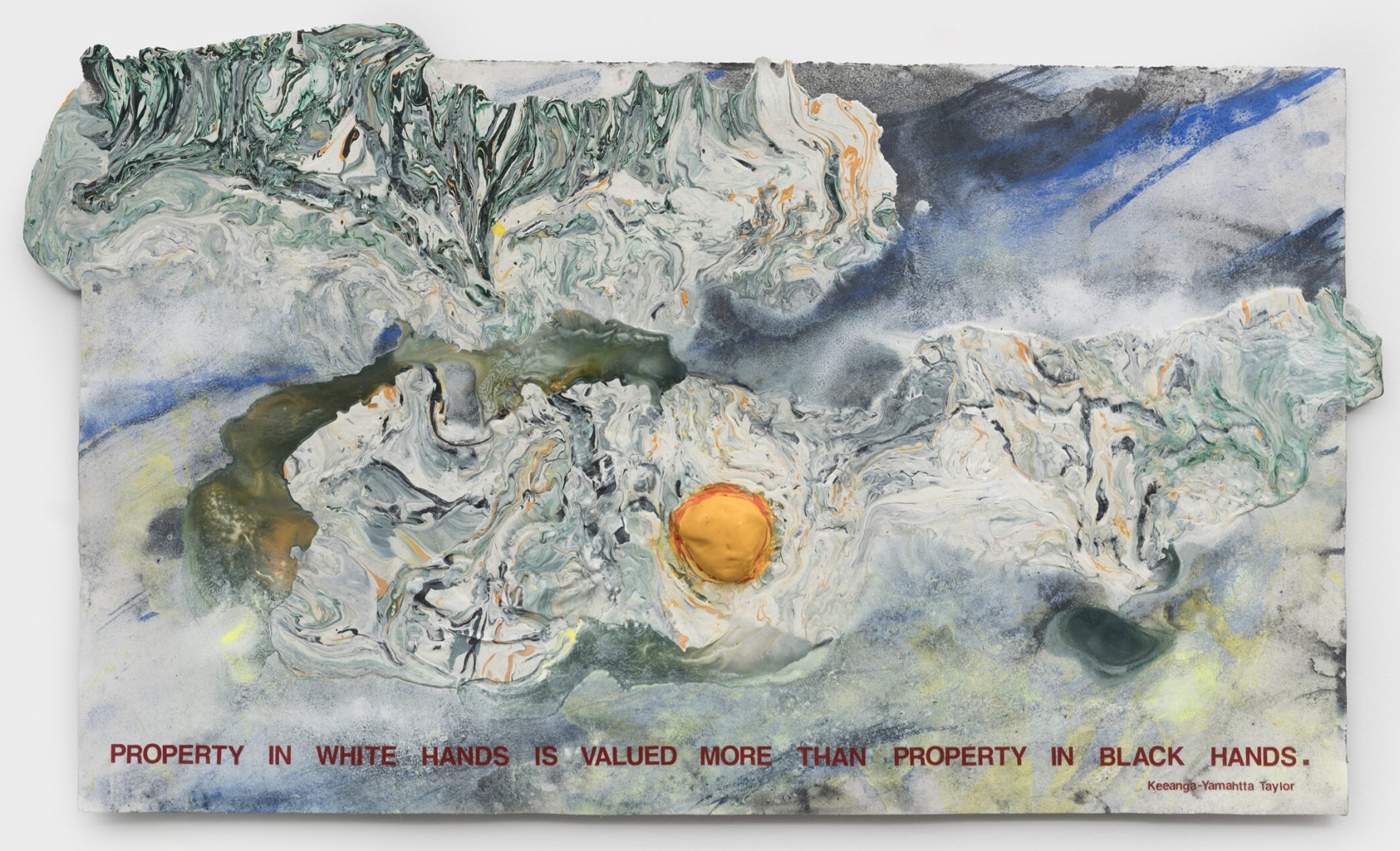
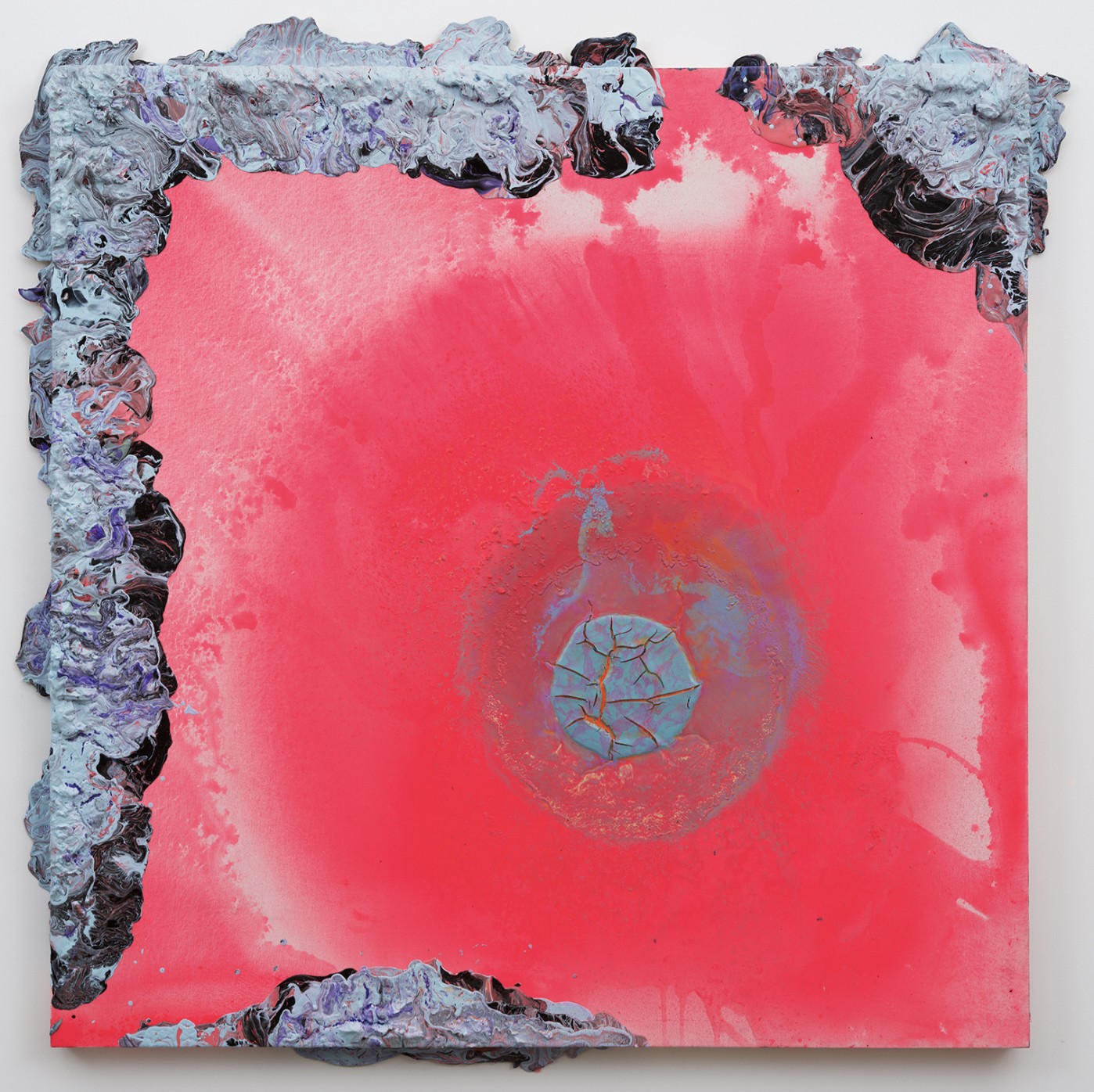
This slide show focuses on works from McMillian’s current exhibition at Vielmetter Los Angeles, entitled Some lives in the sunshine. Comprised of recent paintings, works on paper, and sculptures, this exhibition is centered on the artist’s study of discriminatory real estate practices in the United States. A series of works on paper combines expressively painted landscapes with quotations taken from books and speeches that the artist read as he researched the topic of redlining and predatory lending. In these paintings, McMillian’s political message is more explicit than in some other works but before you ever notice the text, the painter lures you in with vivid colors and flowing swaths of paint.
In addition to the inspiration McMillian finds in studying history, he has been influenced by science fiction, especially the works of Octavia Butler and Ursula K. LeGuin who explored nonlinear time and different ways of living with race, class, and gender. The late musician Prince is also a role model for the artist, who admires the musician’s wide-ranging skills on multiple instruments and his versatility as a communicator using his music. McMillian spent his graduate student years developing his abilities in multiple mediums in order to remove any limits on his own ability to communicate.
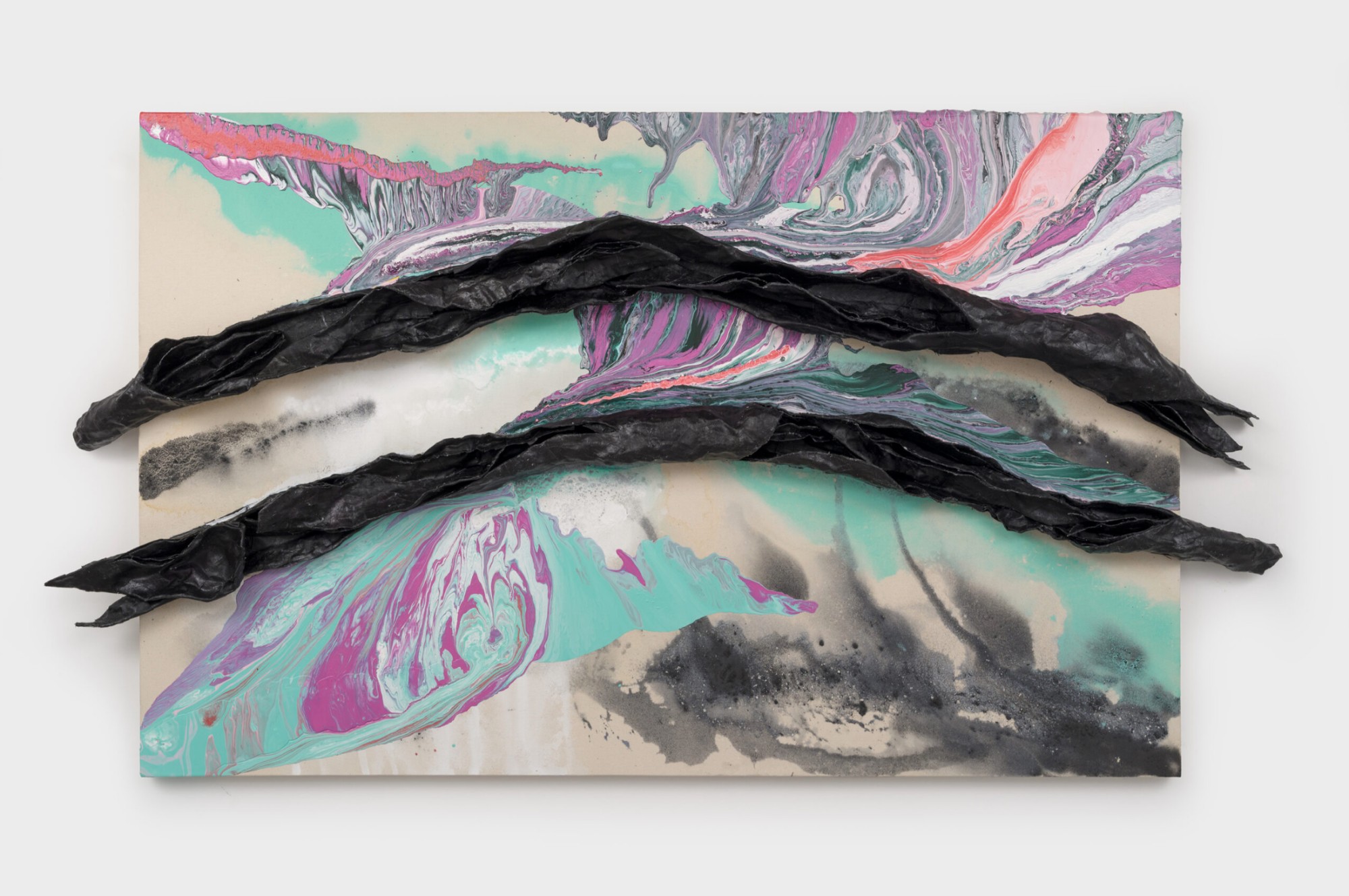
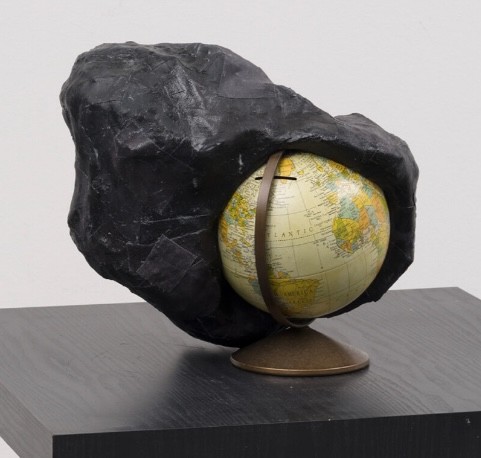
McMillian often uses unexpected materials in his works, including discarded furnishings, blankets and bedding acquired in thrift shops, found objects, and roughly handmade elements. Two sculptures included in this slide show began with piggy banks to which McMillian added protrusions made from chicken wire and fabric painted black. In the object created from a bank in the shape of a globe, the black form has begun to envelop the planet, reminding me of McMillian’s interest in science fiction. The black forms are a feature of many of the artist’s sculptures, intruding into chairs, cabinets and even some paintings. They often appear to be malignant growths, perhaps a manifestation of the blight which racism casts over the lives of its victims.
In McMillian’s paintings, whether on paper, canvas, or thrift shop sheets and blankets, the artist pours latex and acrylic paints over the support. The effects vary from fairly controlled to almost chaotic. One recognizes a connection between his technique and that of Abstract Expressionists like Jackson Pollock and Helen Frankenthaler, but McMillian’s goals are far from the intensely personal self-expression that was at the heart of the earlier movement. Instead, he has adapted the poured paint method into a vehicle for his political themes and their emotional toll.
McMillian allows his supports to maintain a presence in his paintings, which can be quite surprising in works made from knitted throws, crocheted afghans, or as in this exhibition, pieced quilts. For me, this reminder of the labor of unnamed makers, likely women, contrasts with the “fine art” context of a gallery and stresses the domestic origins of the objects. In addition to the thrift store fabrics, McMillian has incorporated sofas and chairs and even a refrigerator into his works. The domesticity of his materials emphasizes the human lives entangled in the histories of slavery and systemic racism.
"I'm not shocked by the history in the sense that I know that it exists. But the way that it rests or lives in me is always shocking. … And so the shock that I live with, with that history, that's something that I'm constantly processing." – Rodney McMillian
McMillian’s works challenge expectations on many levels. He uses a poured paint technique formerly associated with self-expression to convey his research into the intersections of race, class and power. The abstracted forms which he refers to as landscapes often bear only the slightest resemblance to what viewers expect to see. Finally, the artist’s materials are often drawn from a domestic context yet they carry the weighty presence of history's most painful events.
Enjoy this small selections of works by Rodney McMillian and, if you get the opportunity to visit one of the exhibitions listed below, please share your experience in a comment.
Exhibitions:
Rodney McMillian: Some lives in the sunshine, through March 1, at Vielmetter Los Angeles, 1700 S Santa Fe Ave #101, Los Angeles, California, USA. LINK: vielmetter.com/exhibitions/rodney-mcmillian-2026
Rodney McMillian: Neighbors, through March 24, at Henry Art Gallery, University of Washington, 15th Avenue NE & NE 41st Street, Seattle, Washington, USA. LINK: henryart.org/exhibitions/rodney-mcmillian-neighbors
Rodney McMillian: A Son of the Soil, March 21 to June 28, at Columbia Museum of Art, 1515 Main Street, Columbia, South Caroline, USA. LINK: columbiamuseum.org/view/rodney-mcmillian-son-soil
Please share your comments and questions on Substack. LINK: irequireart.substack.com/p/viewing-room-47/comments
Longer captions may not be fully visible on smaller screens. We apologize for the inconvenience.
If the caption obscures part of the artwork, click on the image to turn off the caption.