Max Beckmann: The Realest Things of Life
by Laura Heyrman
Max Beckmann (German, 1844-1950), painter, sculptor, draughtsman, printmaker, and writer, created highly individual interpretations of the cultural, social, and political climate he witnessed. Though often described as an Expressionist, the artist rejected that movement and disagreed with the name being applied to his work. He saw himself as recording reality while also revealing undertones of myth and spirituality in his themes.
“What I want to show in my work is the idea that hides itself behind so-called reality. I am seeking the bridge that leads from the visible and the invisible …” – Max Beckmann
In spite of Beckmann’s objections, looking back at the first half of the 20th century we find many similarities in philosophy (seeking to reveal truth beyond appearances) and visual form (painterly, fractured forms and intense color) between Beckmann and Expressionists like Ernst Ludwig Kirchner (German, 1880-1938) and Gabriele Münter (German, 1877-1962; LINK Chance Encounters 64).
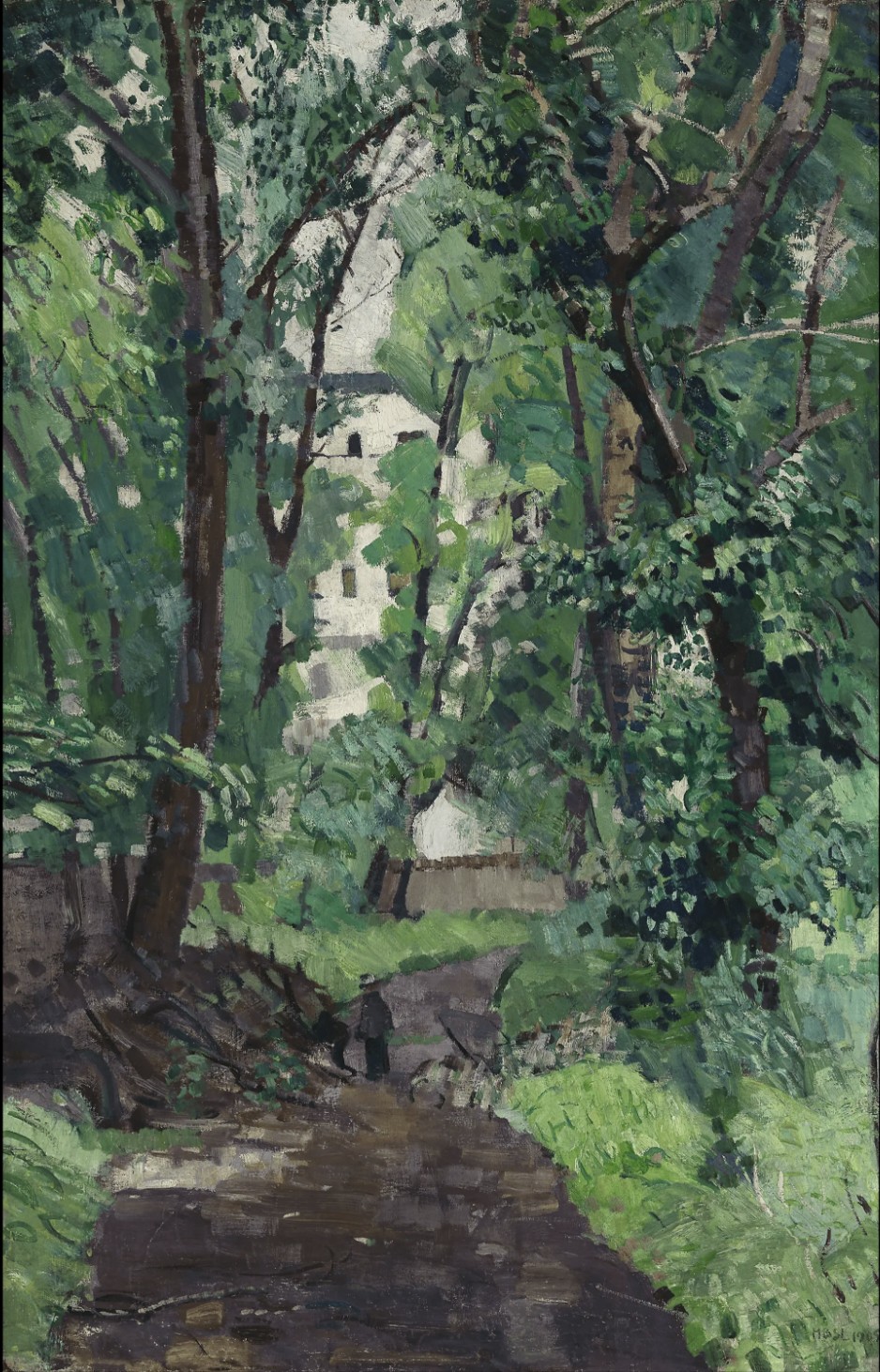
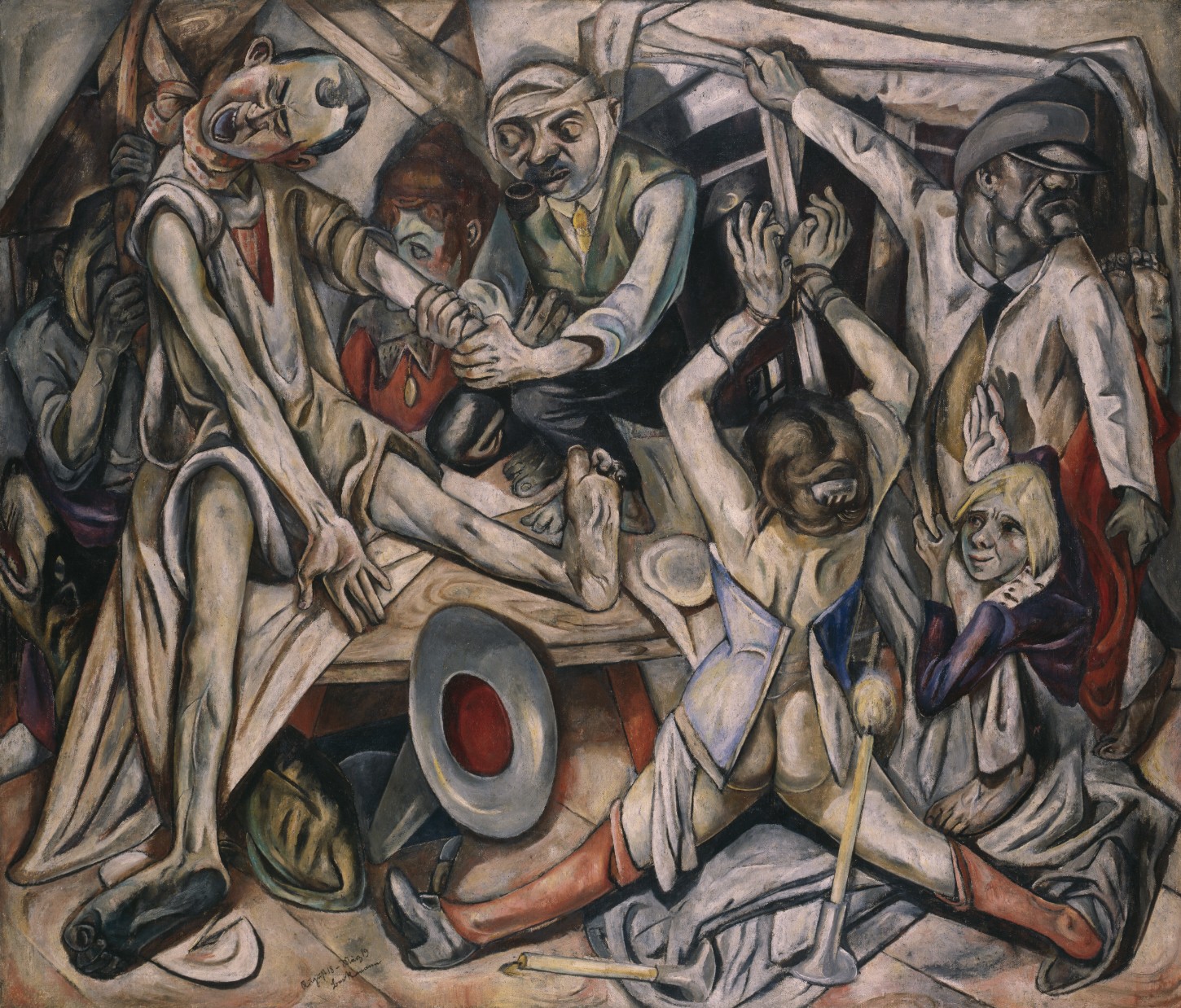
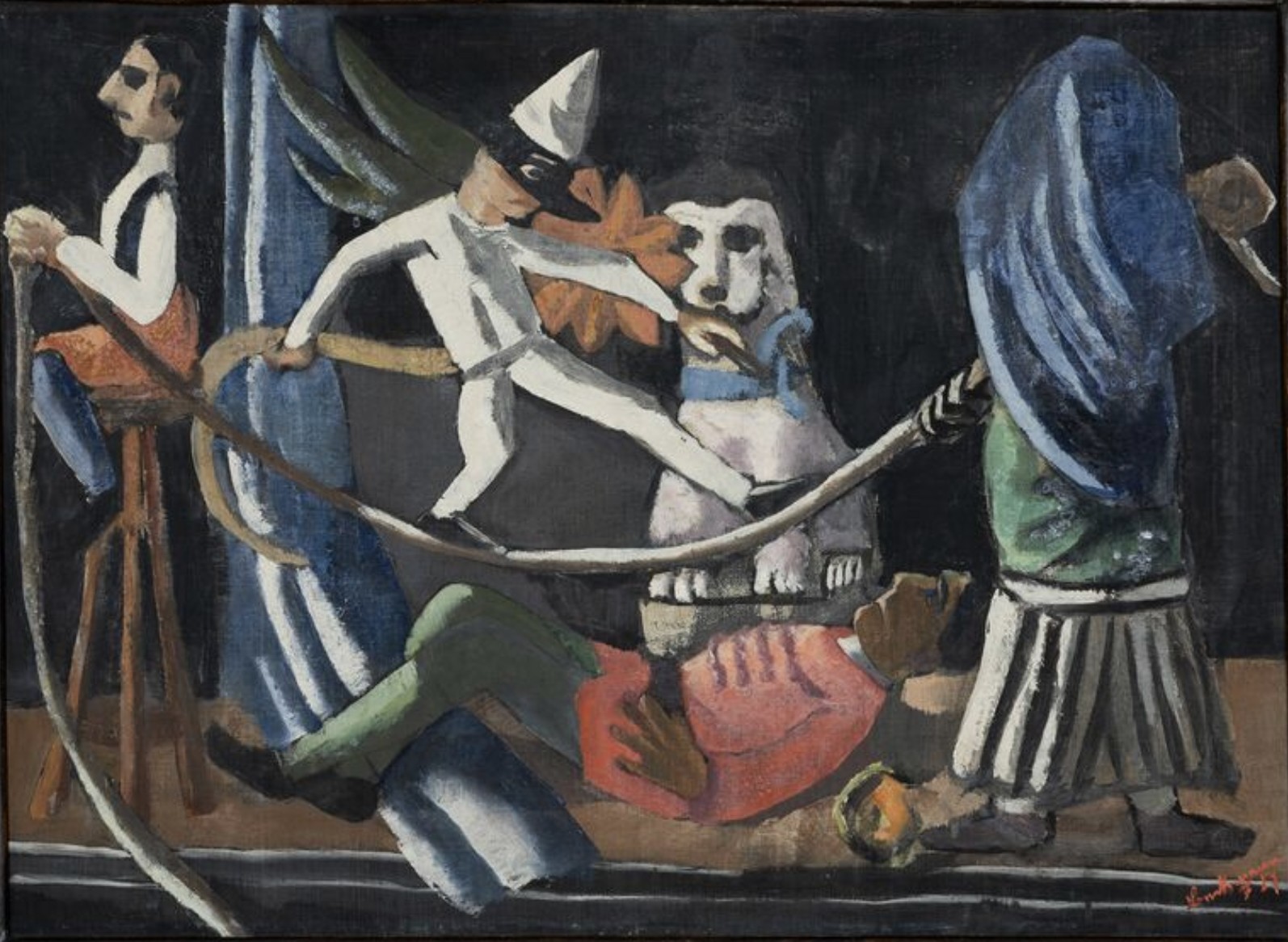
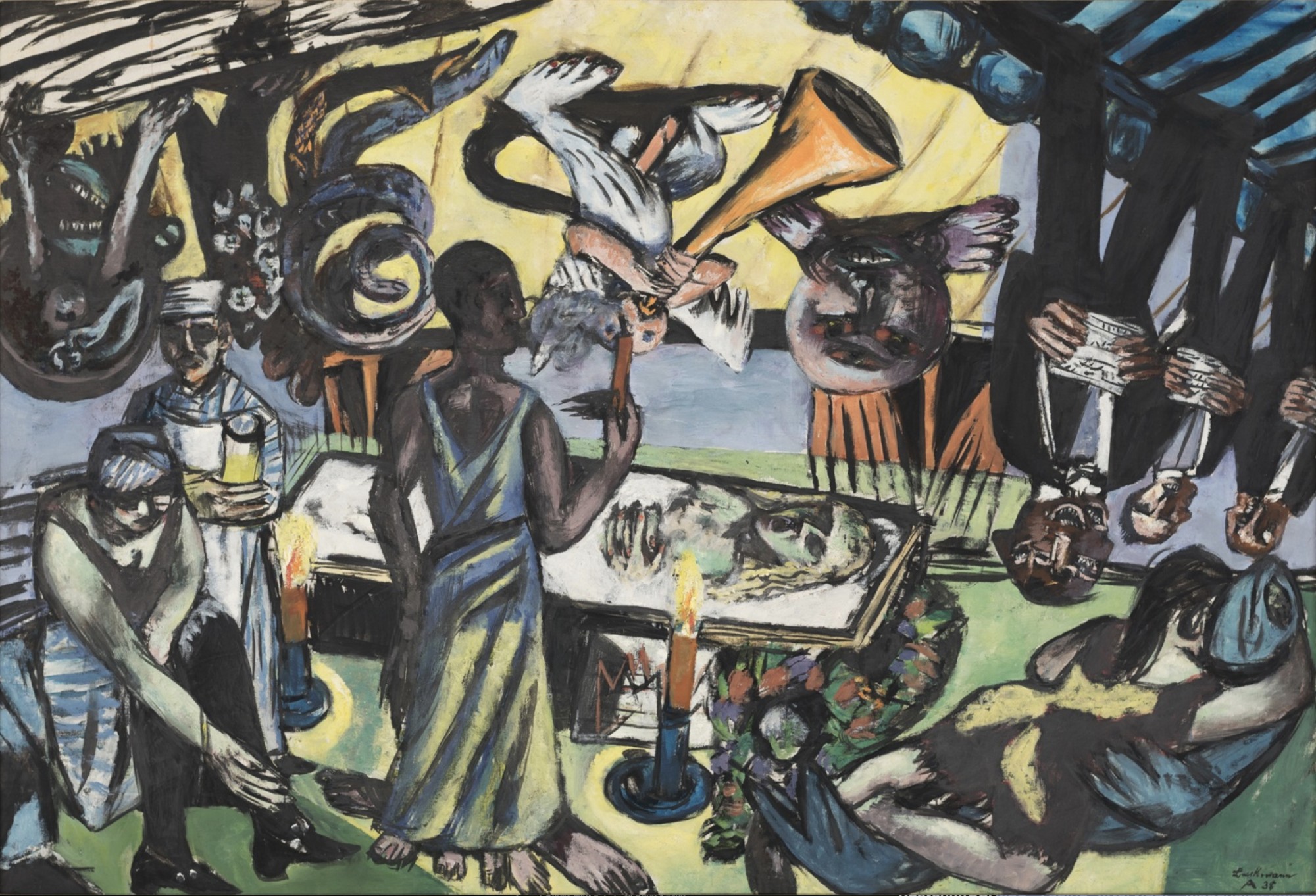
Trained in traditional European academicism, Beckmann became a member of the Berlin Secession (1898-1913), creating works like Old Botanical Garden (1905) in a style influenced by Impressionism. World War One was perhaps the most important influence on the artist. Beckmann volunteered as an orderly and was so deeply traumatized by what he experienced that he suffered a breakdown and was discharged from the army. After this experience, the artist’s style, subject matter, and goals changed. The Night (1918-1919), in this slide show, is a chaotic scene of violence in a tent-like space; the artist used mostly neutral colors interspersed with patches of purple, green, yellow, and especially red. Exactly what is going on, who is doing what to whom, is unclear but the sense of horror and unease is obvious.
In the 1920s, Beckmann’s works were exhibited with the Neue Sachlichkeit (New Objectivity; LINK Chance Encounters 51) movement. Like other artists associated with that group, Beckmann used his art to record and satirize the social hypocrisy and moral decadence of Germany under the Weimar Republic, that country’s first constitutional republic. The artist was highly successful during this period, widely collected by German museums and honored with prizes. In common with many of cultural stars of the Weimar era though, Beckmann was rejected by the Nazis when they came to power. In 1933, the artist was described as a “cultural Bolshevik” and fired from his teaching position by Nazi leaders. At the same time, over 500 of his works were confiscated from German museums; some were sold outside Germany and several were included in the notorious Entartete Kunst (Degenerate Art) exhibition.
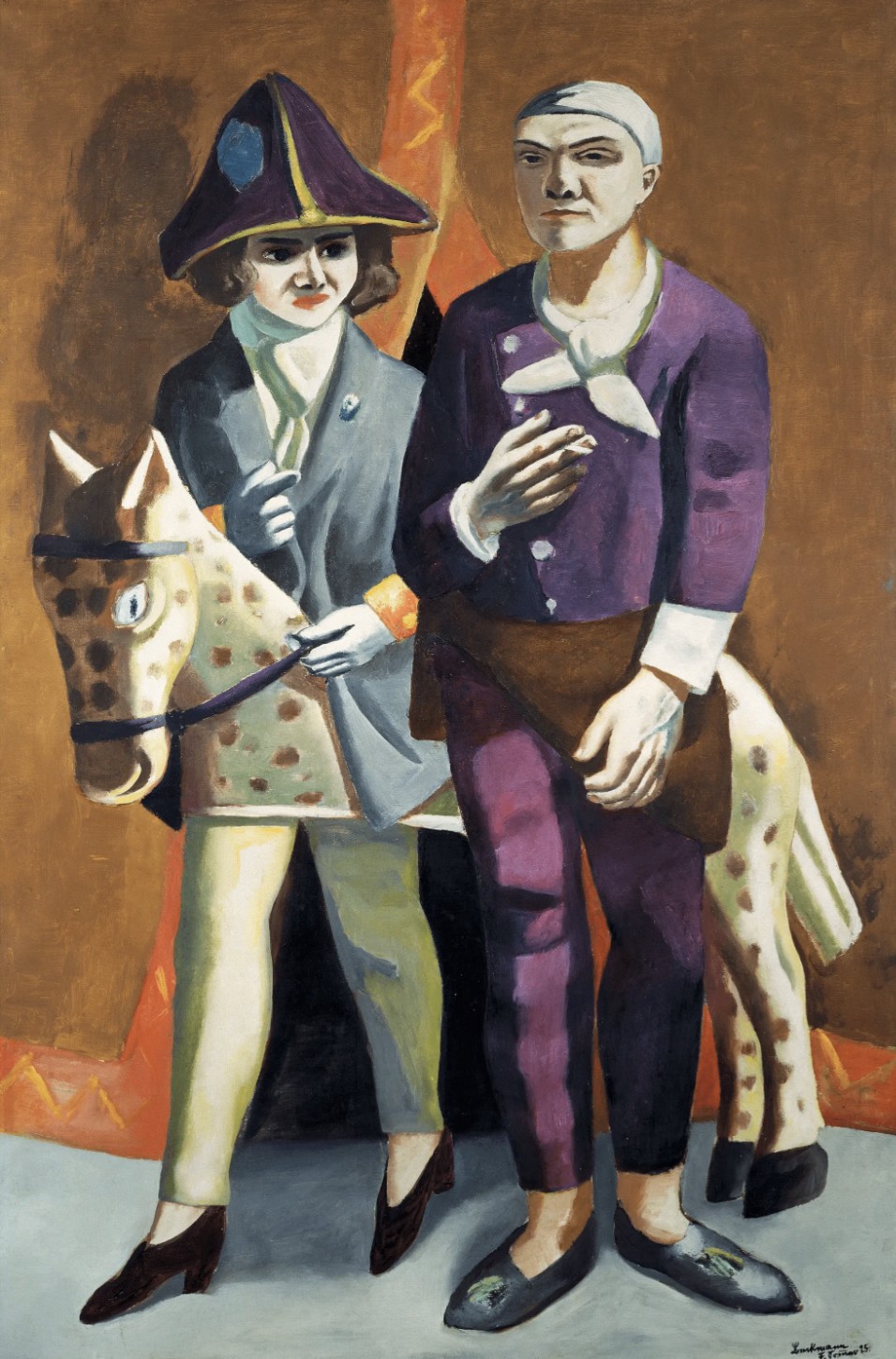
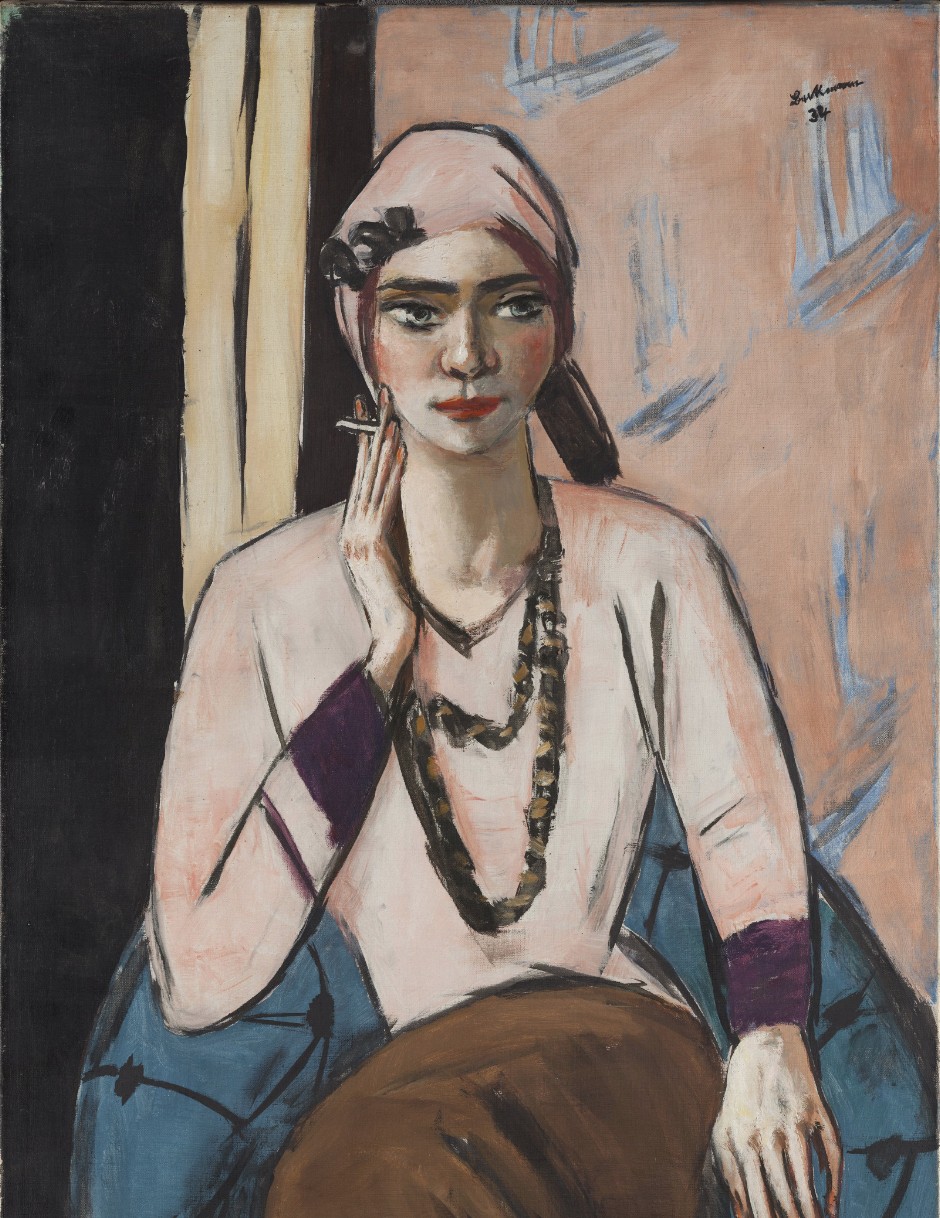
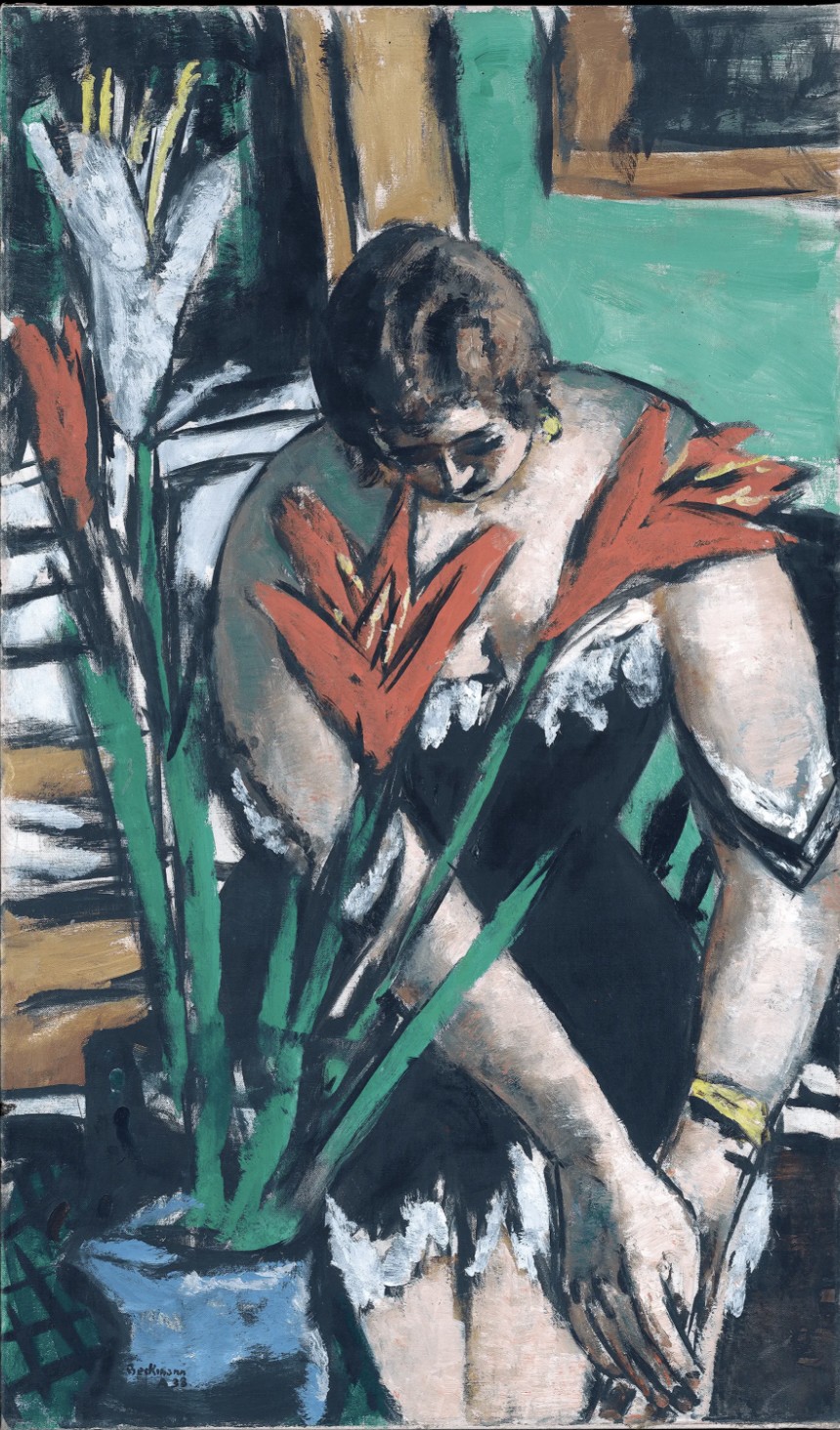
The day after the Entartete Kunst exhibition opened in July 1937, Beckmann and his wife Quappi (depicted in two works in this slide show) left Berlin for Amsterdam. Like many avant-garde artists facing the animosity of the Nazi regime, he tried repeatedly to get permission to come to the United States during the war but remained in the Dutch capital throughout World War Two. The artist produced many works during this period, following his advice he gave his students: “work a lot…simplify…use lots of color…make the painting more personal.”
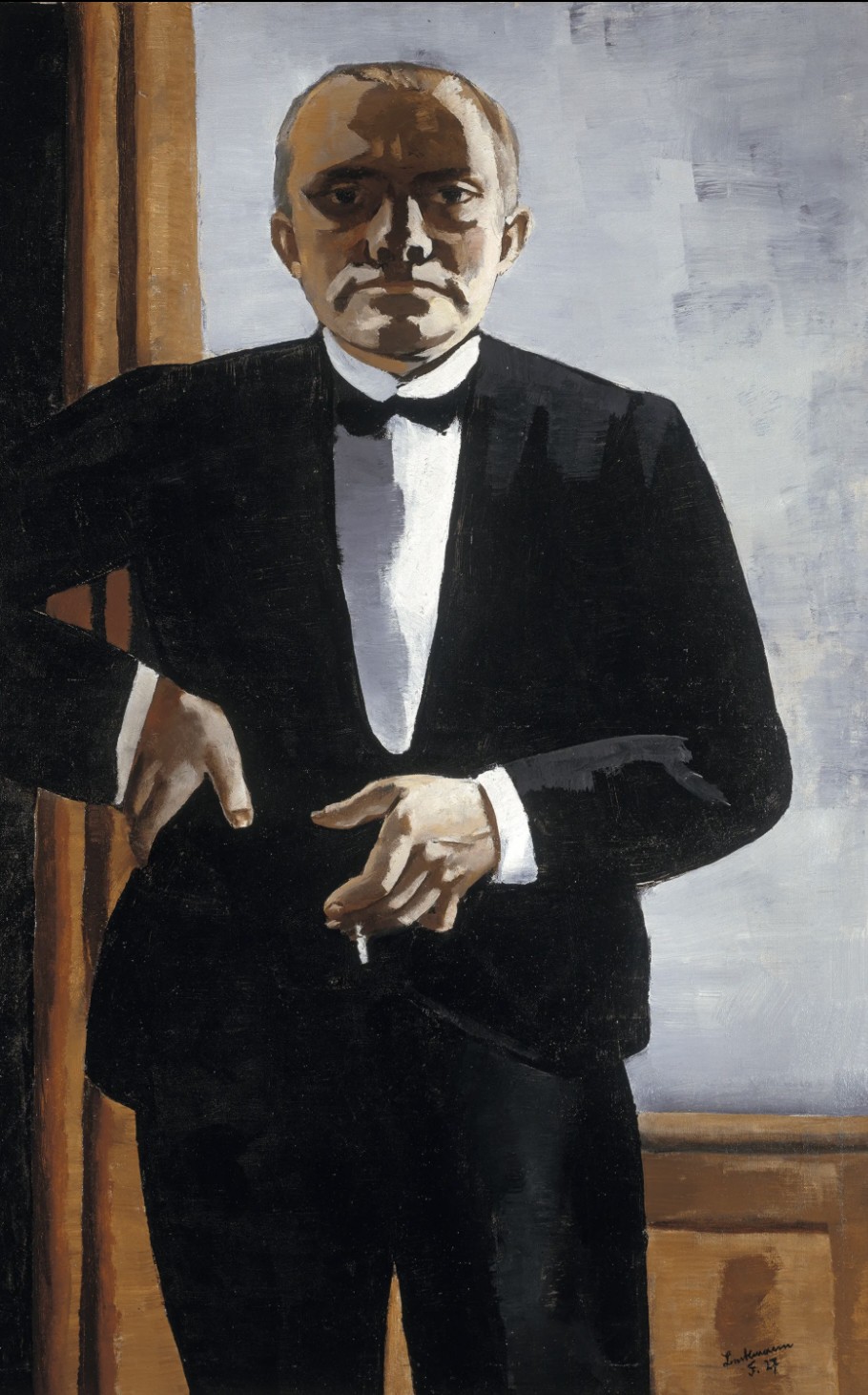
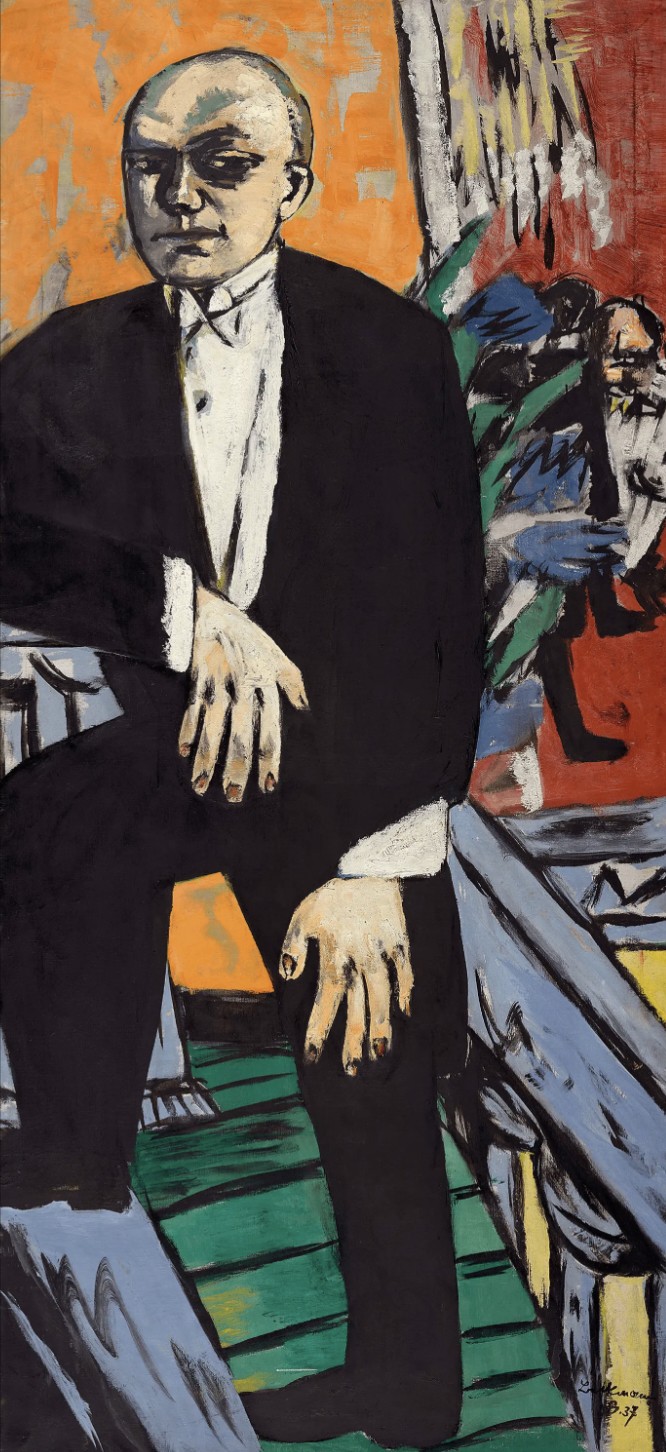
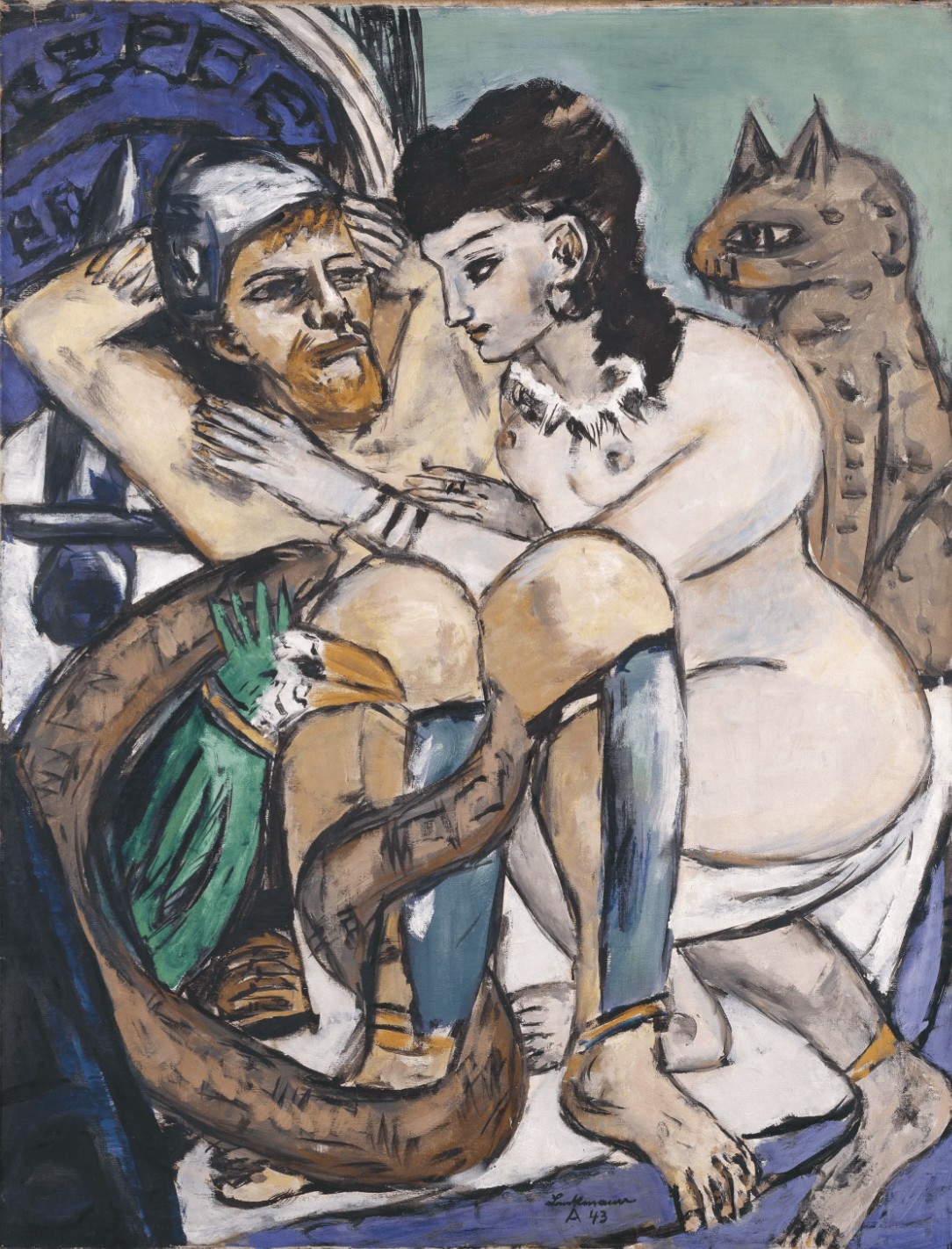
Beckman focused on a variety of themes, shifting among them readily. Self-portraits were an important theme for Beckmann; he created more than 80 during his career. They represented a study of the artist’s internal as well as external self, in keeping with the artist’s philosophical studies about the importance of self-knowledge. He painted portraits of others as well in which he attempted to find the spirit as well as the appearance. He painted many landscapes and still lifes but above all he saw himself as a history painter. This genre was an old fashioned one by the artist’s lifetime but Beckmann gave it new life by using religious and mythological themes to reflect on contemporary life.
"The stronger my determination grows to grasp the unutterable things of this world, the deeper and more powerful the emotion burning inside me about our existence, the tighter I try to keep my mouth shut and the harder I try to capture the terrible thrilling monster of life’s vitality and to confine it, to beat it down, and to strangle it with crystal clear, razor-sharp lines and planes …" – Max Beckmann
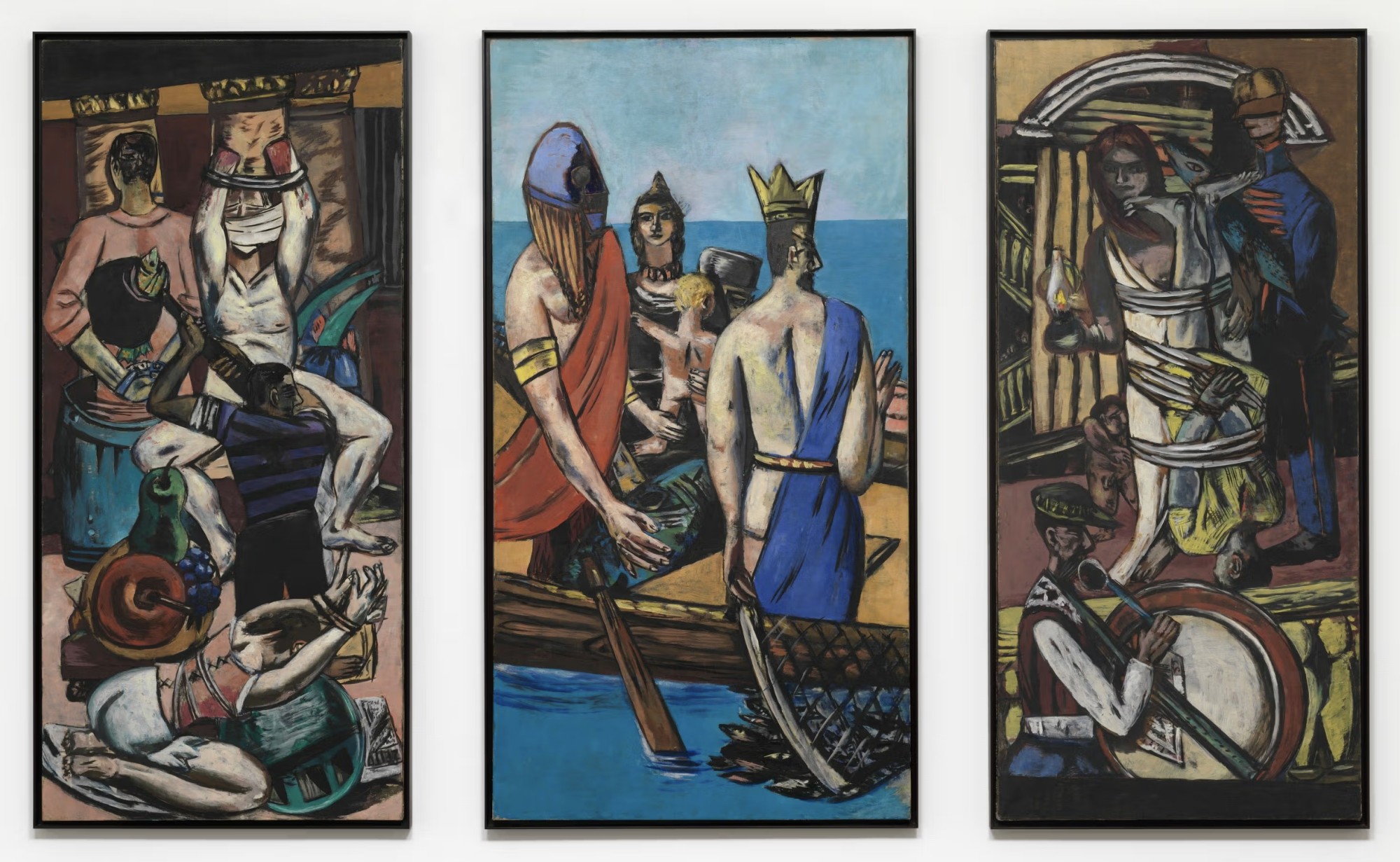
One of Beckmann’s achievements was to update the triptych (three-panel) format from its origins in Medieval and Renaissance religious paintings to a tool for Modern artistic narratives. The slide show includes the first triptych that the artist created. Departure (1932-1935) contrasts restraint and freedom, compression and openness, violence and refuge. The side panels depict dark scenes of torture and captivity while the central, more brightly colored scene conveys the possibility of escape and salvation. The artist explained this central panel:
“The King and Queen have freed themselves... The Queen carries the greatest treasure - Freedom - as her child in her lap. Freedom is the one thing that matters - it is the departure, the new start.”
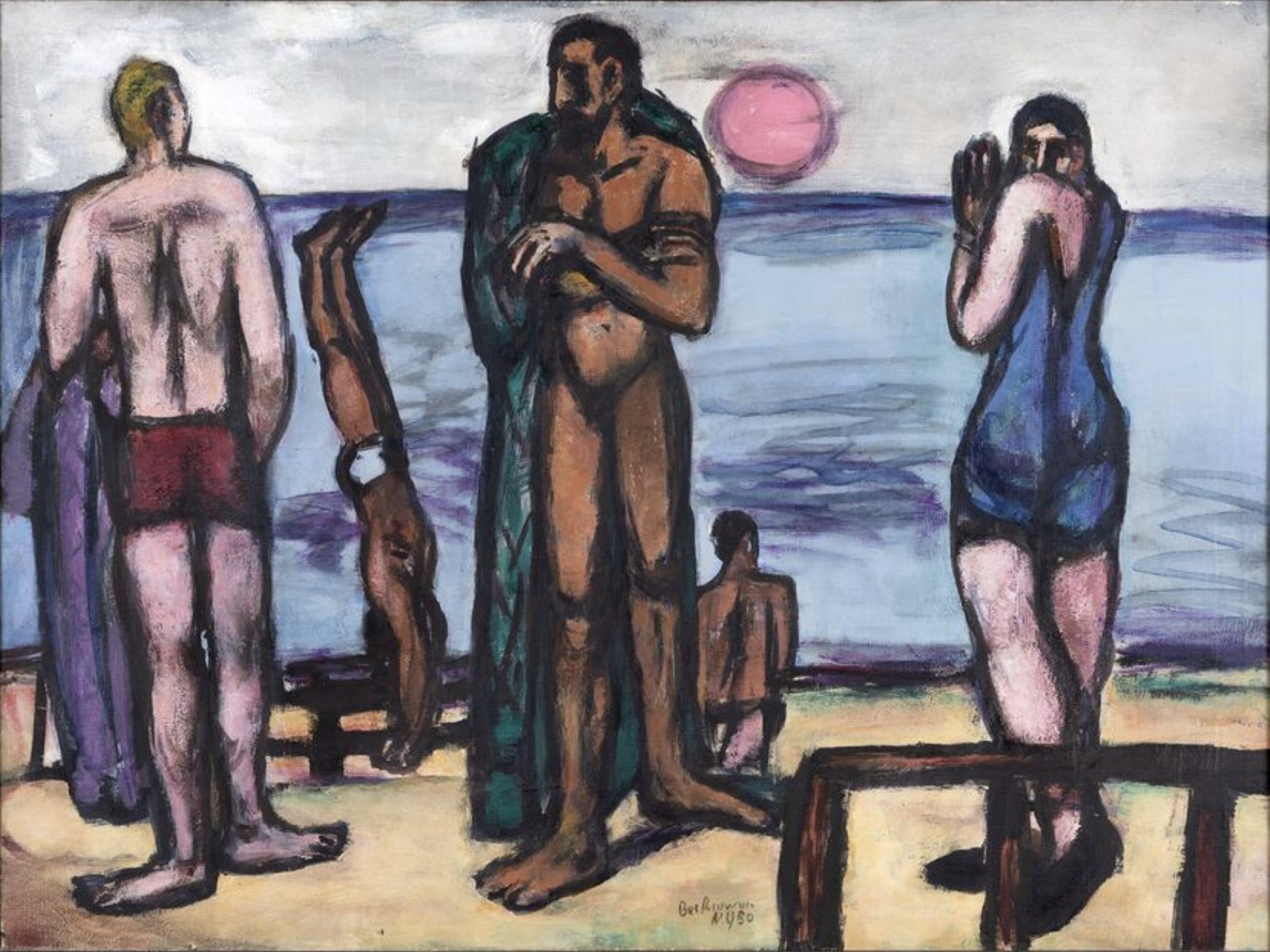
In 1947, when the artist was invited to take a teaching position at the St. Louis School of Art at Washington University, Beckmann came to the U.S. The artist’s first retrospective took place at the museum now known as Saint Louis Art Museum which today owns the largest single collection of Beckmann’s paintings in the world. The artist and his wife also traveled to Denver and Chicago and then to New York City in 1949. Beckmann taught at the Brooklyn Museum School of Art and was honored with a one-man show at the 1950 Venice Biennale. Unfortunately, Beckmann died of heart attack at the age of 66 in December of 1950.
Max Beckmann was influential in mid-20th century American painting, from expressive painters like Philip Guston (American, 1913-1980) to Beckmann’s student, the Minimalist Color Field Painter Ellsworth Kelly (American, 1923-2015; LINK Viewing Room 3). The difficulty of categorizing the artist led to his being neglected by museums through the second half of the 19th century but Beckmann’s profile has risen in both Europe and North America in the past few decades. The artist is now well known for his clear-eyed attention to themes of terror and redemption, his bold style, and layering reality, dreams, myths and fable into allegories of modern life.
“My heart beats more for a rougher, commoner, more vulgar art … one that offers direct access to the terrible, the crude, the magnificent, the ordinary, the grotesque and the banal in life. An art that will always be there for us, in the realest things of life.” – Max Beckmann
Exhibition:
Beckmann’s work is included in “Are We Still Up To It? – Art & Democracy through October 18, 2026 at Neues Schloss (New Castle) Herrenchiemsee, Munich, Germany LINK pinakothek-der-moderne.de/en/exhibitions/are-we-still-up-to-it-art-democracy-2026
Please share your comments and questions on Substack. LINK irequireart.substack.com/p/viewing-room-54/comments
Longer captions may not be fully visible on smaller screens. We apologize for the inconvenience.
If the caption obscures part of the artwork, click on the image to turn off the caption.