Matisse: Harmony and Exploration
By Laura Heyrman
“Slowly I discovered the secret of my art. It consists of a meditation on nature, on the expression of a dream which is always inspired by reality.” – Henri Matisse (French, 1869-1954)
2026 is turning out to be a great year for fans of Henri Matisse. As of mid-April, seven exhibitions of the artist’s work are open, with one more scheduled to begin in mid-May. In this Viewing Room, the majority of works are included in the Matisse survey at Acquavella Galleries since it presents the widest variety of works chronologically, as well as showing examples of the artist’s lesser known sculptural output. A few examples from other exhibitions are included and the details for all eight shows are provided below.
Matisse trained in law and after graduation, worked as a court administrator. A severe attack of appendicitis resulted in a long convalescence. To help her son pass the time, his mother purchased art supplies for him. Finding in art “a kind of paradise,” Matisse abandoned his law career and embarked on the work which would occupy him for over sixty years. In the 1890s, he mastered the technical aspects of painting and traveled to become more familiar with contemporary and past artists and in search of inspiration.
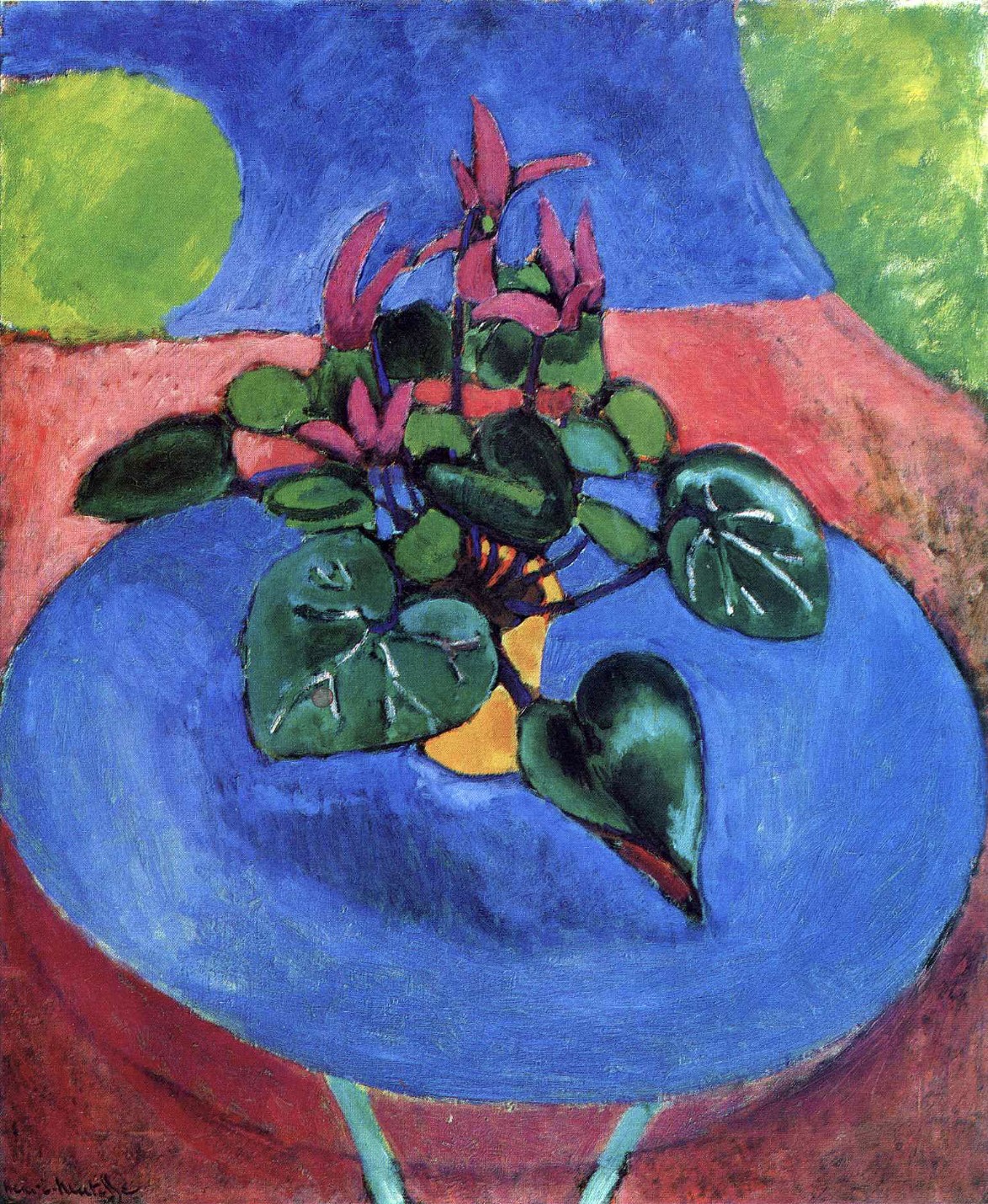
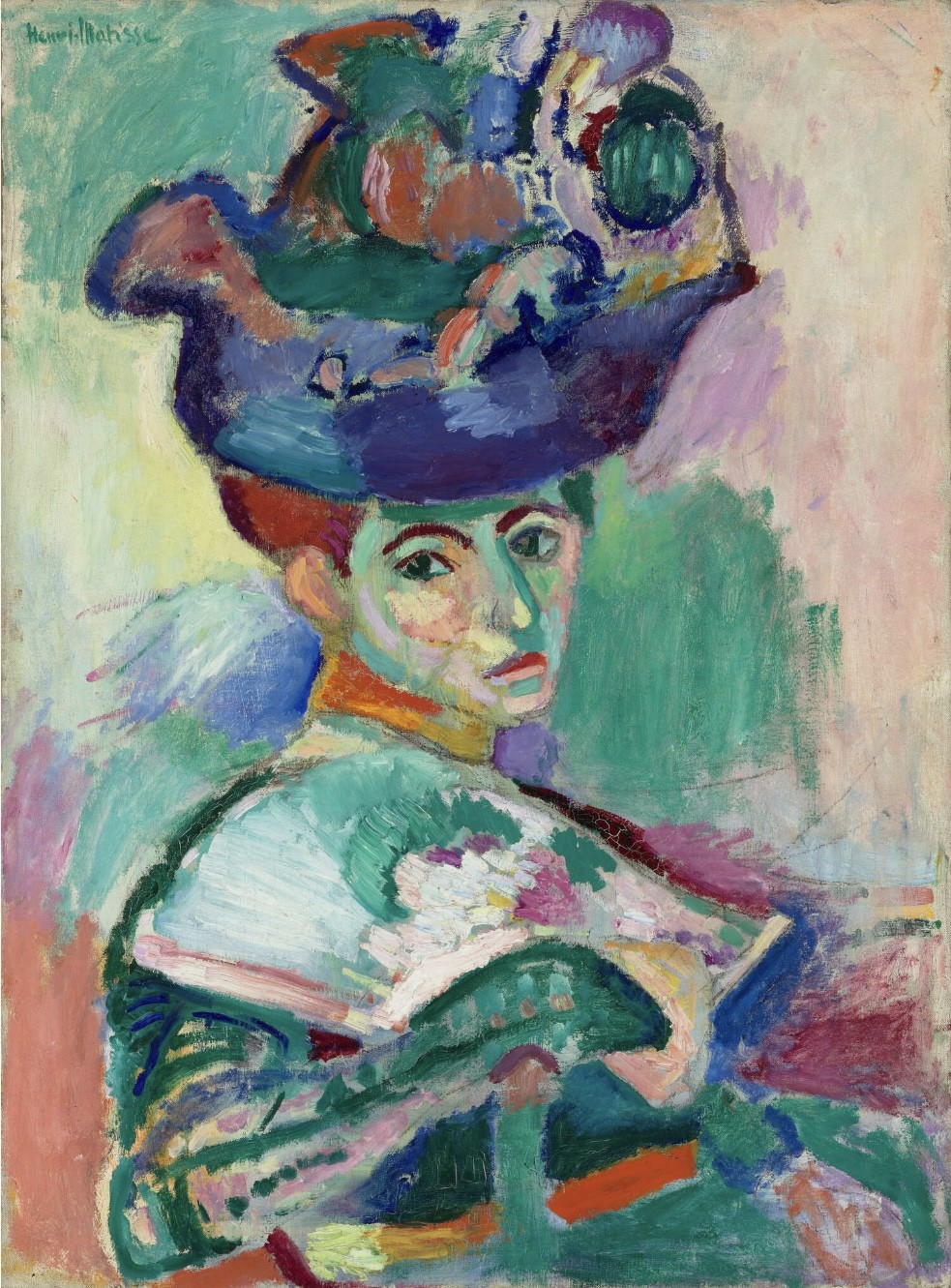
Matisse was one of the founders of the Fauve movement, which lasted from about 1900 to 1905 and was characterized by bold, non-naturalistic color and expressive paint application. (For more on Fauvism, see Chance Encounters 22 irequireart.substack.com/p/chance-encounters-edition-22.) The artist’s Fauve masterpiece Woman with a Hat (1905) is included in this slide show and will be the centerpiece of the exhibition to be held at the San Francisco Museum of Modern Art this year. This painting provoked considerable comment, much of it negative, but its purchase by Gertrude Stein and her brother Leo showed Matisse that his innovative ideas could find an audience.
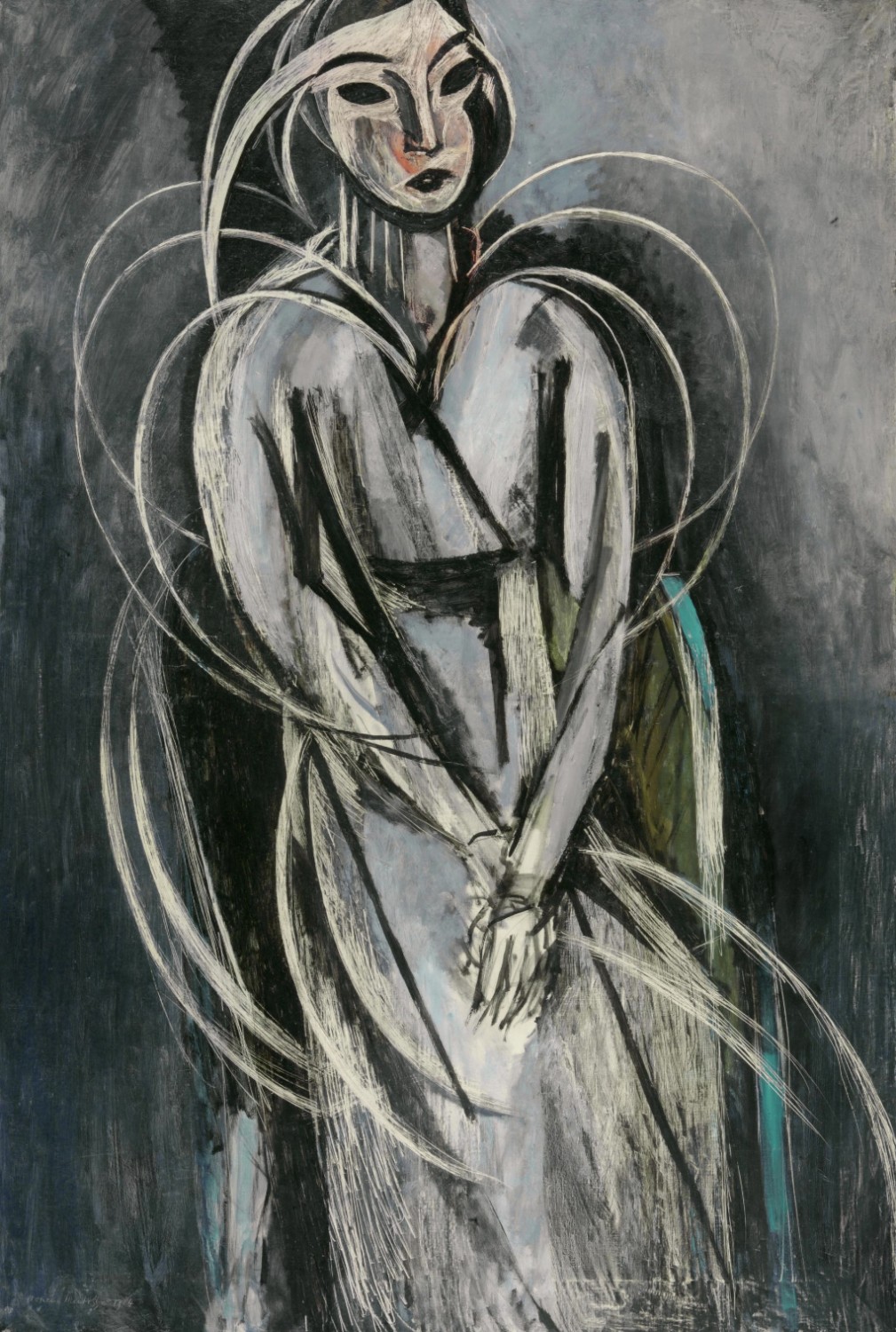
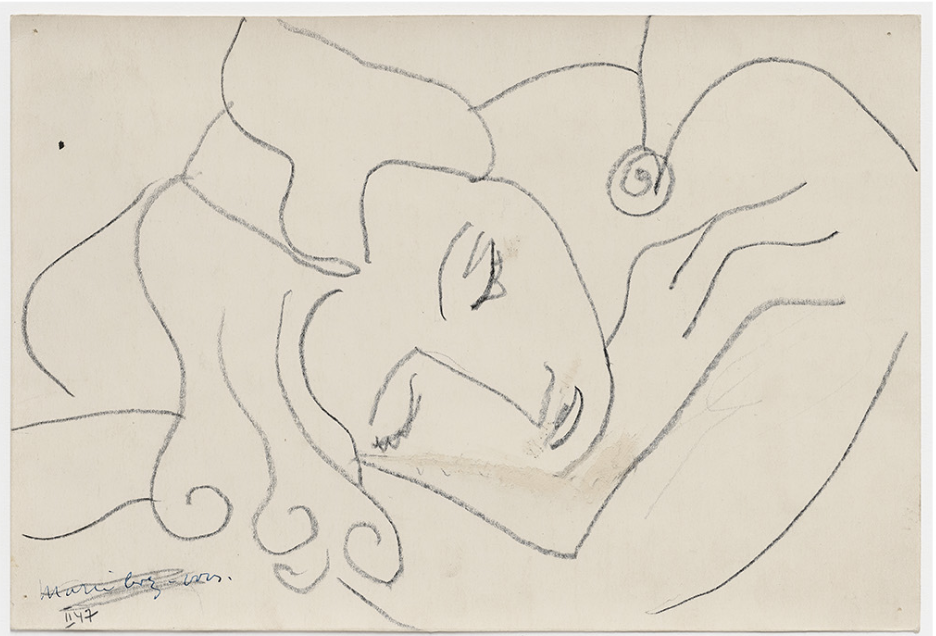
Even after the members of the Fauve group went their separate ways, Matisse experimented with vivid color and self-expressive form throughout his life. Best known for his paintings, the artist was also a skilled draughtsman and printmaker. In addition, he began to explore form in three dimensions by creating sculptures.
“I made sculpture because what interested me in painting was the clarification of my ideas. I changed medium and worked in clay as a respite from painting when I had done absolutely all that I could for the moment. Which is to say that it was always for the purpose of organization. It was done to give order to my feelings, to seek a method that completely suited me. When I found it in sculpture, it helped me in painting.” – Henri Matisse
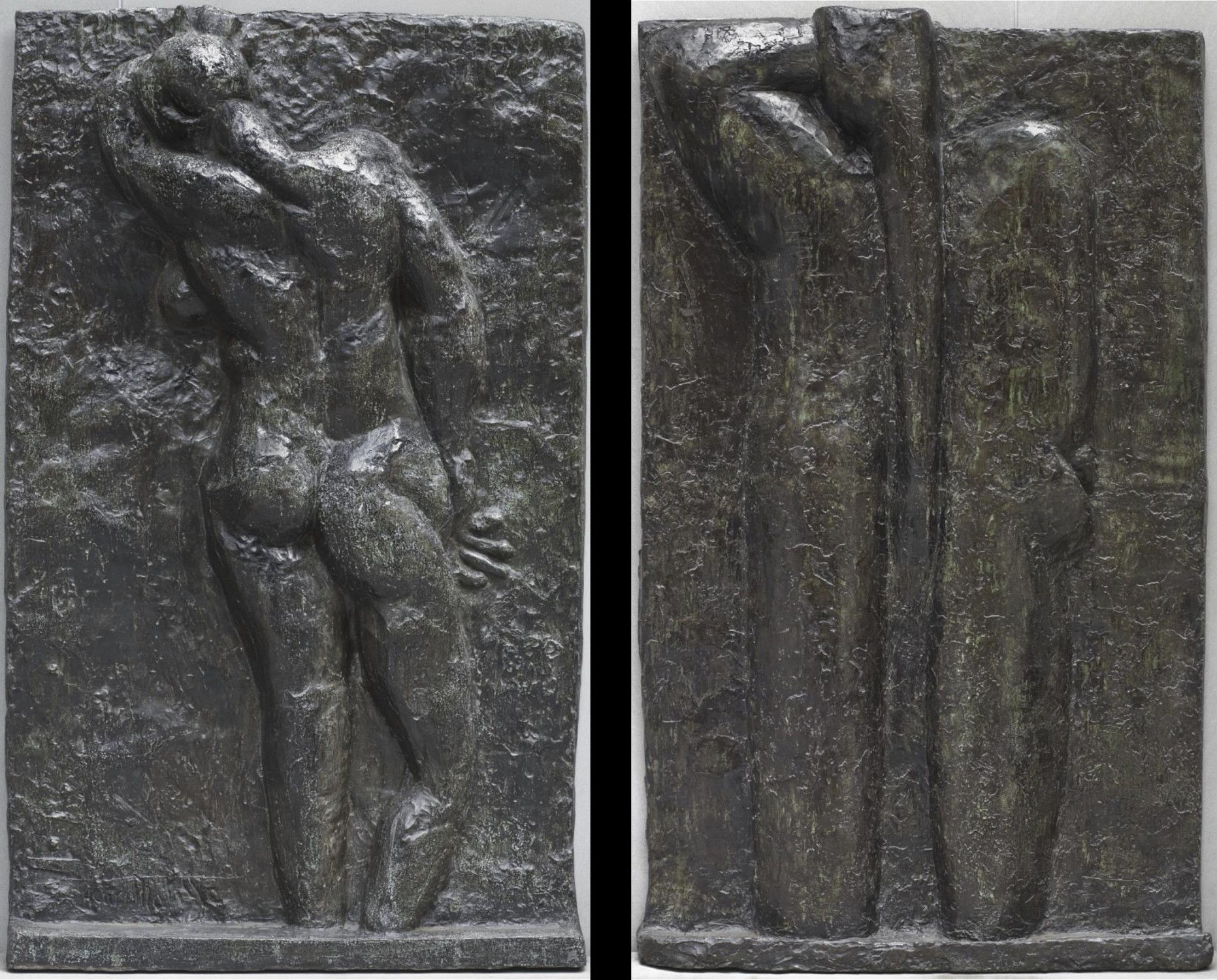
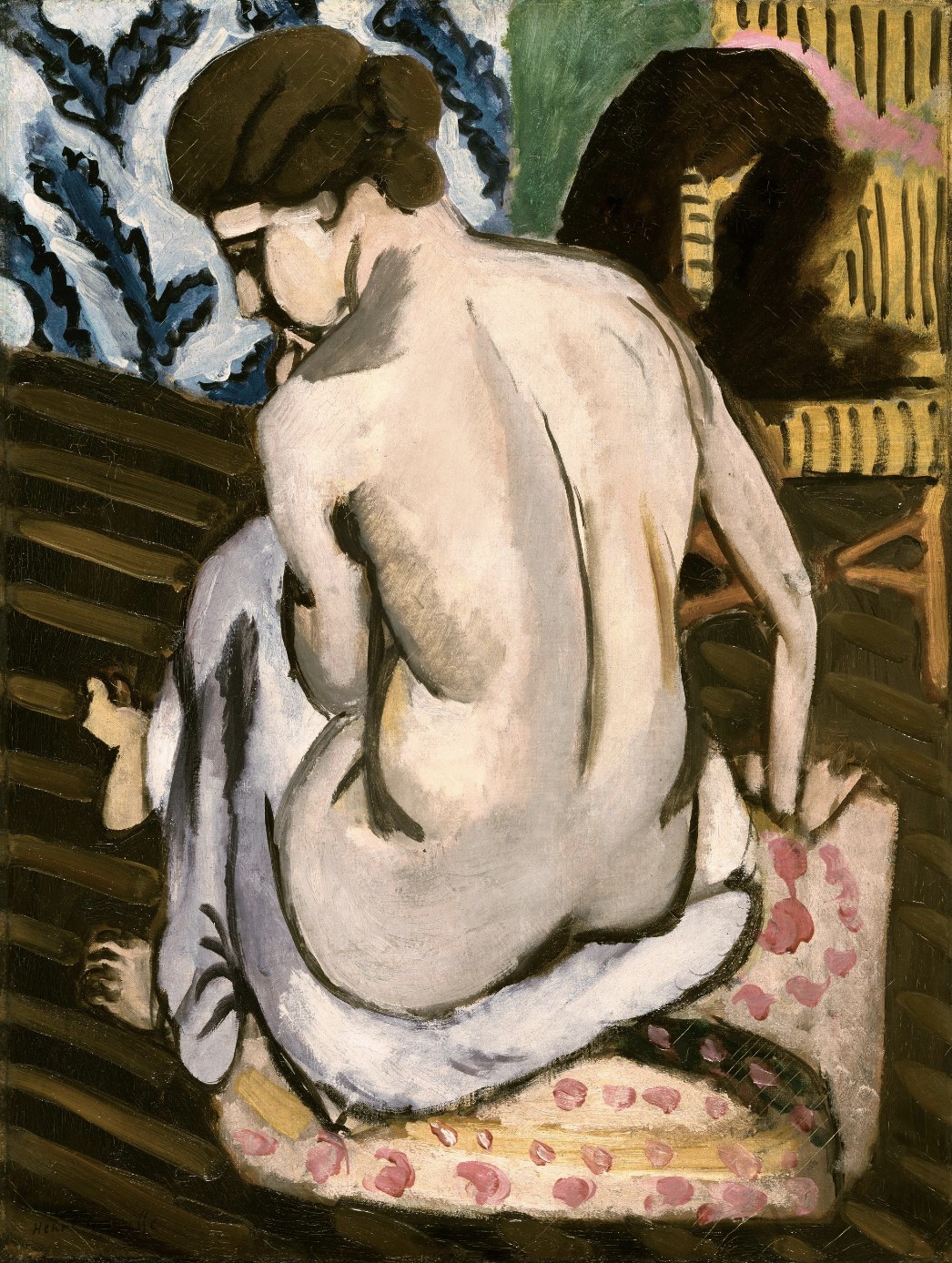
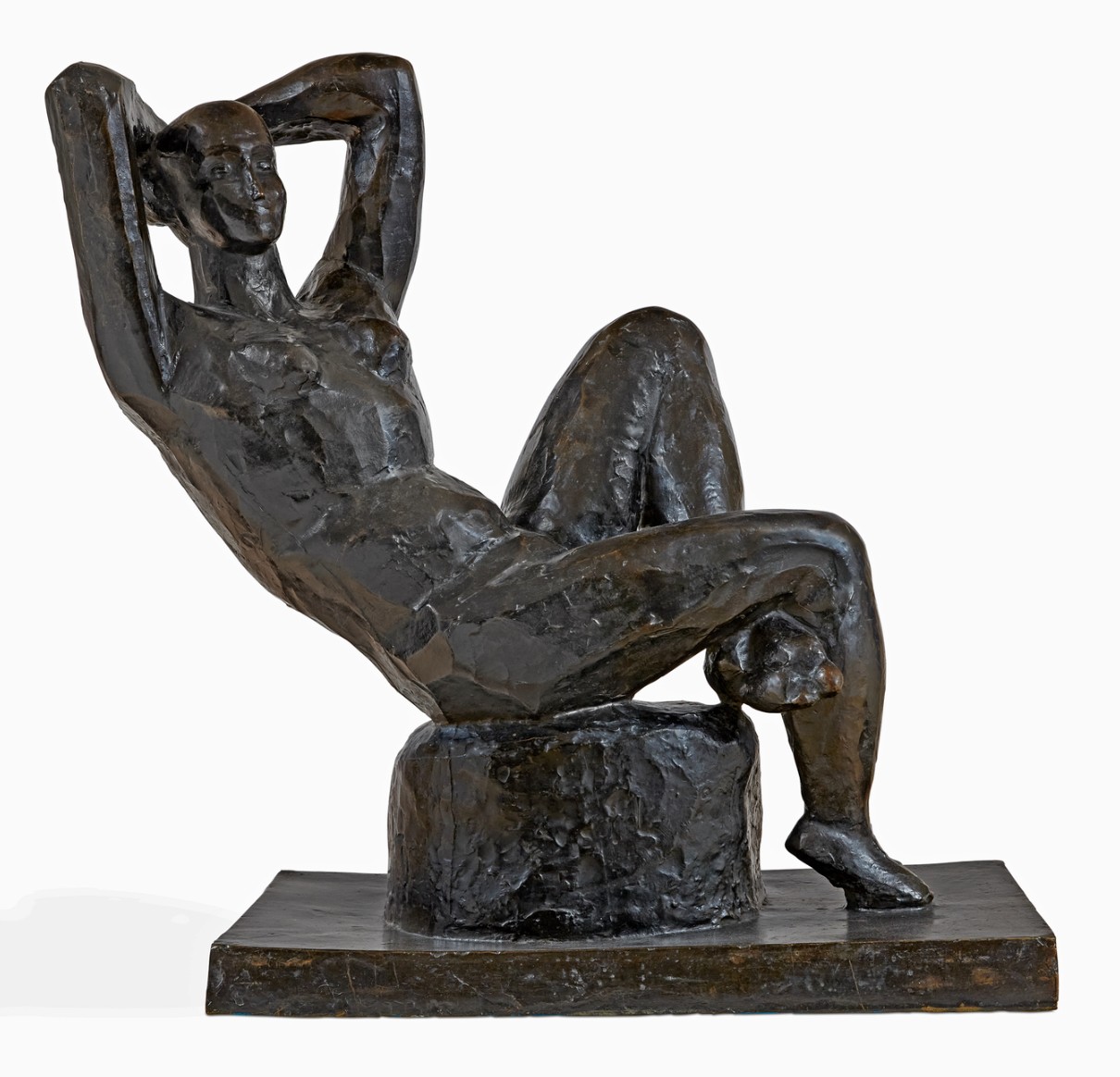
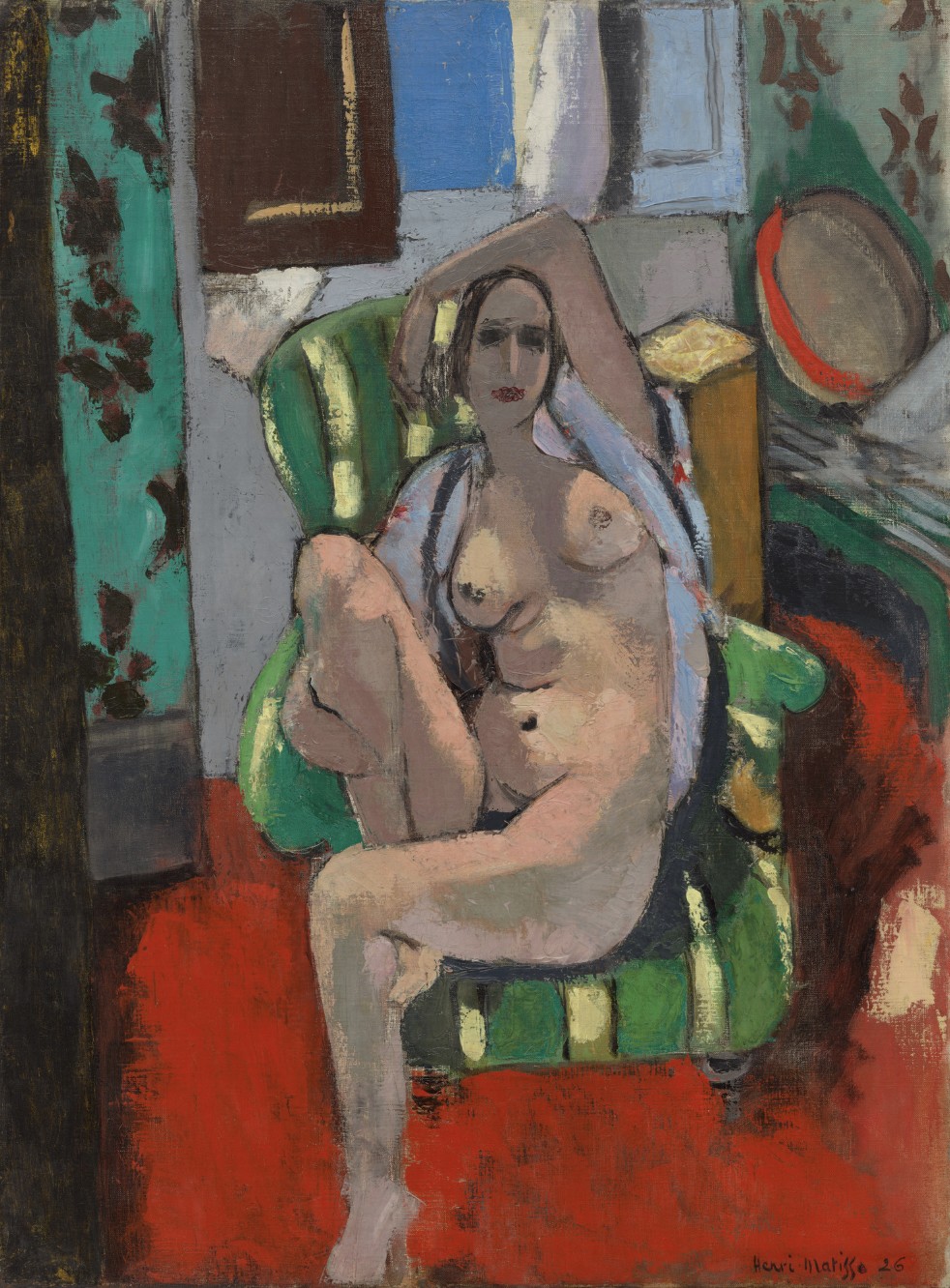
Even during the Fauve period, Matisse was fashioning small figures in clay, though he couldn’t afford to have them cast in bronze until later in his life. Eventually, the artist sculpted on a larger scale, most notably in the Backs, which are over 6 feet by over 4 feet and 6 inches deep. Two of this series are included in the slide show to demonstrate how Matisse pushed his original conception from naturalism to extreme abstraction. The artist formed the first version in clay around 1909 and cast it in plaster since he couldn’t afford bronze. Each of the subsequent versions started from a plaster cast of the preceding one and Matisse returned to the project over a period of about 20 years. The 1917 painting showing a nude model from the back, included in the slide show, demonstrates how the artist moved between different media as he worked out ideas in two- and three-dimensions, resolving challenges in one medium by working in another. The same process is seen in the pairing of the sculpture Large Seated Nude (1922-1929) and Odalisque with a Tambourine (1925-1926). Matisse described how he became frustrated working on the position of the sculpted head, working and reworking the clay until the head dropped off. He covered the offending figure and turned to painting and drawing, using the same pose again and again until he figured out how he wanted to depict the head in three-dimensions.
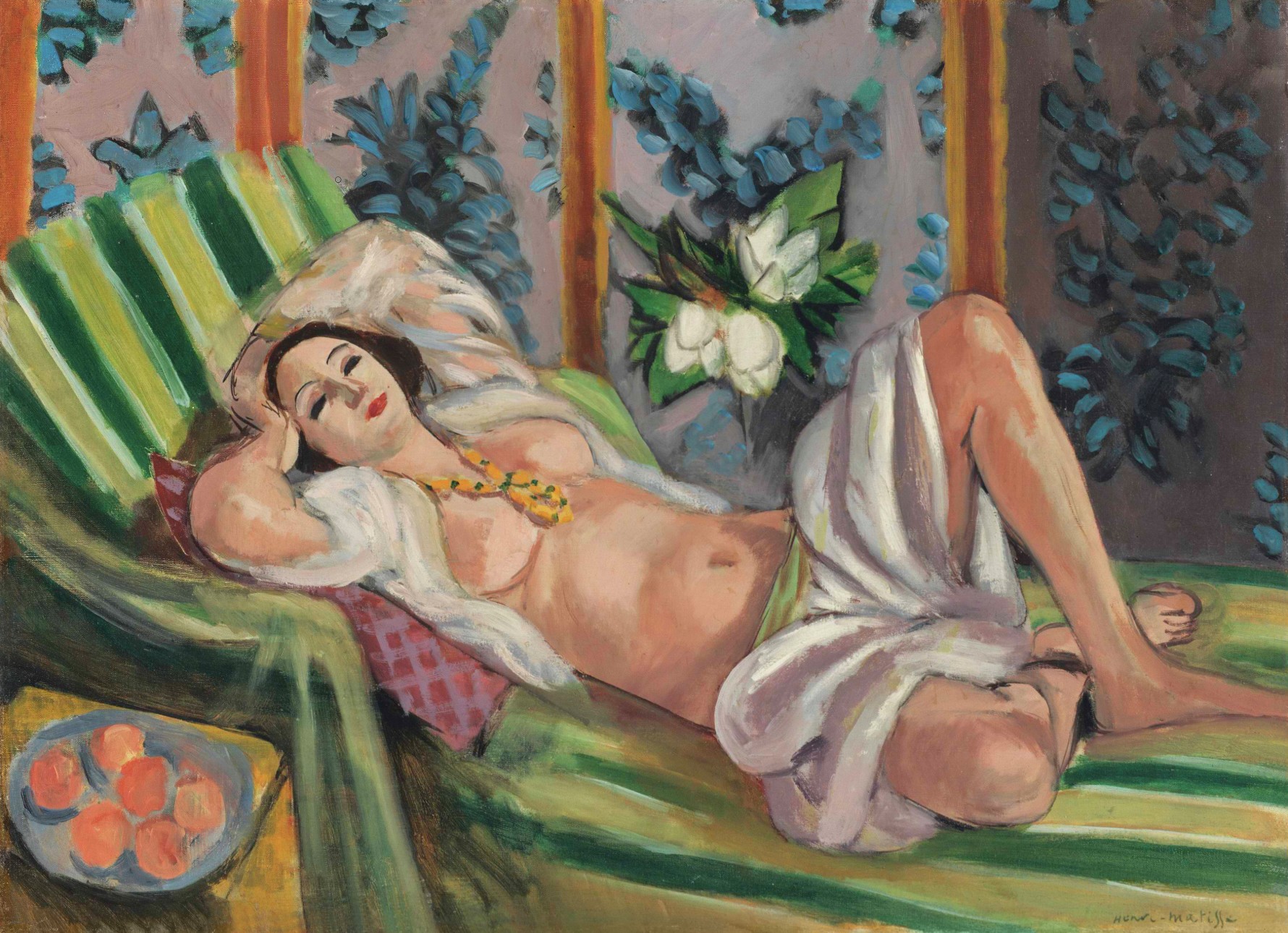
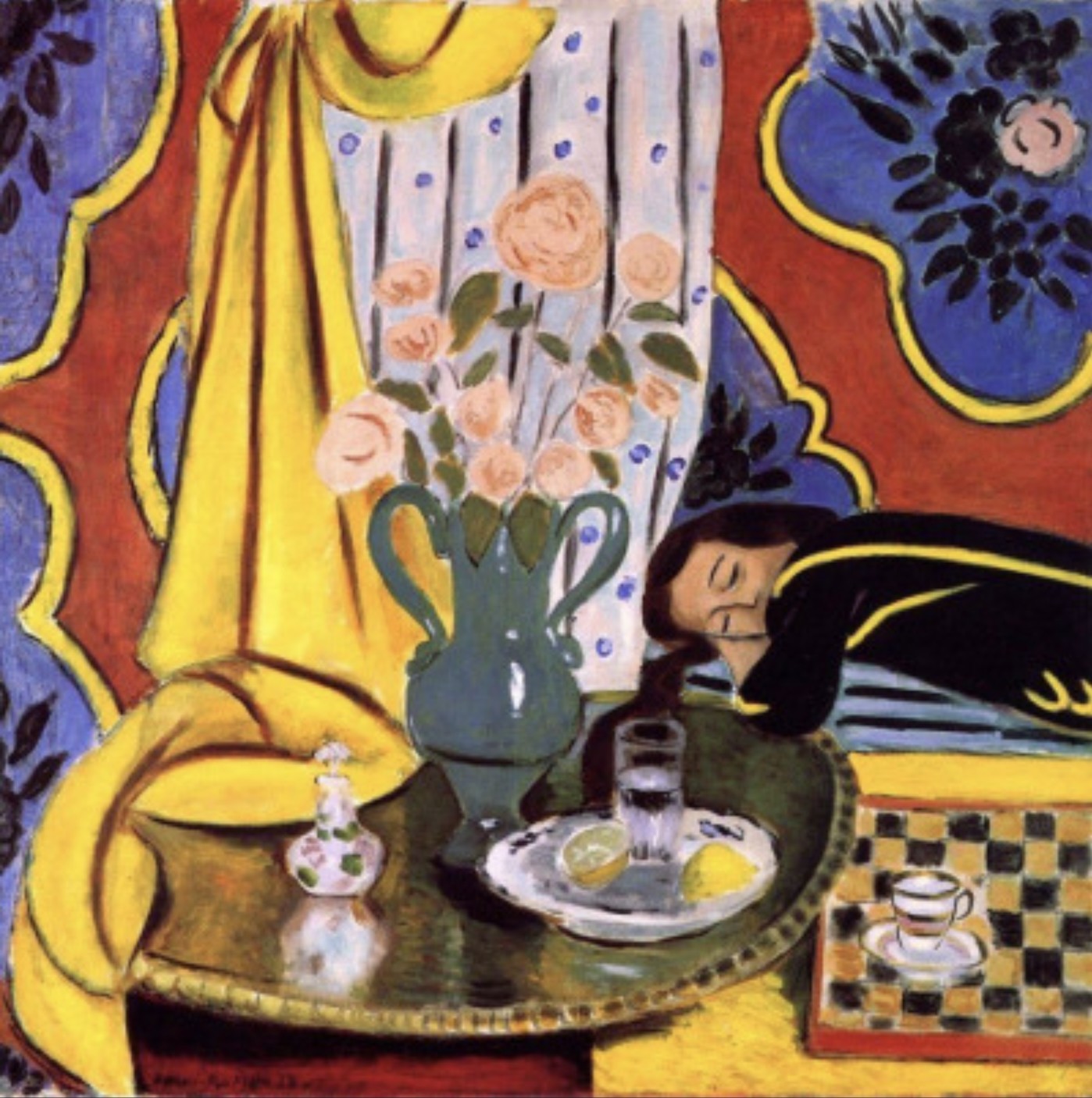
Two of Matisse’s many works titled “odalisque” are included in this slide show. This term referred to harem women, who symbolized the “exotic” Arab world to Europeans of the 19th and early 20th centuries. For Matisse, the odalisques signified his encounters with Morocco, which he had visited twice in the 1910s. Throughout his life, the artist collected North African and Islamic clothing, textiles, and pottery. Matisse used his collections as props in his figural and still life paintings. The patterns and colors he experienced in his travels and in the fabrics he collected suited the taste for flatness and color Matisse was developing in the post-Fauve years.
“What I dream of is an art of balance, of purity and serenity, devoid of troubling or disturbing subject matter, an art which could be for every mental worker, for the businessman as well as the man of letters, for example, a soothing, calming influence on the mind, something like a good armchair which provides relaxation from physical fatigue.” – Henri Matisse
Matisse moved from Paris to Nice in 1917 and lived in southern France for the remainder of his life. In the 1920s, in common with many formerly radical artists, the artist’s work became more relaxed in style and more traditional in technique. Referred to as the “Return to Order,” this shift partly reflected post-World War One feelings of dismay and anxiety and a desire for stability. Matisse however considered his works as a continuation of the search for harmony and balance that he’d always undertaken.
“I cannot copy nature in a servile way, I must interpret nature and submit it to the spirit of the picture – when I have found the relationship of all the tones the result must be a living harmony of tones, a harmony not unlike that of a musical composition.“ – Henri Matisse
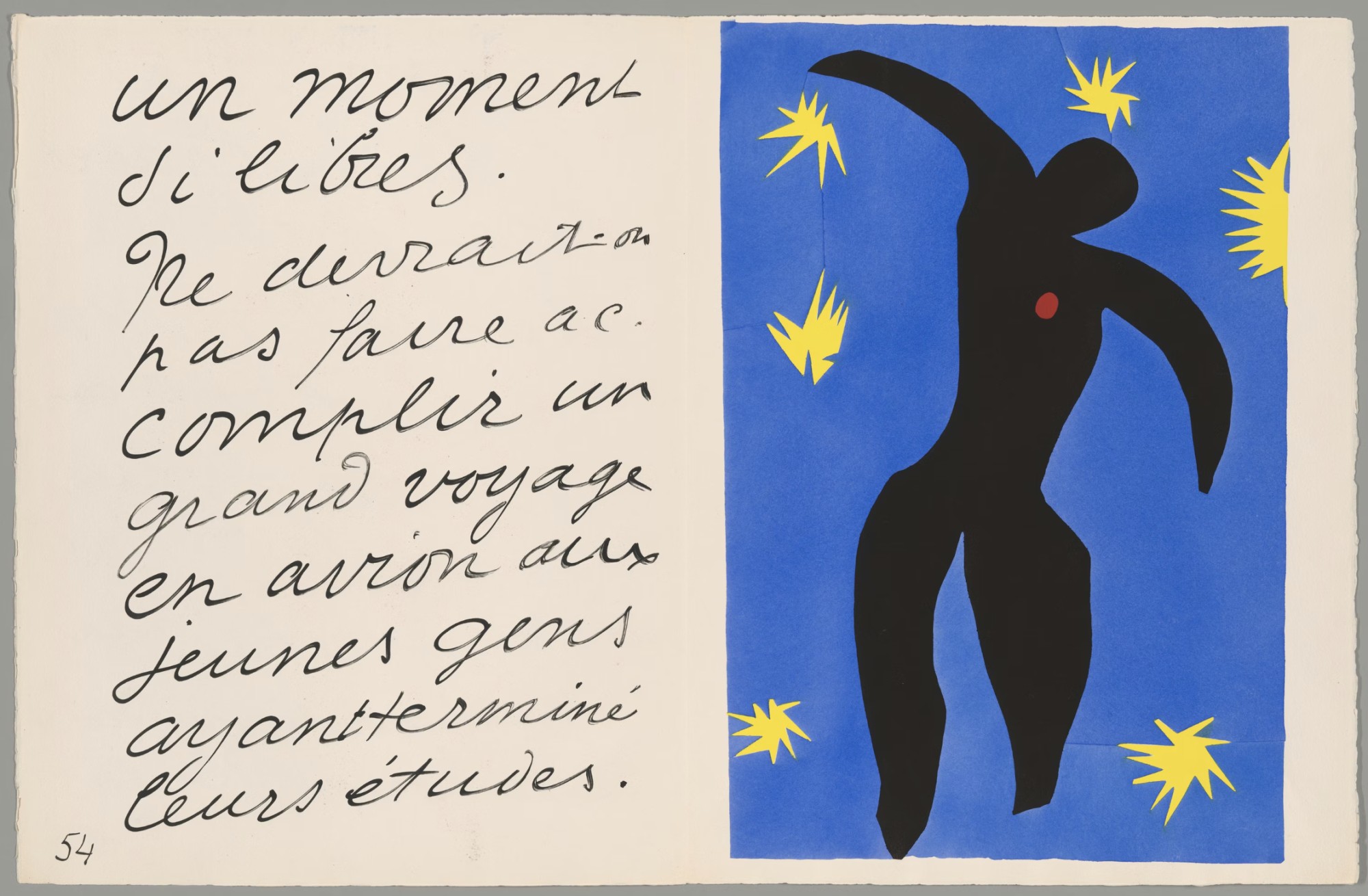
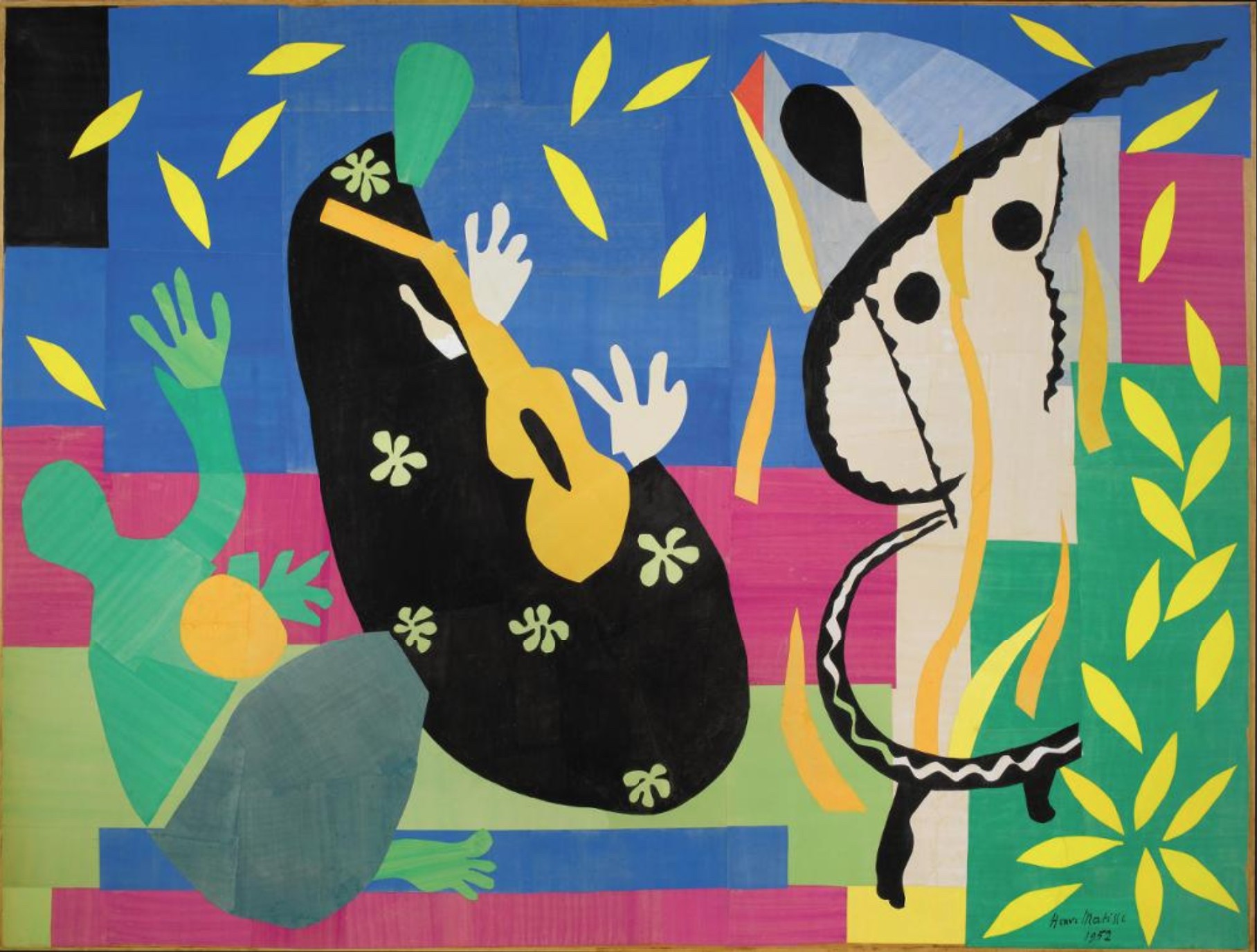
In 1941, Matisse underwent abdominal surgery for cancer. Though successful in removing the cancer, the surgery left the artist unable to stand for long and mostly confined to a wheelchair or his bed. Unable to paint or sculpt, the artist adapted a paper-cutting technique he’d used many years before when designing sets and costumes for two ballets. The artist’s assistants would paint sheets of paper in bright colors and Matisse would cut out shapes and pin them into compositions. One of the first projects using the cut-out (or découpage) technique was the artist’s book called Jazz (1947), currently exhibited at the Art Institute of Chicago. The success of this project encouraged Matisse to expand his cut-out practice, eventually creating large mural compositions like The King’s Sadness (1952) which is included in the Grand Palais exhibition of the artist’s late period works.
“The paper cutouts allow me to draw with color. For me, it is a simplification. Instead of drawing an outline and then filling in with color—with one modifying the other—I draw directly in color… . It is not a starting point, it is a completion.” – Henri Matisse
Henri Matisse was one of the leading artistic innovators of the 20th century. His works demonstrate his experimental nature and devotion to shape, line, and color as tools for expressing his distillations of nature. His persistence in the face of criticism, war, and illness show the power his dream of harmony had to sustain him.
“A work of art must be harmonious in its entirety: any superfluous detail would replace some other essential detail in the mind of the spectator.” – Henri Matisse
Current and upcoming exhibitions:
“Matisse: The Pursuit of Harmony,” through May 22, 2026 at Acquavella Galleries, 18 East Seventy-Ninth Street, New York, New York, USA acquavellagalleries.com/exhibitions/matisse2
“Matisse’s Jazz: Rhythms in Color,” through June 1, 2026 at The Art Institute of Chicago, 111 South Michigan Avenue, Chicago, Illinois, USA artic.edu/exhibitions/10557/matisse-s-jazz-rhythms-in-color
“Matisse in Vence: The Stations of the Cross,” through June 28, 2026 at Baltimore Museum of Art, 10 Art Museum Drive, Baltimore, Maryland, USA artbma.org/exhibition/matisse-in-vence-the-stations-of-the-cross
“Matisse 1941-1954,” through July 26, 2026, at Grand Palais coproduced with the Centre Pompidou, Square Jean Perrin, 17 Avenue du Général Eisenhower, Paris, France grandpalais.fr/en/program/matisse-1941-1954
“Fratino and Matisse: To See This Light Again,” through September 6, 2026, at Baltimore Museum of Art, 10 Art Museum Drive, Baltimore, Maryland, USA artbma.org/exhibition/fratino-and-matisse-to-see-this-light-again
“Matisse and Martinique: Portraits and Poetry,” through October 26, 2026, at Baltimore Museum of Art, 10 Art Museum Drive, Baltimore, Maryland, USA artbma.org/exhibition/matisse-and-martinique-portraits-and-poetry
“Henri Matisse: Beyond Color,” through August 29, 2026, at Morris Museum, 6 Normandy Heights Road, Morristown, New Jersey, USA morrismuseum.org/on-view/upcoming/henri-matisse-beyond-color
“Matisse's Femme au chapeau: A Modern Scandal,” May 16-September 13, 2026, at San Francisco Museum of Modern Art, 151 Third Street, San Francisco, California, USA sfmoma.org/exhibition/matisse-femme-au-chapeau
Please share your comments and questions on Substack. LINK irequireart.substack.com/p/viewing-room-50/comments
Longer captions may not be fully visible on smaller screens. We apologize for this inconvenience.
If the caption obscures part of the artwork, click on the image to turn off the caption.
All works: Henri Matisse (French, 1869-1954) © Succession H. Matisse