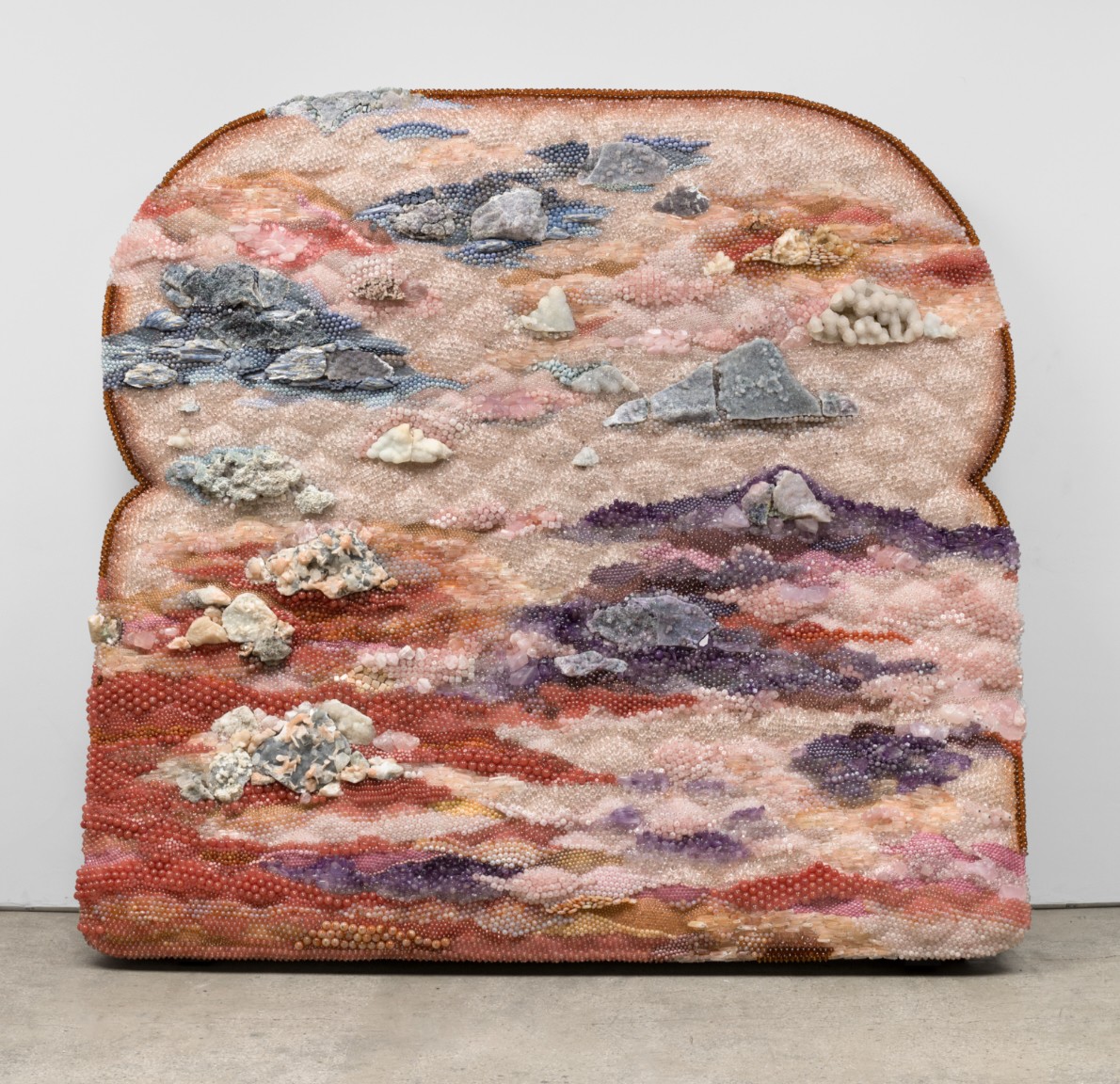
Kathleen Ryan: An Art of Contrasts
By Laura Heyrman
Kathleen Ryan (American, b. 1984) is best known for her dazzling beaded sculptures of oversized fruit. This Viewing Room includes a selection of works from Ryan’s career, to show how the artist’s earlier play with scale and materials led to the work for which she is best known.
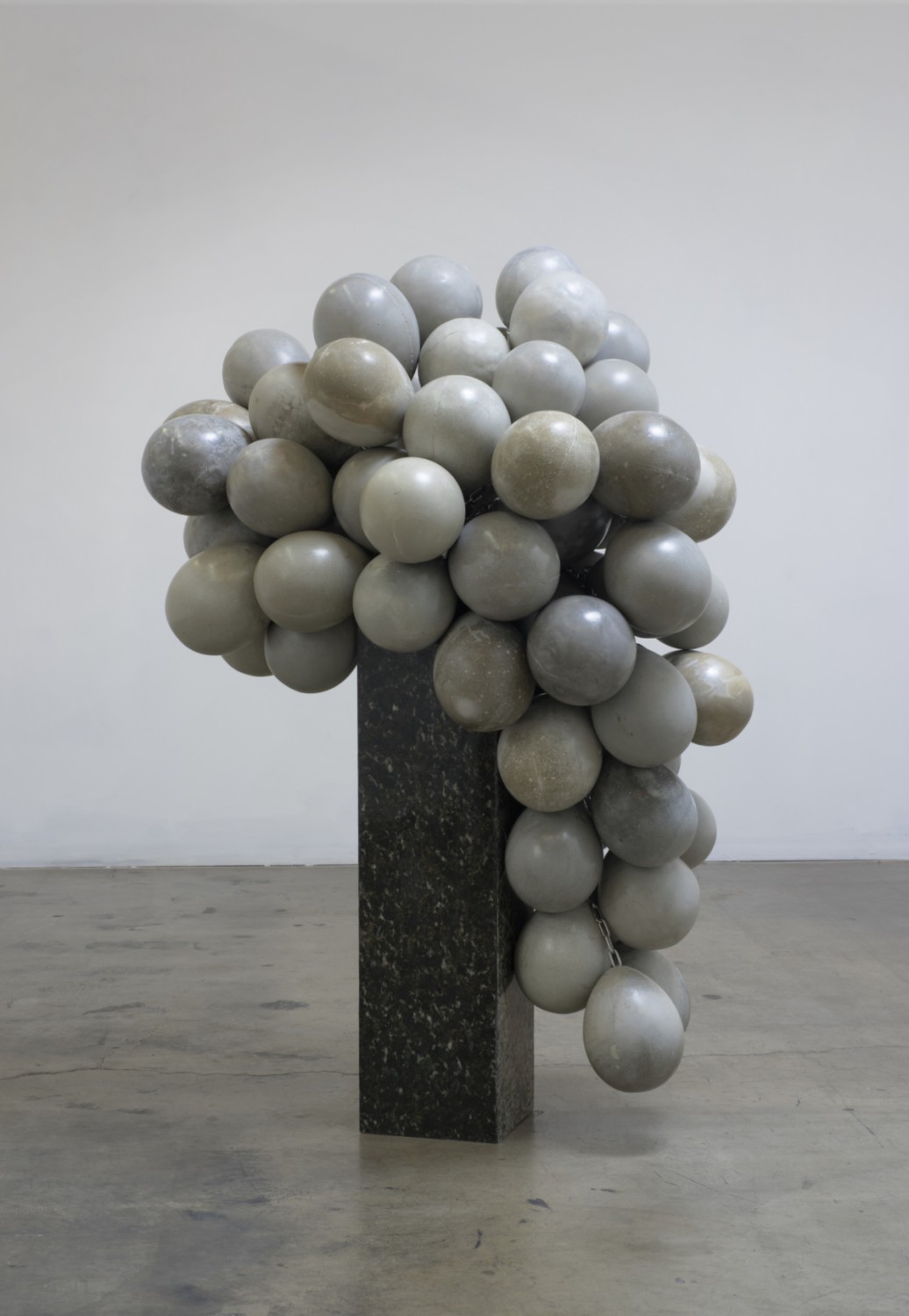
Born, raised, and educated in California, Ryan now lives and works in Jersey City, New Jersey where she has a warehouse filled with the varied materials from which she creates her sculptures. Ryan finds inspiration in the natural world and the history of art. Bacchante (2015) is an example. This sculpture consists of a bunch of large polished concrete grapes draped over a granite pillar and is part of a series inspired by a 17th century painting of a female follower of Dionysus which Ryan saw at the Getty. The grapes refer to the god’s intoxicating wine and the drooping bunch over the column suggests the curving form of the bacchante. Created by filling balloons with concrete, this sculpture contrasts the buoyant shapes with weighty concrete, the glossy polish at odds with the mundane material.
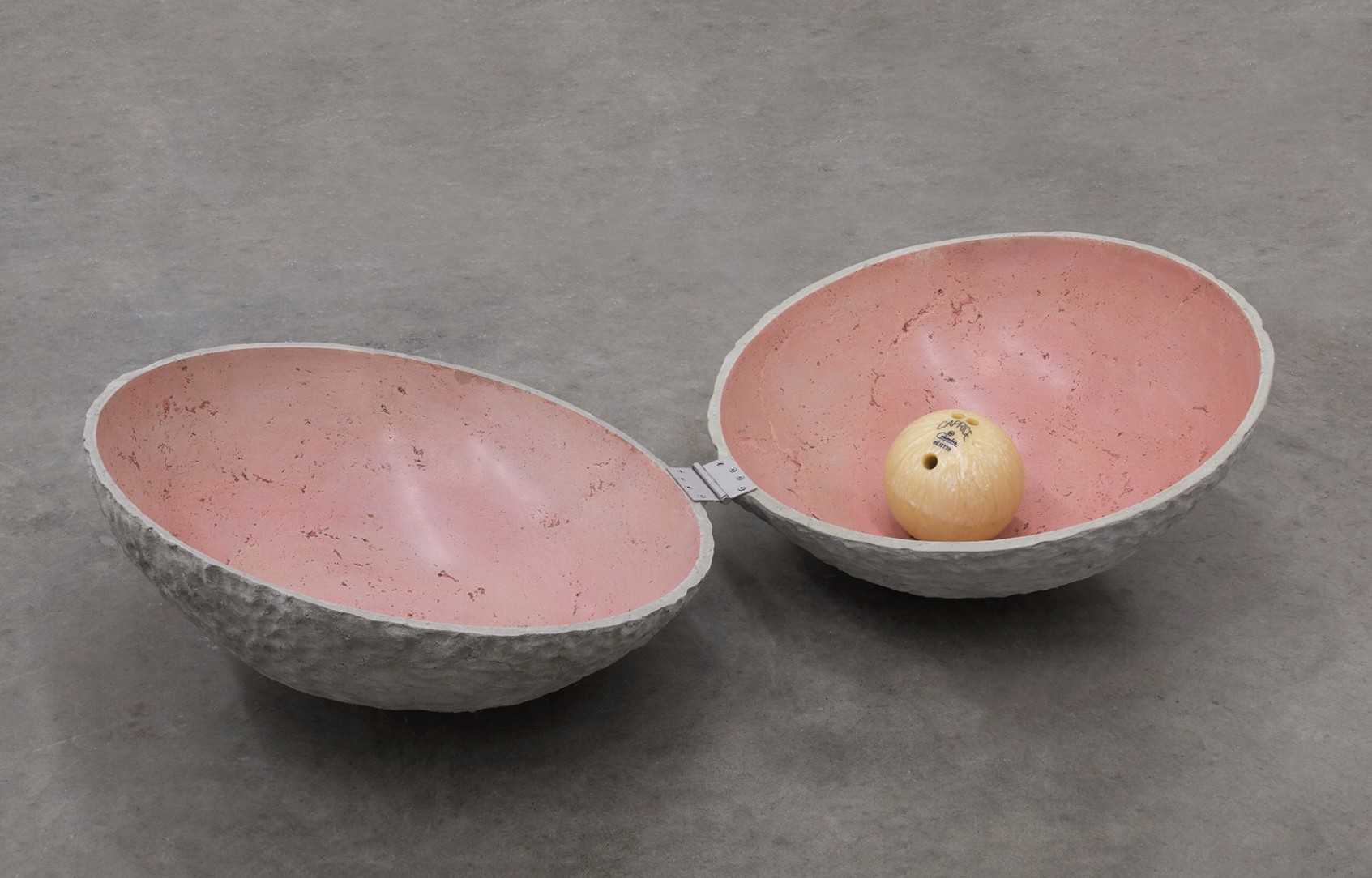
Many of the artist’s works display such contrasts. Caprice (2016) is one of a number of works that Ryan created using bowling balls, which often serve as oversized beads or pearls. In this example, an industrial steel pod is coated in concrete on the outside and painted pink inside, with a creamy white bowling ball sitting like an oyster’s pearl in the open shell. The industrial finishes look nothing like the organic features of an oyster, so there’s no illusionism to this work. Still, the shapes and colors make the point. The title is taken from the bowling ball brand, but also suggests the artist’s playful approach in the work.
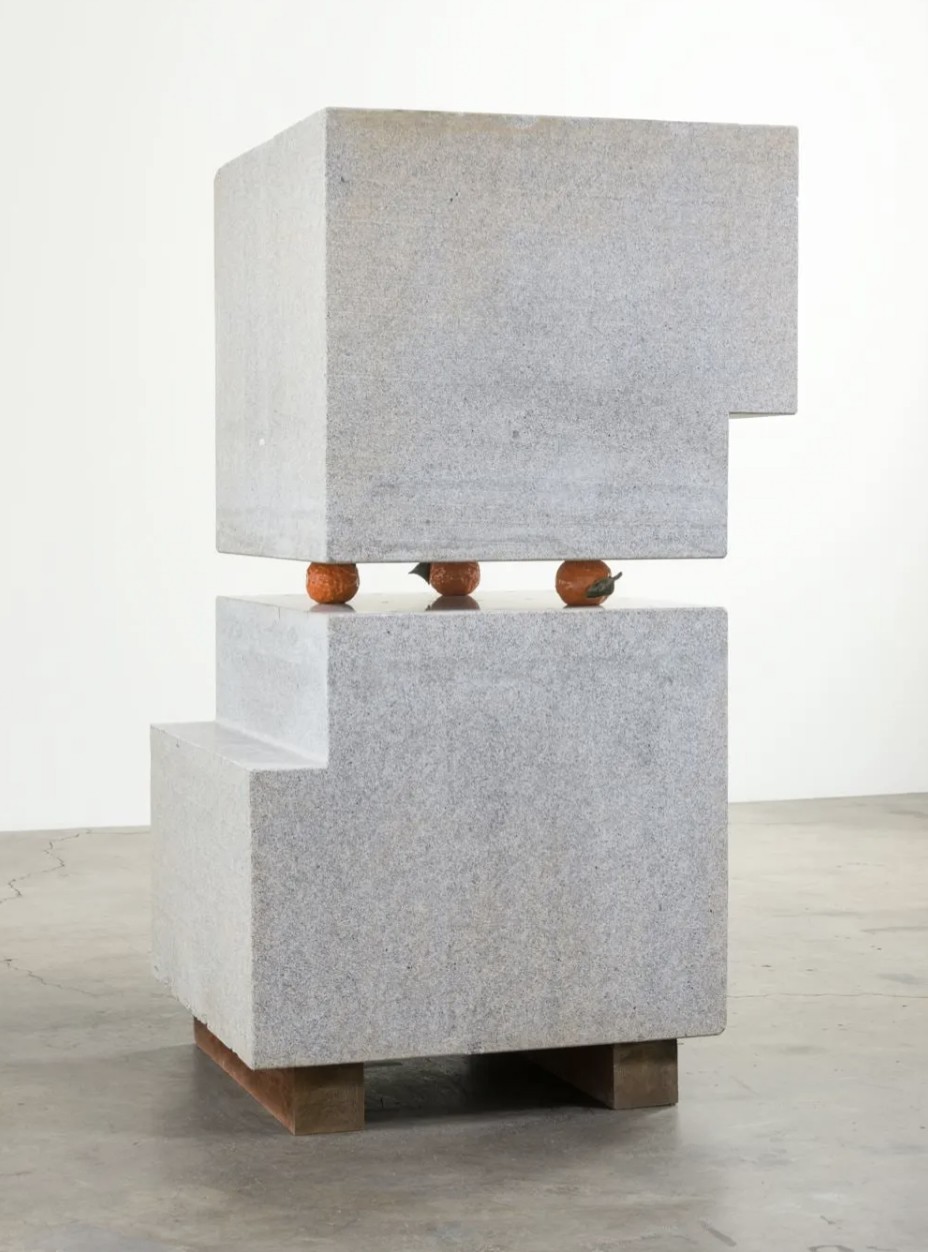
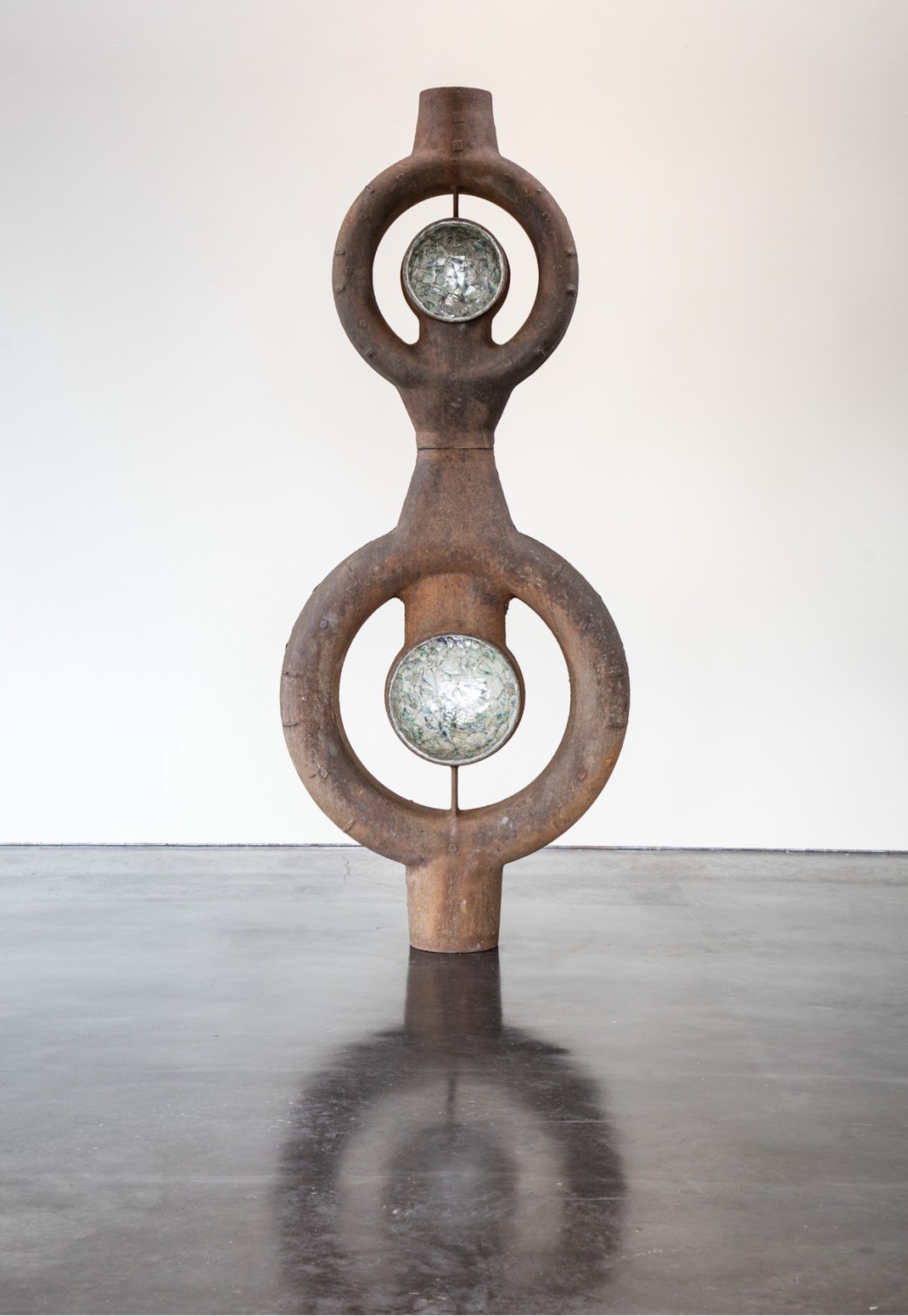
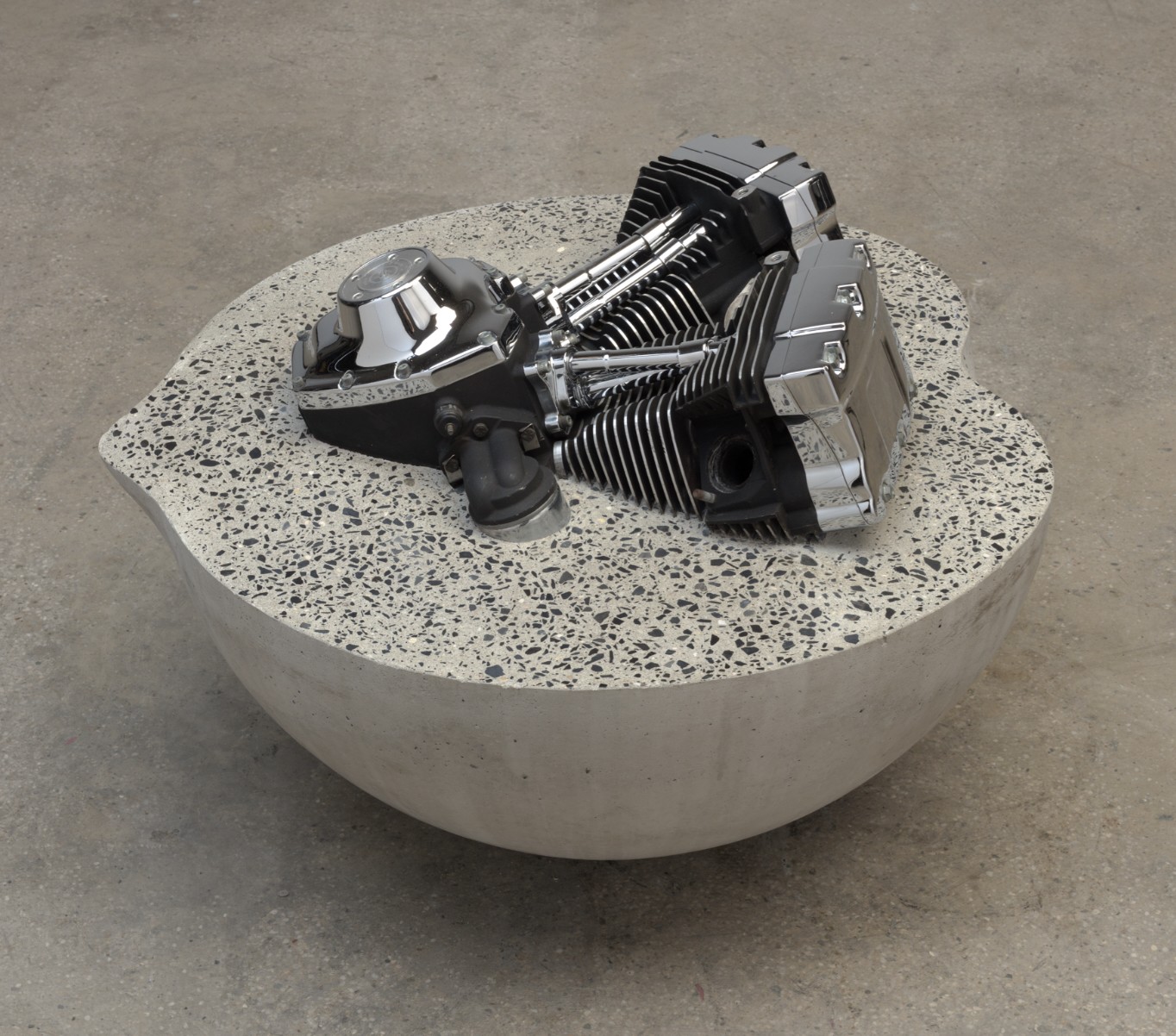
Other early works explored contrasts between industrial materials and organic forms. Between Two Bodies (2017) consists of two 3-ton industrial blocks of granite separated by ceramic oranges. Ryan found the granite on eBay and spent a couple of years waiting for inspiration to strike. Since the granite had once been used in the Southern California aerospace industry and oranges are so closely associated with same area, combining the two seemed appropriate and created the contrasts she favors. Mother of Pearl (2019) combines industrial iron forms and abalone shell, a natural source of mother-of-pearl. The two-lobed iron structure refers to Mother Goddess forms found in many cultures turning the title from a literal description to a multi-layered reference. Such layered meanings have become increasingly important in the artist’s works as her career has progressed.
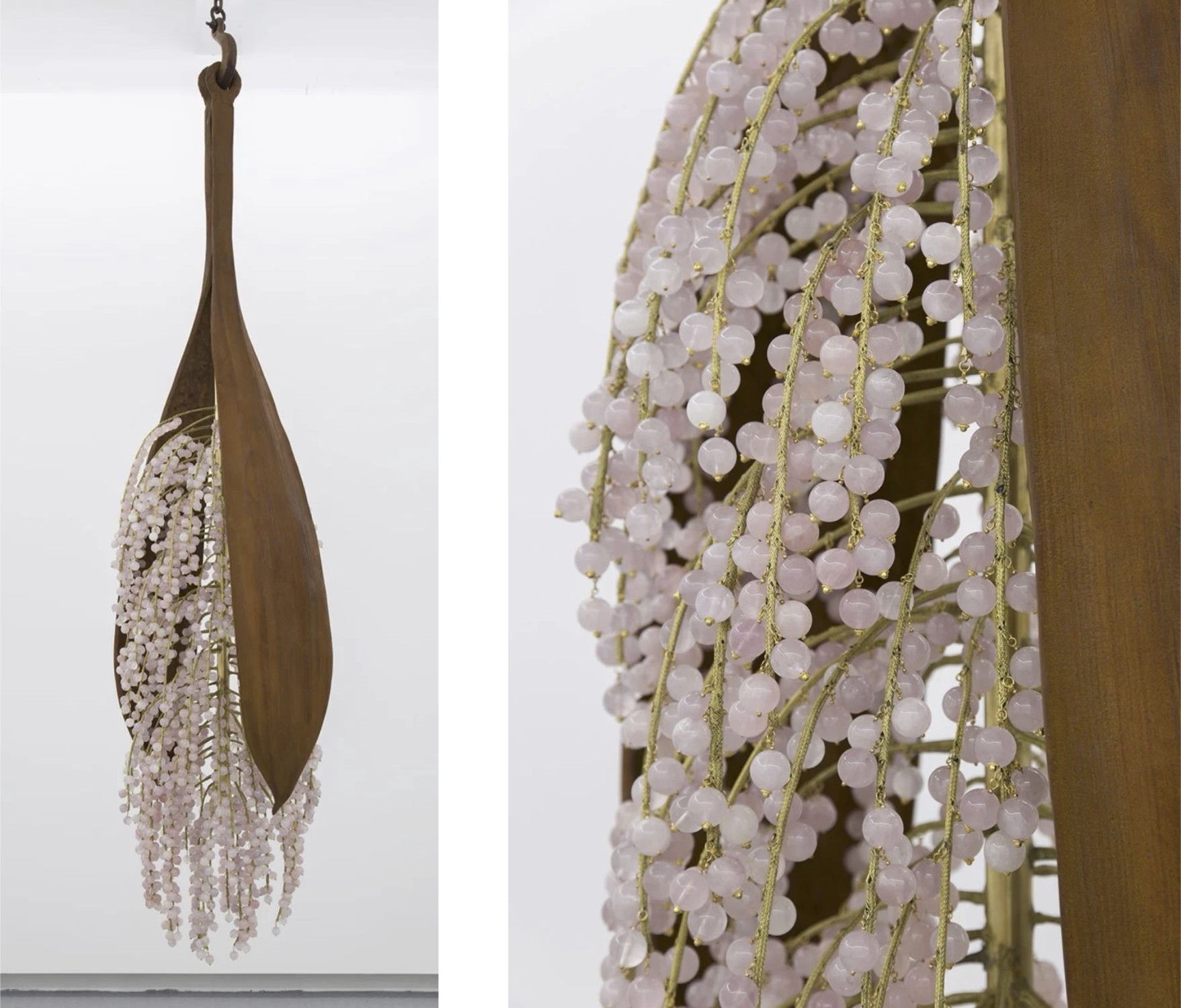
In 2017, Ryan created two sculptures inspired by hanging seed pods of the queen palm trees of Southern California. Diana, included in this slide show, includes rose quartz beads to represent the seeds while the sister sculpture Matilda has jade beads. This was the artist’s first experience sourcing and using semiprecious beads. Little did she know at the time how important these materials were to become in her work. These sculptures continued the idea of contrasting industrial and organic forms. In Diana, the rusted iron pod and industrial hook contrast with the polished pink beads connected by gleaming brass.
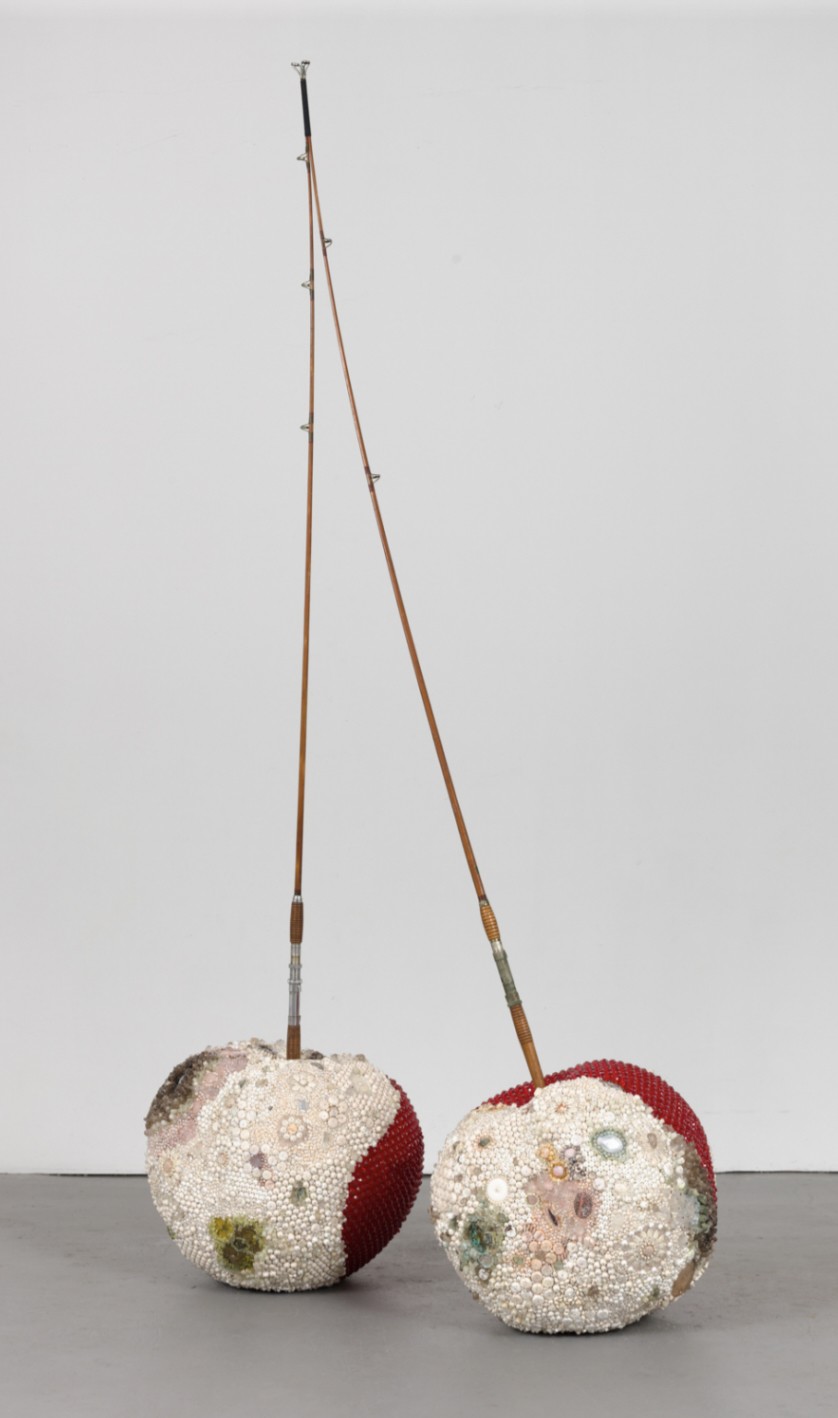
Ryan began creating sculptures depicting decaying fruit in 2018, beginning with slightly oversized pieces, increasing to works that range between 4 and 10 feet long. The Bad Fruits series is the artist’s best-known body of work and produces the contradictory feelings of attraction and repulsion that dominate most commentaries and reviews of Ryan’s work. This response is what the artist is seeking in the works, as she explained in a 2019 profile in the New York Times.
“The sculptures are beautiful and pleasurable, but there’s an ugliness and unease that comes with them.”
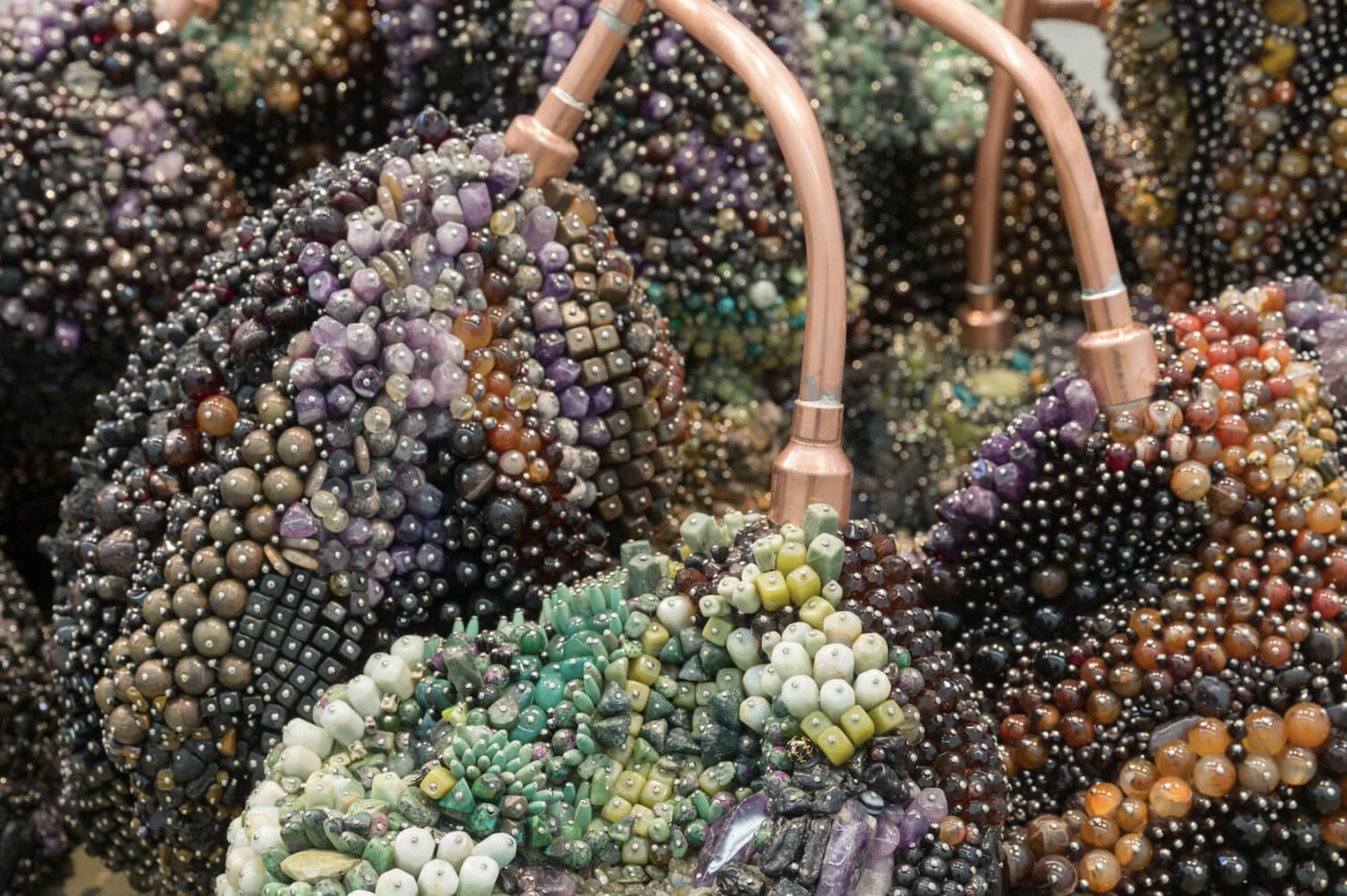
And the works are beautiful to look at. Bad Grapes is a large example from 2020. The bright copper pipes of the “stems” contrast with blue, red, and purple beaded forms of decaying grapes spread across the floor. The artist studies photographs sourced online as reference points for her fruit but she also allows examples of fresh fruit to deteriorate in her studio to observe the process of decay first hand. In the grapes, the natural dark color of the fruit doesn’t contrast as strongly with the decay as it does in some of the other fruits Ryan depicts. That may encourage the observer to move in to examine the work more closely. That close observation makes one more aware and appreciative of the materials the artist used and the time and craftsmanship she lavishes on her work. The slide show includes a close view of some of the grapes to simulate this experience. One can momentarily forget that the imagery is rotting fruit while focusing on the beautiful beadwork, but a step back quickly reminds one of the theme.
Though she never intended to focus so much of her work on fruit, Ryan finds the subject suitable for an underlying commentary of contemporary society.
“They’re not just opulent. There’s an inherent decline built into them, which is also something that’s happening in the world. The economy is inflating, but so is wealth inequality, all at the expense of the environment.” – Kathleen Ryan, quoted in the New York Times, 2019
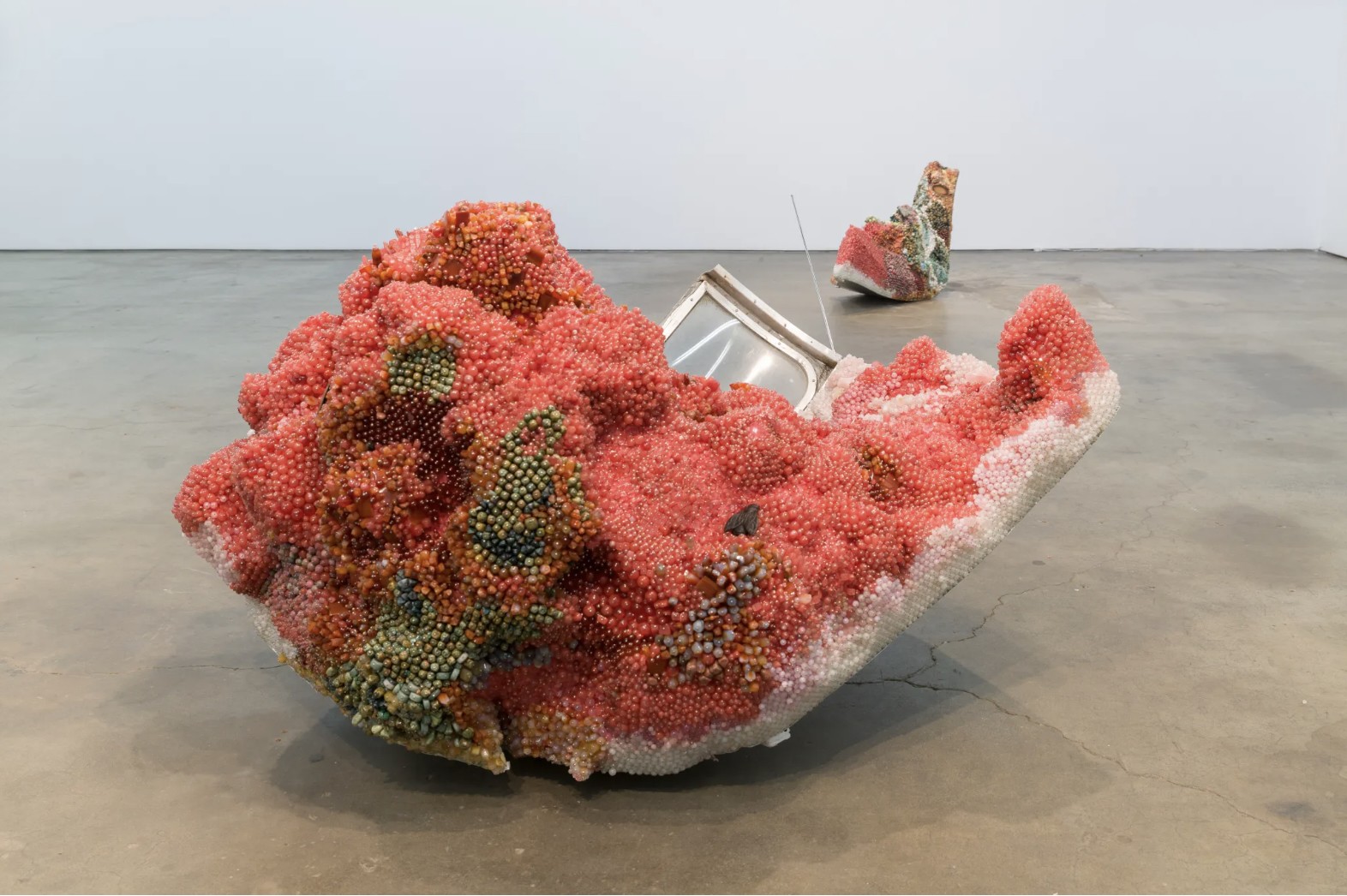
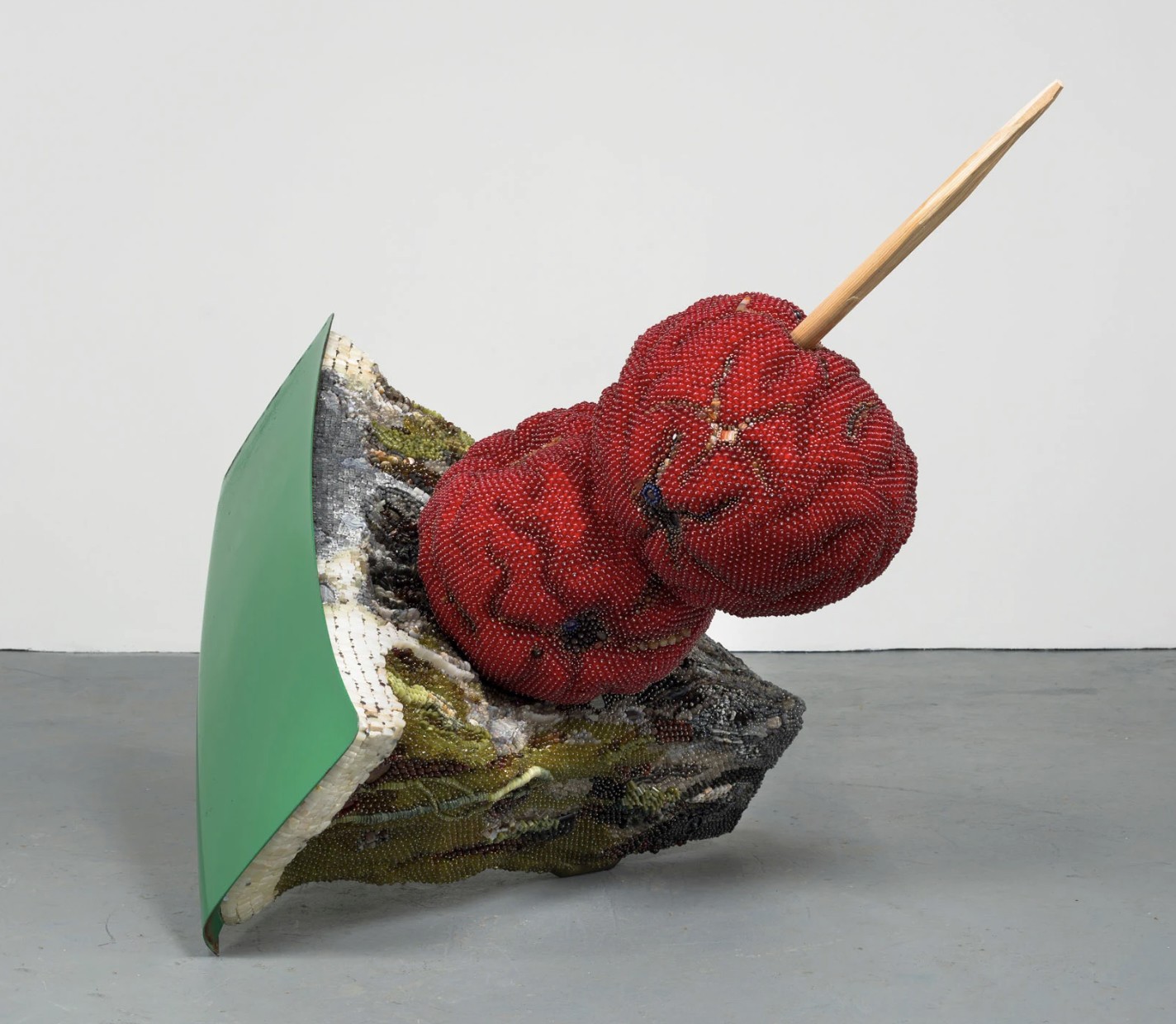
The artist’s concern for society’s wasting of resources has encouraged her to incorporate discarded materials in innovative ways. The pieces of decaying watermelon in her Bad Melon works (2020) are constructed on sections of a decrepit Airstream camper Ryan found on Craigslist. The camper spoke to her of the mid-20th century American Dream and watermelon of stereotypical American summer picnics. She cut apart the trailer and built her melon fragments atop the pieces. The artist made no attempt to hide the features of the vehicle, so once again the contrast between the organic and the manmade is highlighted. Having discovered some vintage cast iron and cast brass flies online, she incorporated these in the Bad Melon sculptures too.
“I like how objects bring meaning and carry a history. The Airstream is an idealized symbol of Americana—of leisure and freedom. And here, it’s a broken, rotten watermelon.” – Kathleen Ryan
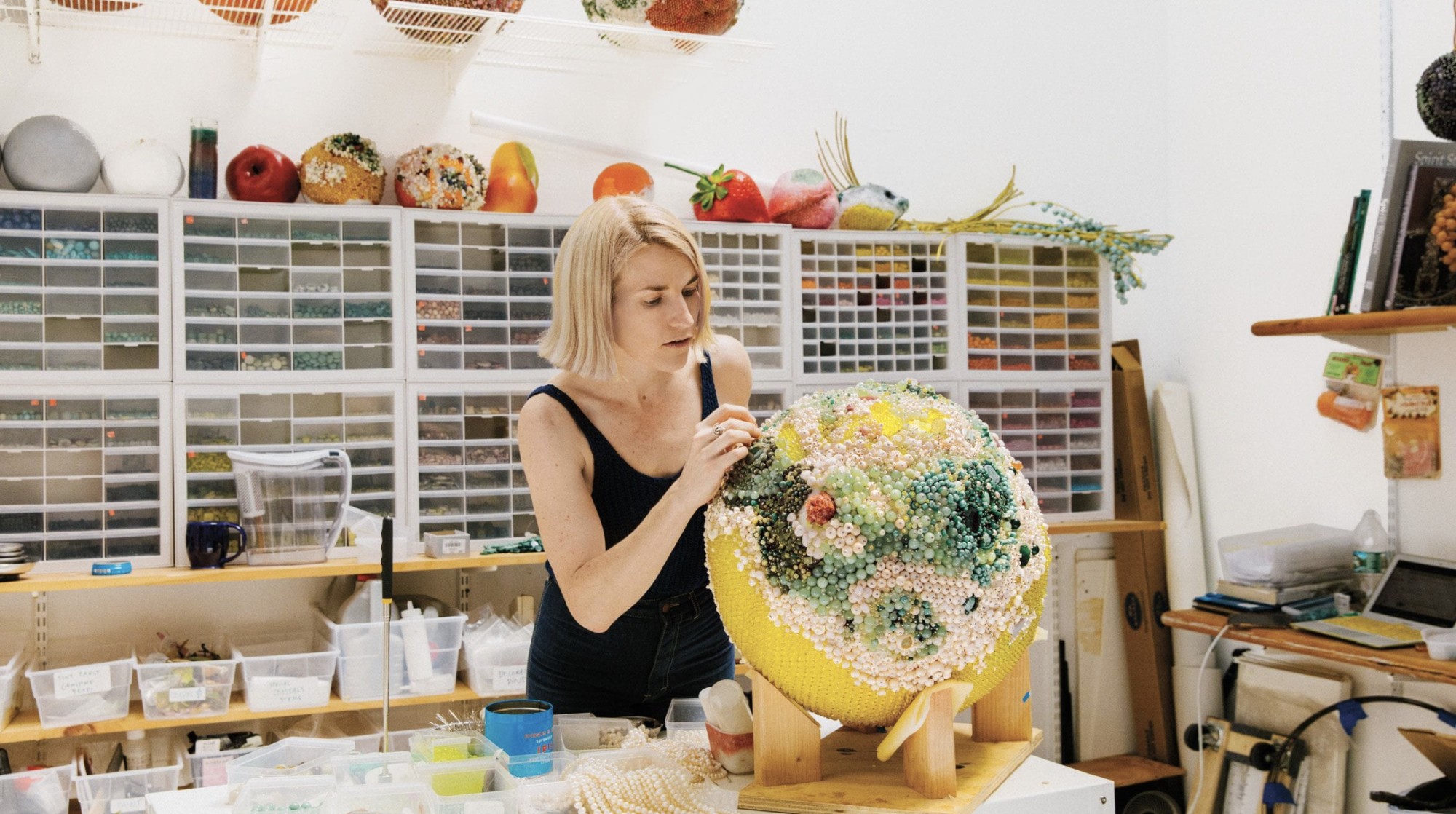
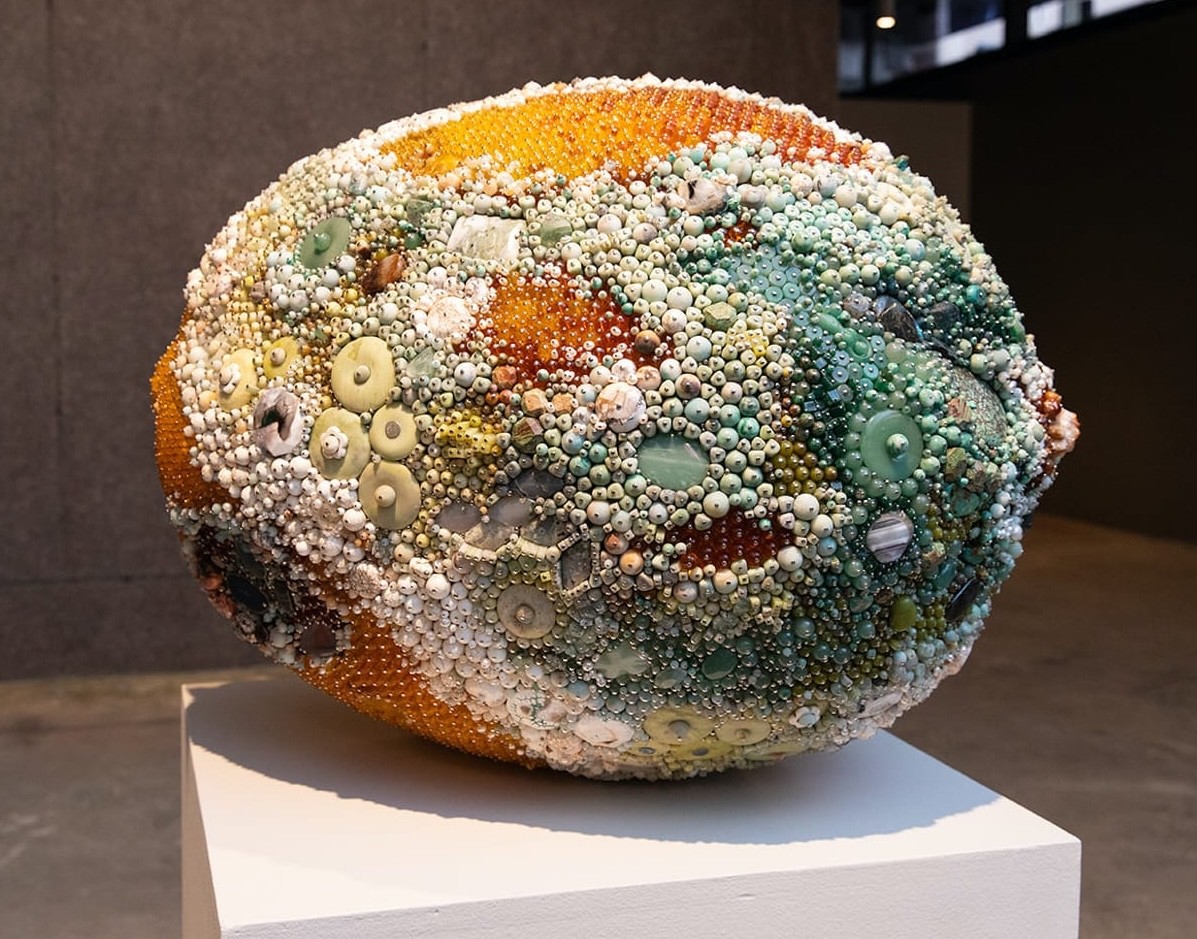
Ryan’s beaded fruits were originally inspired by her fascination with beaded and sequined fruits made from kits in the United States between the 1940s and 1970s. The artist encountered these in resale, antique, and junk shops and collected a few because of her interest. Her process in creating her own fruit sculptures is to build the basic form out of polystyrene foam. She may sketch the design of fresh and rotting sections on paper or paint directly onto the foam before beginning the labor-intensive and time-consuming process of choosing beads and applying them with pins (or nails, depending on the size). A single lemon sculpture may be covered with over 10,000 beads and may take as long as two months to complete. Fresh sections of the fruit are covered with plastic or glass beads while the rotted sections are filled in with natural stone beads. The more rotted the area, the more valuable the beads in that section are. Some of the beads and pearls Ryan uses are reclaimed from old jewelry and have irregular shapes. A detail of Bad Lemon (Celestial) of 2023 in the slide show includes some beads like these.
Lemons are the most frequently repeated fruits in Ryan’s work. Lemons have many connotations including playing a role in our food and drink, symbolizing optimism (if life gives you lemons…) or persistent malfunction, as in a constantly broken car. Once again, the artist incorporates multiple layers of meaning for the viewer to untangle, all while seducing the eye with brilliant colors and patterns and disturbing the mind with the thought of rotted fruit. Other contrasts apparent in Ryan's work include the hard, durable beads depicting soft fruit and even softer decay, the natural and the manufactured, and the cool, dry materials with the illusionistic dampness of rotting fruit.
Many have noted the connection between Ryan’s food sculptures and the art historical tradition of vanitas still life. The vanitas is a particular form of still life painting in which arrangements of fruits and flowers are combined with symbols of the passage of time, death, and decay. Skulls, insects, wilted flowers, and decay-spotted fruit conveyed the memento mori, a reminder of human mortality. In 17th century Holland, when such subjects were especially popular, exotic citrus fruits like lemons were frequently included, as they entered Europe on Dutch trading ships carrying these and other luxuries.
Beyond the memento mori, decay carries many additional possible interpretations. As the artist has stated, it is intended as a critique of the excesses of luxury and speaks to the exploitation of the planet and its resources. Rot in contemporary art has also been interpreted as symbolizing the dangers of capitalism without the controls of humanitarian values. The over-heated art market may itself be one of those dangers, and to some observers, it also participates in wasteful luxury. In contrast, decomposition isn’t just rot. It is a rebirth into another stage of existence and other life comes from it. The positive value Ryan places on that life might be symbolized by the beauty and value of the precious and semiprecious stones she incorporates into the most rotten sections. Though few of us would want to have a close confrontation with the bacterial growths on a real piece of rotten fruit, these sculptures hold their subjects in the moment of transformation between one phase of existence and another. In doing so, they provide an opportunity to explore the many-layered contrasts expressed in Kathleen Ryan’s art.
Current exhibition:
Kathleen Ryan: Souvenir, through January 10, 2026 (closed December 23 to January1), at Karma, 7351 Santa Monica Boulevard, Los Angeles, California, USA. LINK: karmakarma.org/exhibitions/kathleen-ryan-2025_la
Please share your comments and questions on Substack. LINK: irequireart.substack.com/p/viewing-room-45/comments
Some captions are especially long on these images because Ryan is careful to note every material incorporated in these works. Because it is so important to the artist, I felt I should share them.
If the caption obscures part of the artwork, click on the image to turn off the caption.
Longer captions may not be fully visible on smaller screens. We apologize for the inconvenience.